Did Japan Confirm Its First Bird Flu Outbreak This Season in the Greater Tokyo Area?

Synopsis
Japan has reported its first bird flu outbreak of the season in the greater Tokyo area, prompting immediate culling measures. As the country grapples with the avian influenza threat, experts urge strict preventive actions to protect both poultry and public health. Stay informed as we delve into the details of this alarming situation.
Key Takeaways
First outbreak of bird flu in greater Tokyo this season.
240,000 chickens to be culled at the affected farm.
Enhanced disinfection efforts and movement restrictions implemented.
Government urges strict hygiene measures across poultry facilities.
Avian influenza poses higher fatality rates in humans compared to seasonal flu.
Tokyo, Dec 30 (NationPress) The Japanese Ministry of Agriculture has reported a significant occurrence of highly pathogenic avian influenza at a poultry facility in Saitama Prefecture, which is notable as the country's 12th outbreak this season and the very first in the greater Tokyo area.
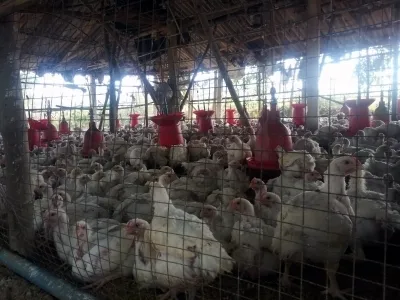
This affected facility, situated in Ranzan Town, north of Tokyo, houses approximately 240,000 egg-laying chickens, as per the announcement from the Ministry of Agriculture, Forestry and Fisheries.
The greater Tokyo area includes Tokyo along with the surrounding prefectures of Saitama, Chiba, and Kanagawa.
The government of Saitama Prefecture disclosed that all chickens on the farm will be culled, incinerated, and buried. Enhanced disinfection procedures will be implemented to curb any potential spread of the virus, alongside movement restrictions on poultry at nearby farms.
The agriculture ministry has pledged to intensify measures to prevent further outbreaks and will send an epidemiological investigation team to the affected site. It also advised local governments across Japan to maintain vigilance and strictly adhere to protocols for early detection, immediate reporting, and hygiene management at poultry establishments, as reported by the Xinhua news agency.
Typically, Japan's avian influenza season spans from autumn through spring. The previous outbreaks this season have already necessitated the culling of over 3.65 million chickens.
The World Health Organization categorizes avian influenza, also referred to as bird flu, as a type of zoonotic influenza affecting wild birds and poultry, caused by virus subtypes A(H5N1) and A(H9N2). Human infections with avian influenza are rare and do not easily spread between individuals. Most human cases are linked to direct or indirect contact with infected live or deceased poultry.
Since its initial identification in Hong Kong in 1997, the disease has led to human outbreaks and fatalities in 16 nations across Africa, Asia, Europe, and the Middle East. In 2006, the highly pathogenic A(H5N1) strain spread rapidly through the Eastern Mediterranean Region, resulting in significant non-human outbreaks in countries like Afghanistan, Djibouti, Egypt, Iraq, Jordan, and others. Confirmed transmissions from infected birds to humans were reported in Djibouti, Egypt, Iraq, and Pakistan, with avian influenza becoming endemic among poultry in Egypt since then.
The incubation period for the A(H5N1) virus ranges from 2 to 5 days on average, extending up to 17 days. Symptoms in humans may include fever, malaise, cough, sore throat, and muscle aches, with serious cases leading to pneumonia, severe illness, and even death. The fatality rate for avian influenza in humans is significantly higher than that of seasonal influenza.
Point of View
It is essential to approach the recent outbreak of avian influenza in Japan with a balanced perspective. The situation underscores the importance of swift governmental action to mitigate risks to both livestock and human health. Our commitment to providing accurate and timely information remains steadfast.
NationPress
15 Oct 2026
Frequently Asked Questions
What is avian influenza?
Avian influenza, commonly known as bird flu, is a type of zoonotic influenza that primarily affects birds and can occasionally infect humans.
How does avian influenza spread?
The virus spreads through direct or indirect contact with infected live or dead poultry.
What measures are being taken in Japan?
In response to the outbreak, all infected chickens will be culled, and disinfection efforts will be intensified to prevent further spread.
What are the symptoms of avian influenza in humans?
Symptoms may include fever, cough, sore throat, and muscle aches, with severe cases leading to pneumonia.
Why is this outbreak significant?
This marks Japan's first bird flu outbreak in the greater Tokyo area this season, raising concerns about public health and poultry farming.