What Legal and Credibility Issues Has a Former Pentagon Spokesman Raised About US Military Action in Venezuela?

Synopsis
In a critical interview, former Pentagon spokesman Dave Lapan questions the legal and credibility implications of the recent US military actions in Venezuela. He warns that conflicting narratives from the Trump administration could jeopardize America's standing with its global allies, highlighting the urgent need for transparency in military operations.
Key Takeaways
Concerns over legal authority for military action remain unresolved.
Conflicting narratives from the Trump administration could damage US credibility.
The operation lacked prior congressional authorization.
Military effectiveness acknowledged, but legal justifications questioned.
Communication practices have changed, raising trust issues.
Washington, Jan 7 (NationPress) A former Pentagon press secretary has raised significant concerns regarding the legal foundation, communication, and worldwide repercussions of the recent US military action in Venezuela. He cautioned that inconsistent narratives from the Trump administration could undermine America’s credibility with allies and partners.
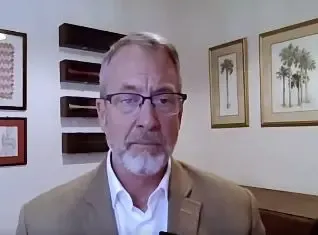
In an exclusive interview with IANS, Dave Lapan, a retired US Marine colonel who served as Pentagon press secretary and later as deputy assistant secretary for media relations at the Department of Homeland Security, emphasized that crucial questions about the Venezuela operation remain unresolved days after its execution.
“Although several days have passed since the operation was executed, there are still countless unanswered inquiries,” Lapan remarked, highlighting the uncertainty surrounding the legal authority under which the mission was initiated and its genuine intention.
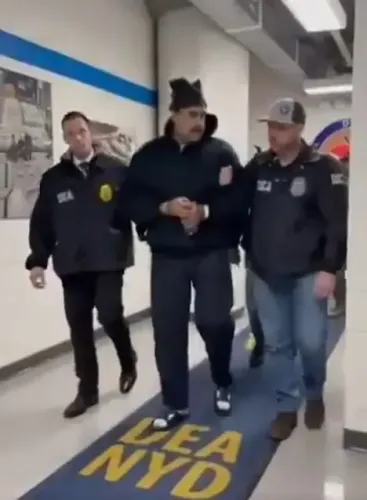
He pointed out that the administration has provided multiple, at times contradictory, explanations. “Was this an operation aimed at apprehending an alleged drug trafficker? Was it about seizing oil from Venezuela? Was it about regime change?” Lapan questioned. “There are numerous explanations, many of which contradict each other.”
Addressing a series of questions regarding the military actions in Venezuela, Lapan noted that the ambiguity complicates understanding for both Americans and the international community regarding what transpired and what may follow.
Drawing parallels with US military engagements in Afghanistan and Iraq, Lapan underscored a significant distinction. “In Iraq and Afghanistan, those were officially declared wars,” he explained, noting that Congress sanctioned those operations. In contrast, he indicated that the scenario in Venezuela is markedly different.
“Even though this was not a large-scale operation like those in Iraq or Afghanistan, it involved military force and lethal military action,” Lapan stated. He added that “dozens of individuals lost their lives” and that US service members sustained injuries.
He pointed out that Congress neither authorized nor was informed about the operation beforehand. “They weren’t even made aware of the operation until it was concluded,” he remarked, characterizing the situation as “uncharted territory in many respects.”
From a purely military perspective, Lapan acknowledged the operation’s effectiveness. “From a military-only viewpoint, it was very successful,” he stated, citing elements such as surprise, suppression of air defenses, and the swift entrance and exit of US forces from Venezuela.
However, he voiced skepticism about the administration’s assertion that the action was fundamentally a law-enforcement effort backed by the military. “Numerous legal experts have weighed in to suggest that this is not a sufficient justification,” Lapan commented, adding that the lack of definitive answers is concerning.
As a former senior spokesperson, Lapan also critiqued the manner in which the operation was conveyed. He contrasted current practices with prior Pentagon briefings. “We made considerable efforts to deliver clear and accurate information promptly,” he recalled, often featuring senior military leaders briefing the media at the Pentagon.
“That is not what we are witnessing now,” Lapan noted, highlighting that the chairman of the Joint Chiefs briefed reporters at the White House instead of the Pentagon, and that the existing Pentagon press corps has effectively been dismantled.
He cautioned that this void breeds confusion and distrust. “It raises questions about the suitable role of the US military,” he stated, including its overseas deployments without congressional consent and its operations domestically.
Lapan asserted that the Venezuela operation also conveys troubling signals globally. “It generates uncertainty and confusion among our friends and allies,” he remarked, including partners in Europe and Asia. “They must ponder whether treaties even hold significance anymore.”
“This directly influences the credibility of the United States,” Lapan stated. “Our partners must question whether we can be relied upon anymore—and that is a profoundly disheartening realization.”
Point of View
It is imperative to recognize the significance of Dave Lapan's insights regarding the US military operation in Venezuela. The concerns raised not only highlight the need for clarity and accountability but also reflect the broader implications for US credibility on the global stage. It is essential that we, as a nation, prioritize transparency and foster trust with our allies.
NationPress
26 Sept 2026
Frequently Asked Questions
What are the main concerns raised by Dave Lapan?
Dave Lapan has raised concerns regarding the legal authority, conflicting explanations from the administration, and the implications for US credibility with allies.
How does this operation compare to past military actions?
Lapan notes that the operations in Iraq and Afghanistan were officially declared wars authorized by Congress, while the Venezuela operation lacked prior congressional authorization.
What was the military's effectiveness in the Venezuela operation?
From a military standpoint, Lapan acknowledged the operation's effectiveness in terms of surprise and quick execution, despite the troubling legal justifications.
Why is communication important in military operations?
Effective communication helps to maintain public trust and clarity about military actions, which is critical for national credibility.
What implications does this have for US foreign relations?
The conflicting narratives and lack of clarity could create doubt among US allies regarding America's reliability and commitment to international treaties.