Is India Committed to Atmanirbharta Amidst Global Changes?
Synopsis
In a powerful address, Shaktikanta Das highlights India's unwavering path toward becoming the fastest-growing economy, despite global uncertainties. By embracing self-reliance through Atmanirbharta, India seeks to secure its future while navigating a complex geopolitical landscape. Discover how India is reforming its economy and enhancing its global standing.
Key Takeaways
India is projected to be the fastest-growing economy despite global challenges.
Atmanirbharta aims to build economic self-reliance and geopolitical autonomy.
Structural reforms have been crucial for stability and growth.
India's GDP growth is forecasted at 7.4% by 2025-26.
Government fiscal discipline is improving public debt sustainability.
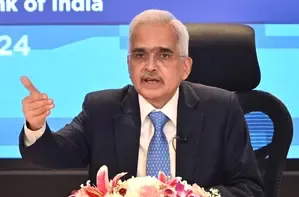
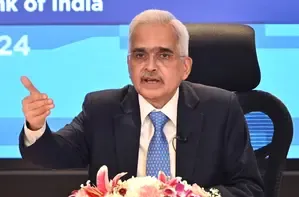
New Delhi, Jan 9 (NationPress) Shaktikanta Das, Principal Secretary-2 to the Prime Minister, remarked on Friday that India is on track to become the fastest-growing economy globally, despite facing geopolitical tensions and trade obstacles.
During the inaugural Bibek Debroy Memorial Lecture, Das emphasized that the evolving geopolitical dynamics and trade regulations are transforming the global economic landscape. Traditional multilateralism, which once served as a foundation for global governance, is increasingly being overshadowed by geopolitical rivalries, protectionist stances, and fragmentation.
Das asserted that in this dynamic global context, India has adopted Atmanirbharta, a vision of self-reliance, as the guiding principle of its policies.
“Acknowledging these realities, India’s position in the changing world order is unmistakable. India advocates for a cooperative and rules-based global system while also actively forming partnerships and strategies to safeguard our national interests in a more dispersed power environment,” he articulated.
He stated, “The Atmanirbharta envisioned by Prime Minister Modi is not about isolation; rather, it is a strategy aimed at building core competencies and resilience. Atmanirbharta consists of two interrelated dimensions: economic self-reliance and geopolitical independence. A self-sufficient economy, bolstered by robust domestic capabilities, enhances our capacity to maintain economic growth, while an independent foreign policy allows us to navigate external conditions aligned with our national interests.”
Das further noted that the foundation of India’s stability and growth is the continuous implementation of structural reforms by the government over the last decade, encompassing taxation, financial architecture, labor regulations, and business facilitation.
Highlighting the Indian economy's strength, he indicated that by 2025-26, the real GDP is projected to grow at 7.4 percent, according to estimates from the National Statistics Office (NSO). In addition, India is expected to contribute approximately 18 percent to global GDP growth during the same period.
Moreover, inflation has been kept in check through prudent monetary policies and supply-side interventions.
Fiscal consolidation is progressing well, with the central government’s gross fiscal deficit decreasing from 9.2 percent in 2020-21 to 4.8 percent in 2024-25. This commitment to fiscal discipline is creating room for future counter-cyclical policies and ensuring sustainable public debt levels.
The former RBI Governor also noted that the financial sector has experienced significant recovery over the past decade. The health of banks, NBFCs, and other financial institutions is currently at an optimal level. The Gross Non-Performing Assets (GNPA) of banks have plummeted to remarkable levels, and there has been substantial improvement in governance within the banking sector.
On the external front, India’s balance of payments is stable with a manageable current account deficit. Our foreign exchange reserves remain strong at just below US $700 billion, serving as a buffer against external shocks. Robust reserves instill confidence among investors that India can meet its external payment obligations.
Das pointed out that these achievements stem from prudent policies and resilient buffers established over time.
He underscored that the government's continuity and consistency in reform momentum have been pivotal in driving growth with stability. The Goods and Services Tax (GST) has revolutionized India’s economy by unifying the nation into a single common market, replacing a complex web of cascading indirect taxes. This has enhanced tax compliance and efficiency, broadened the tax base, and eliminated inter-state barriers. The latest comprehensive review and next-generation reforms in GST (September 2025) have simplified the tax structure and made it more consumer-friendly, sparking a robust impulse towards domestic consumption and growth.
The Insolvency and Bankruptcy Code (IBC) of 2016 has fundamentally transformed India’s credit culture. Before the IBC, resolving a distressed company in India was often a lengthy and futile process. The IBC instituted a modern, time-bound insolvency resolution framework, shifting power to creditors and facilitating quicker recovery of value. This significant reform bolsters banking sector stability, Das explained.
Concurrently, reforms in the real estate sector through the Real Estate (Regulation and Development) Act (RERA) have improved transparency, accountability, and consumer protection.
The implementation of the four Labour Codes enacted in 2020, set for notification in November 2025, marks a transformative consolidation of 29 labor laws into four unified codes covering wages, social security, industrial relations, and occupational safety, Das concluded.
Point of View
It is evident that India's steadfast focus on Atmanirbharta amidst global turbulence is not just a policy but a necessary strategy for sustainable growth. As geopolitical dynamics evolve, the need for a self-reliant economy becomes critical for national interest and stability.
NationPress
19 Sept 2026
Frequently Asked Questions
What is Atmanirbharta?
Atmanirbharta is India's vision of self-reliance, emphasizing economic independence and resilience in the face of global challenges.
How is India's economy performing?
India's economy is projected to grow at 7.4% by 2025-26, contributing around 18% to global GDP growth.
What reforms have been implemented in India?
Key reforms include the Goods and Services Tax, Insolvency and Bankruptcy Code, and labor law consolidation, all aimed at enhancing economic stability.
How has inflation been managed in India?
Inflation has been controlled through prudent monetary policies and supply-side measures, contributing to economic stability.
What is the significance of India's foreign exchange reserves?
India's foreign exchange reserves, currently below $700 billion, provide a buffer against external shocks and instill investor confidence.