Sonipat HDR 2026 presented in Delhi: Key findings on health, education, and governance
Synopsis
India leads the world in sub-national Human Development Reports, and the Sonipat HDR 2026 adds to that legacy — but its Delhi presentation revealed uncomfortable ground realities: declining girls' participation in education and sports, gaps in migrant data, and the urgent need for district-level spatial planning. Whether these findings move beyond the seminar room into policy action is the real test.
Key Takeaways
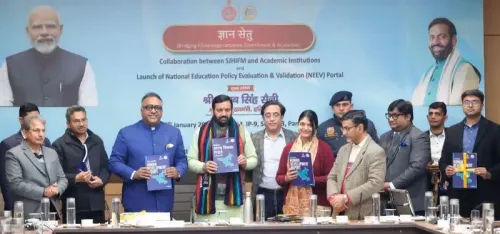
The Sonipat Human Development Report 2026 was formally presented in New Delhi by the Jindal Institute of Haryana Studies (JIHS) .
The report was first released by the Chief Minister of Haryana in January 2026 and covers sectors including health, education, environment, labour, and governance.
Kanta Singh of UN Women flagged a visible decline in girls' participation in education and sports in Sonipat, calling for better gender-disaggregated data.
Dalal Moosa of the World Bank called for integrating social protection and migrant population data into future HDRs.
India leads globally in sub-national HDRs, with over 800 such reports produced worldwide, according to UNDP India.
Experts called for stronger district-level evidence systems and deeper institutional engagement to convert HDR findings into actionable policy.
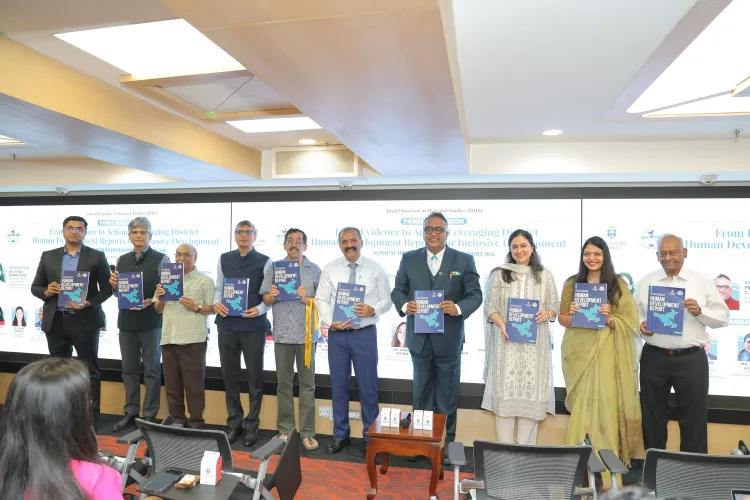
The Sonipat Human Development Report (HDR) 2026, first released by the Chief Minister of Haryana in January 2026, was formally presented in New Delhi at an event organised by the Jindal Institute of Haryana Studies (JIHS). The gathering brought together policymakers, academics, development practitioners, and international experts to examine the report's findings and their implications for public policy in Sonipat district.
Key Dignitaries and Presenters
The report was formally released by Vijai Vardhan, Former Chief Secretary, Government of Haryana, and Vikas Gupta, Commissioner, Kendriya Vidyalaya Sangathan. Distinguished guests included Dr. Dalal Moosa, Senior Economist at the World Bank; Ms. Kanta Singh, Deputy Country Representative, UN Women; Mr. Jagan Shah, Senior Urban Expert and Former Director, National Institute of Urban Affairs (NIUA); Professor Alakh N. Sharma, Director, Institute for Human Development; and Ms. Amrah Ashraf, Head of Communications and Strategic Partnerships, UNDP India.
The event was also graced by Professor C. Raj Kumar, Vice Chancellor of O.P. Jindal Global University; Professor Mrinalini Jha, Director of JIHS; and Professor R. Sudarshan, Dean, Jindal School of Government and Public Policy.
Core Findings Across Key Sectors
Chapter authors presented concise overviews of the HDR's findings across sectors including health, education, environment, labour and livelihoods, governance, spatial transformation, and basic service delivery. Each presentation highlighted critical development challenges specific to Sonipat and offered actionable policy recommendations for district-level governance.
Professor Mrinalini Jha, in her opening remarks, outlined the key findings and described ongoing and future initiatives of JIHS in advancing regional research. Professor C. Raj Kumar emphasised the role of dedicated research institutions in producing rigorous, policy-relevant regional analyses. Both Vijai Vardhan and Vikas Gupta commended the research team and underscored the practical utility of HDRs in informing governance, drawing from their own administrative experience.
Panel Discussion: From Evidence to Action
A panel discussion titled 'From Evidence to Action: Leveraging District Human Development Reports for Inclusive Development' convened leading experts to deliberate on the broader relevance of HDRs. Dr. Dalal Moosa stressed the importance of integrating social protection into HDRs, describing it as a cornerstone of the social contract. She also called for the inclusion of migrant population data and suggested making reports more accessible through concise, infographic-driven formats.
Ms. Kanta Singh reflected on a visible decline in girls' participation in education and sports such as volleyball in Sonipat, noting that cultural factors significantly influence women's economic participation. She called for more nuanced indicators beyond unemployment rates, improved gender-disaggregated data, and greater attention to enabling factors such as public transport.
Professor Alakh N. Sharma underscored the importance of identifying vulnerable employment and advocated for stronger reliance on primary data to better capture district-level realities. Mr. Jagan Shah emphasised the need for district-level spatial planning infrastructure, noting that spatial transformation reflects broader structural shifts towards an urban economy, and called for closer examination of the financialisation of spatial assets.
India's Leadership in Sub-National HDRs
Ms. Amrah Ashraf reaffirmed the continued global relevance of Human Development Reports, noting that over 800 such reports have been produced worldwide, with India leading in the number of sub-national HDRs. The panel, moderated by Professor Naveen Thomas, concluded with a broad exchange of ideas on strengthening district-level evidence, improving data systems, and deepening institutional engagement.
The event underscored a growing consensus that translating HDR findings into inclusive, actionable policy outcomes requires sustained collaboration between research institutions, government bodies, and international development organisations.
Point of View
Absent migrant data, weak spatial planning infrastructure — are not unique to Sonipat; they are systemic gaps that district reports repeatedly surface but rarely fix. India's lead in sub-national HDRs is a genuine achievement, but the recurring challenge is the last mile: converting rigorous research into institutional change. Until disbursement of public resources is explicitly linked to HDR findings, these reports risk remaining well-produced documents that circulate in seminar rooms rather than in district planning offices.
NationPress
11 May 2026
Frequently Asked Questions
What is the Sonipat Human Development Report 2026?
The Sonipat Human Development Report 2026 is a comprehensive district-level study covering health, education, environment, labour, governance, and spatial transformation in Sonipat, Haryana. It was first released by the Chief Minister of Haryana in January 2026 and formally presented in New Delhi by the Jindal Institute of Haryana Studies.
Who organised the Delhi presentation of the Sonipat HDR 2026?
The event was organised by the Jindal Institute of Haryana Studies (JIHS), a research body under O.P. Jindal Global University. It brought together policymakers, academics, and representatives from the World Bank, UN Women, and UNDP India.
What were the key concerns raised at the Sonipat HDR 2026 event?
Experts flagged a decline in girls' participation in education and sports in Sonipat, the absence of migrant population data in HDRs, the need for district-level spatial planning, and the importance of integrating social protection indicators. Calls were also made for better gender-disaggregated data and more accessible report formats.
How does India rank globally in Human Development Reports?
India leads the world in the number of sub-national Human Development Reports, according to UNDP India's Ms. Amrah Ashraf. Over 800 such reports have been produced globally, with India accounting for a significant share at the district and state level.
What is the broader significance of district-level HDRs for India?
District HDRs provide granular, evidence-based data that can guide public policy on health, education, livelihoods, and governance at the local level. Experts at the event stressed that their value depends on strong data systems, institutional engagement, and a clear mechanism to translate findings into actionable policy outcomes.