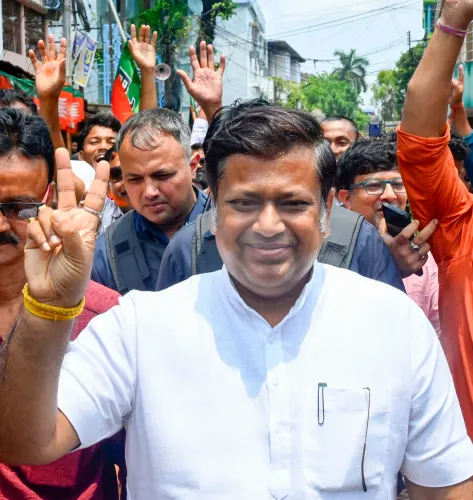
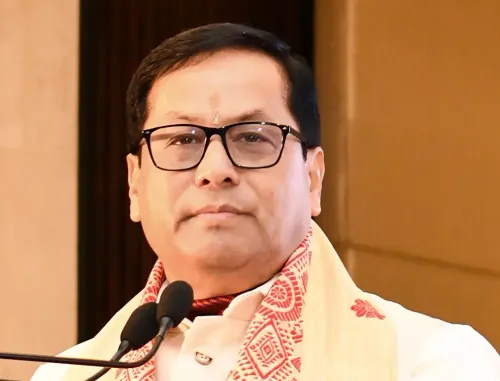
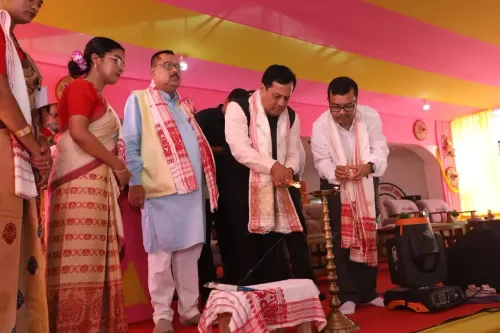
NITI Aayog's Gobardhan Das Vows to Revive Sonar Bangla Under Modi
Synopsis
Newly appointed NITI Aayog member Gobardhan Das has pledged to restore West Bengal's 'Sonar Bangla' glory under PM Modi's leadership, citing alarming gaps in education and healthcare that are driving mass migration out of the state — a pointed signal from the Centre ahead of future political battles in Bengal.
Key Takeaways
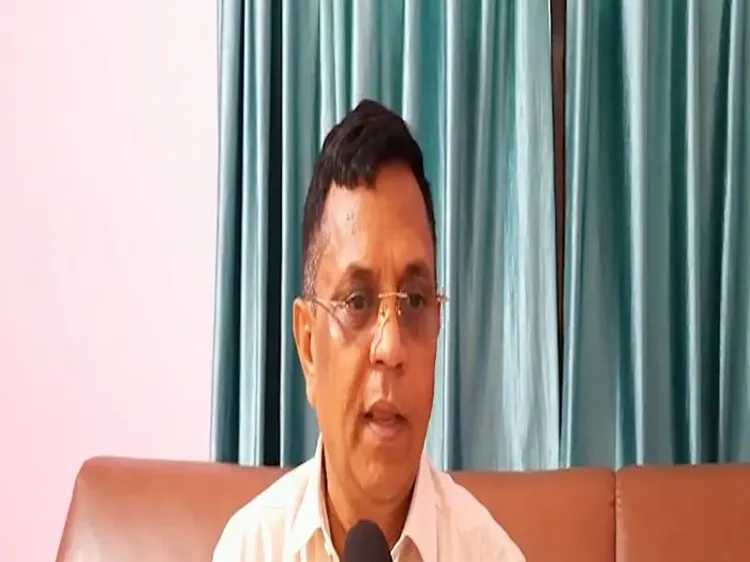
Gobardhan Das was newly appointed as a member of NITI Aayog and spoke to media on April 25 about his development priorities.
Das pledged to restore West Bengal to its 'Sonar Bangla' glory, invoking the legacies of Tagore , Aurobindo , Syama Prasad Mookerjee , and Meghnad Saha .
He identified critical gaps in West Bengal 's education and healthcare infrastructure as drivers of large-scale citizen migration out of the state.
NITI Aayog 's policy mandate will be directed at reviving West Bengal 's industrial and manufacturing sectors to create local employment.
Das cited India's indigenous Covid-19 vaccine development as proof of what coordinated national effort under PM Modi can achieve.
His priorities align with the broader Viksit Bharat 2047 framework, which requires all Indian states to meet national development benchmarks by India's centenary of independence.
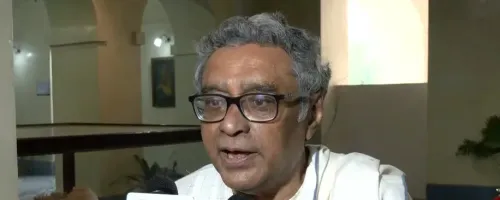
New Delhi, April 25: Gobardhan Das, freshly inducted as a member of NITI Aayog, has unveiled a sweeping development agenda focused on national progress and the revival of West Bengal, pledging full commitment to Prime Minister Narendra Modi's Viksit Bharat 2047 vision. Speaking to reporters after his appointment, Das said the honour extends beyond himself to the entire Bengali community, and vowed to channel the think tank's policy mandate toward bridging India's most critical developmental gaps.
Das Commits to Restoring West Bengal's 'Sonar Bangla' Identity
A central theme of Gobardhan Das's remarks was the restoration of West Bengal to its historically celebrated status as 'Sonar Bangla' — a term evoking the state's rich intellectual, cultural, and economic heritage. He invoked the legacies of luminaries including Sri Aurobindo, Rabindranath Tagore, Bankim Chandra Chatterjee, Syama Prasad Mookerjee, and celebrated scientist Meghnad Saha to underscore what the state has historically represented for India.
Das expressed deep concern over the current state of education and healthcare in West Bengal, describing both sectors as requiring urgent and structured intervention. He pointed out that large numbers of citizens are being forced to migrate outside the state simply to access basic services and employment opportunities — a trend he described as both economically damaging and socially unjust.
This is not merely a regional concern. West Bengal, once a leading industrial and intellectual hub of colonial and post-independence India, has seen its relative economic standing decline over decades. According to publicly available data, the state's per capita income consistently lags behind the national average, and its public health infrastructure has faced persistent criticism from independent assessments.
NITI Aayog Mandate to Bridge Developmental Gaps
Gobardhan Das stated clearly that he intends to leverage the full policy and advisory weight of NITI Aayog to address these structural gaps. His focus areas include revitalising the industrial and manufacturing sectors to generate local employment and reduce distress migration from states like West Bengal.
He emphasised that the principle of 'Sabka Saath, Sabka Vikas' — inclusive growth for all — must remain the foundational pillar of every policy decision. This, he argued, is the only path through which India can evolve into a truly self-reliant and globally capable power by 2047.
Das also highlighted India's performance during the Covid-19 pandemic as a benchmark for what coordinated national effort can achieve. The indigenous development of vaccines under PM Modi's leadership, he said, demonstrated India's scientific capability and governance resolve when the nation unites behind a common goal.
The Bigger Picture: Bengal's Political Economy Under Scrutiny
Das's appointment and his pointed remarks about West Bengal arrive at a politically charged moment. The state has been governed by the Trinamool Congress for over a decade, and the BJP has consistently argued that the ruling dispensation has presided over deteriorating public services and rising unemployment. Critics from multiple quarters have noted that West Bengal's industrial investment figures have lagged behind states like Gujarat, Tamil Nadu, and Karnataka.
Notably, NITI Aayog's role is advisory — it does not directly control state budgets or administration. However, its influence over central scheme allocations, policy frameworks, and cooperative federalism dialogues gives members like Das a significant platform to push for reforms in underperforming states. The question analysts are already raising is whether a NITI Aayog member from Bengal can translate advisory influence into tangible on-ground change without the cooperation of the state government.
This also connects to the broader Viksit Bharat 2047 framework, which explicitly requires all states — including those governed by opposition parties — to align their development trajectories with national benchmarks. Das's appointment may signal the Centre's intent to use NITI Aayog as a soft-power instrument to spotlight gaps in opposition-governed states ahead of future electoral cycles.
Vision for a Self-Reliant, Inclusive India
Gobardhan Das reiterated that the ultimate objective is not merely statistical economic growth but a comprehensive national transformation — one that guarantees welfare, security, and opportunity for every Indian citizen, regardless of geography or social background.
He stressed that regional strengths, including Bengal's intellectual and cultural capital, must be harnessed as contributors to a stronger, more unified national identity. By fostering collective effort and designing inclusive policies, Das argued that the dream of a developed, self-reliant India is achievable within the 2047 timeline set by PM Modi.
As NITI Aayog prepares its next round of state-level development assessments, Das's priorities are expected to shape the think tank's engagement with West Bengal and other eastern Indian states in the months ahead. His effectiveness will be closely watched by both policy circles and political observers as a test of whether institutional advocacy can drive real change in states where the Centre and state government are at ideological odds.
Point of View
Reflecting their developmental failures in the language of data and policy rather than political rhetoric. The irony is stark: a state that once led India in intellectual and industrial capital now exports its citizens in search of hospitals and jobs. Das invokes Bengal's glorious past precisely to highlight how far it has fallen under the current dispensation. Whether advisory influence alone can bridge that gap — or whether this is groundwork for a larger political narrative ahead of the next Bengal assembly election — is the question every serious observer should be asking.
NationPress
24 Sept 2026
Frequently Asked Questions
Who is Gobardhan Das and what is his role at NITI Aayog?
Gobardhan Das is a newly appointed member of NITI Aayog , India's premier policy think tank. He has been tasked with contributing to national development strategy under PM Narendra Modi 's Viksit Bharat 2047 framework.
What is 'Sonar Bangla' and why is Gobardhan Das invoking it?
'Sonar Bangla' means 'Golden Bengal' and refers to West Bengal 's historically rich intellectual, cultural, and economic heritage. Das invoked it to highlight the gap between the state's glorious past — associated with figures like Tagore and Aurobindo — and its current developmental challenges.
What are the key development concerns Das raised about West Bengal?
Gobardhan Das flagged serious deficiencies in West Bengal 's education and healthcare sectors, noting that citizens are forced to migrate outside the state for basic services and employment. He said NITI Aayog would work to reverse this trend through targeted policy interventions.
How does NITI Aayog plan to help West Bengal's development?
NITI Aayog member Gobardhan Das said the body's mandate would be used to bridge developmental gaps in West Bengal by revitalising the industrial and manufacturing sectors and generating local employment. The goal aligns with PM Modi 's 'Sabka Saath, Sabka Vikas' principle of inclusive national growth.
What is the Viksit Bharat 2047 vision that Das referred to?
Viksit Bharat 2047 is PM Narendra Modi 's flagship vision to transform India into a fully developed nation by the centenary of its independence. It encompasses goals across economic growth, infrastructure, healthcare, education, and self-reliance, requiring coordinated effort from all states and central institutions including NITI Aayog .