Japan Accelerates Rare Earth Mining in Africa to Diminish China's Influence
Synopsis
Japan is ramping up efforts to develop rare earth mines in Africa, capitalizing on the discovery of dysprosium and terbium reserves in Namibia. This strategic move aims to reduce its reliance on China by 2028, following recent export restrictions from Beijing. Dive into the details of this unfolding story.
Key Takeaways
Japan is developing rare earth mines in Africa to counter China's dominance.
Notable reserves of dysprosium and terbium found in Namibia.
Japan aims to eliminate reliance on Chinese supplies by 2028.
Challenges include environmental protection costs and supply chain stability.
This move is influenced by geopolitical tensions with China.
New Delhi, March 2 (NationPress) Following the discovery of significant reserves of dysprosium and terbium in Namibia, Japan is advancing its initiatives to establish rare earth mines in Africa, aiming to mitigate China's influence, according to a recent report.
The Japan Organization for Metals and Energy Security (JOGMEC) has validated these reserves, with the Japanese government aspiring to eliminate its reliance on China by the close of 2028, as reported by Asahi Shimbun, citing official sources.
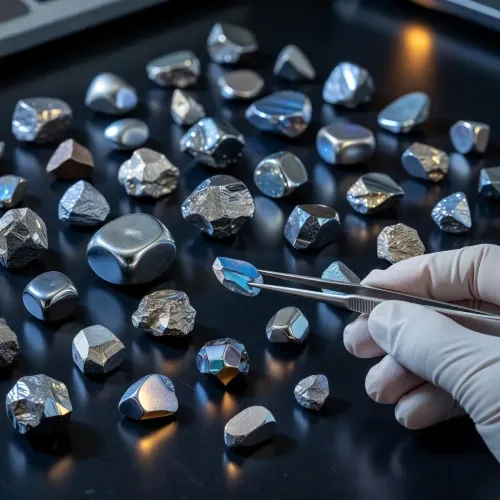
Dysprosium and terbium are essential for their magnetic properties at elevated temperatures and are utilized in high-efficiency electric vehicle motors. These elements rank among the most limited of the rare earth materials.
Japan's objective is to end its dependency on Chinese resources by the end of 2028, as highlighted in the report.
"Should African projects proceed as planned, Japan is anticipated to secure a sufficient supply to fulfill domestic requirements, supplemented by production from Australian and French firms in which JOGMEC and other organizations have invested," the report indicated.
Tokyo is initiating multiple mine developments in Africa and has commenced a bidding process to select developers for these operations. The construction of refining facilities to eliminate impurities post-ore extraction is also under consideration.
The Japanese report acknowledged several challenges to establishing a consistent supply chain, including the financial implications of environmental protection measures.
This strategic move by Japan comes in response to Beijing's stricter export controls on certain rare earth elements, including dysprosium and terbium, following remarks by Japanese Prime Minister Sanae Takaichi in early November regarding a potential Taiwan contingency.
Beijing reacted strongly after Takaichi, recognized for her pro-Taiwan position, asserted before a parliamentary committee on November 7, 2025, that a military strike on Taiwan could pose a 'survival-threatening situation' for Japan, implying a possible involvement of the Japanese Self-Defense Forces.
In January, Japan lodged a diplomatic protest concerning China's operation of mobile drilling rigs in waters along the Japan-China median line in the East China Sea.
Point of View
I present an unbiased perspective on Japan's strategic decision to pursue rare earth mining in Africa. This move not only aims to secure essential resources but also reflects broader geopolitical dynamics amid rising tensions with China. Japan's commitment to reducing dependency on Chinese supplies by 2028 signifies a noteworthy shift in international relations and resource management.
NationPress
13 Oct 2026
Frequently Asked Questions
What rare earth elements is Japan focusing on?
Japan is concentrating on dysprosium and terbium, which are critical for high-performance electric vehicle motors.
Why is Japan seeking to develop mines in Africa?
Japan aims to reduce its dependence on Chinese rare earth supplies, especially after China's tighter export controls.
What is the timeline for Japan's plans?
Japan intends to eliminate reliance on Chinese rare earth supplies by the end of 2028.
What challenges does Japan face in securing these resources?
Japan faces challenges such as the financial burden of environmental protection measures and ensuring a stable supply chain.
How does this situation relate to geopolitical tensions?
Japan's mining initiatives are a direct response to China’s restrictive export policies and rising tensions regarding Taiwan.