Pramila Jayapal at JLF Seattle: Reading is the ultimate act of resistance
Synopsis
At the Jaipur Literature Festival’s third Seattle edition, Congresswoman Pramila Jayapal declared reading ‘the ultimate act of nonviolent resistance’ — naming banned books, criticising White House press restrictions, and linking her own journey from India to the US to a broader fight for democratic free expression.
Key Takeaways
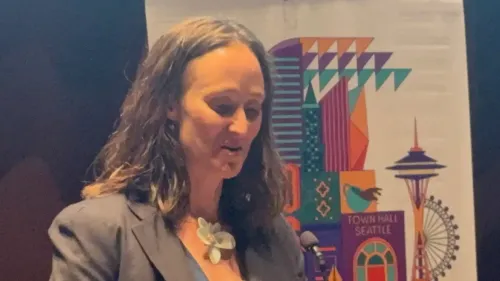
Congresswoman Pramila Jayapal addressed the Jaipur Literature Festival ’s third Seattle edition on 19 September 2026 at the Seattle Public Library .
She declared that ‘to read is the ultimate act of nonviolent resistance,’ calling on audiences to read challenged books and support silenced writers.
Jayapal cited US book bans targeting Toni Morrison’s ‘The Bluest Eye’ , ‘The Kite Runner’ , ‘Milk and Honey’ , and ‘The God of Small Things’ .
She criticised the US president over a reported move to bar CNN , MSNBC , and Politico from the White House.
Jayapal is the first Indian American woman elected to the US House of Representatives and arrived in the US alone at age 16 , becoming a citizen 17 years later.
JLF has expanded to the US, Britain, Spain, the Maldives, and Australia , broadening the reach of Indian and South Asian literary voices.
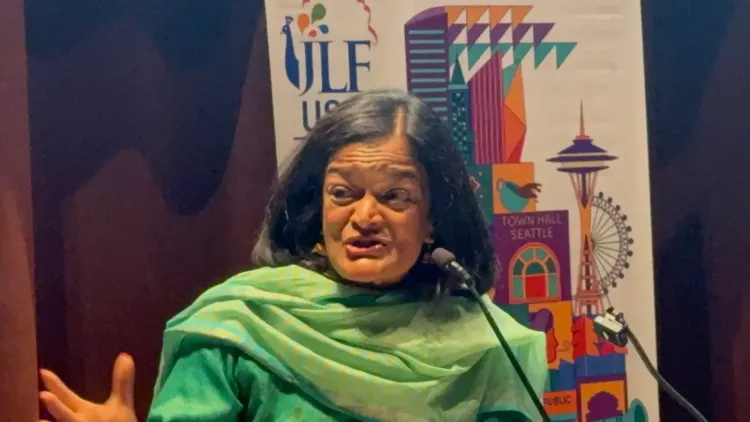
Indian American Congresswoman Pramila Jayapal opened the third Seattle edition of the Jaipur Literature Festival (JLF) on 19 September 2026 with a forceful call to defend free expression, telling the audience at the Seattle Public Library that reading challenged books and amplifying silenced voices were acts of nonviolent resistance against censorship.
“In my mind, to read is the ultimate act of nonviolent resistance,” Jayapal said, framing the literary gathering as a direct response to what she described as mounting restrictions on speech, dissent, and democratic debate in the United States and beyond.
The Case Against Censorship
Jayapal pointed to specific titles that have faced restrictions in the United States, including Toni Morrison’s ‘The Bluest Eye’, ‘The Kite Runner’, ‘Milk and Honey’, and ‘The God of Small Things’. She argued that banning or challenging such works threatens fundamental freedoms and pledged to oppose such moves.
She also criticised the US president over an announcement that she said would bar CNN, MSNBC, and Politico from the White House, describing such actions as emblematic of a broader assault on civil liberties. “We intend to do everything in our power to reclaim our democracy and to refuse to allow our fundamental rights to be shut down,” she said.
Literature as Democratic Infrastructure
For Jayapal, the festival was more than a literary event — it was, she argued, a structural defence of democratic dialogue. “It critiques powerful institutions and it expands the boundaries of our dialogue and our thinking,” she said of literature. “It refuses to let anyone muzzle our imagination so that we can truly begin to share ourselves and our journey forward.”
Alongside voting and community organising, she urged attendees to keep reading, share their own experiences, and actively engage with stories from writers whose voices are being suppressed. “It is our home for exchanging ideas and for dreaming the impossible,” she said of the festival.
A Personal Story: Migration, Identity, and Writing
Jayapal’s remarks carried deep personal resonance. She recalled arriving in the United States alone at the age of 16, driven by her parents’ belief that the country would offer her opportunity and the freedom to be herself. Her path to US citizenship took 17 years.
Years later, she returned to India and spent two years living in villages, exploring her relationship with her birthplace and her sense of identity. That journey became her first book, ‘Pilgrimage to India: A Woman Revisits Her Homeland’, published by Seattle’s Seal Press and later by Penguin India. She also discussed her second book, ‘Use the Power You Have: A Brown Woman’s Guide to Politics and Political Change’, expressing hope that it could encourage women to recognise and exercise their own political influence.
Notably, Jayapal is the first Indian American woman elected to the US House of Representatives, and her personal narrative of migration and return to India has remained central to both her political identity and her writing.
JLF’s Global Footprint and Seattle’s Literary Scene
Jayapal welcomed the festival’s expansion beyond its Jaipur origins to the United States, Britain, Spain, the Maldives, and Australia, saying it had brought Indian and South Asian authors, filmmakers, and artists to new international audiences. She also celebrated Seattle’s independent bookshops, small presses, and writing community, describing them as essential to the city’s literary life and thanking festival organisers and the Seattle Public Library for hosting the event.
With book bans accelerating across multiple US states and press freedom concerns growing globally, the festival’s Seattle edition arrives at a moment when the intersection of literature, democracy, and dissent has rarely felt more urgent.
Point of View
A festival born in Jaipur, and a diaspora congresswoman using both to make a case for pluralism in American democracy. The JLF’s global spread also signals a soft-power dimension that India’s cultural institutions have rarely managed to project so organically. Whether literary solidarity translates into durable political resistance against censorship is a harder question — but Jayapal’s speech ensures the conversation travels well beyond Seattle.
NationPress
19 Sept 2026
Frequently Asked Questions
What did Pramila Jayapal say at the Jaipur Literature Festival in Seattle?
Congresswoman Pramila Jayapal told the Jaipur Literature Festival’s third Seattle edition that ‘to read is the ultimate act of nonviolent resistance,’ urging attendees to read challenged books and support suppressed writers. She condemned US book bans and what she described as growing restrictions on press freedom and democratic debate.
Which books did Pramila Jayapal say were being banned or restricted in the US?
Jayapal cited Toni Morrison’s ‘The Bluest Eye’, ‘The Kite Runner’, ‘Milk and Honey’, and ‘The God of Small Things’ as examples of books facing restrictions in the United States. She argued such bans threatened fundamental freedoms and pledged to oppose them.
What is the Jaipur Literature Festival’s Seattle edition?
The Jaipur Literature Festival (JLF) Seattle is an international offshoot of the flagship Jaipur festival in India, held at the Seattle Public Library. The 2026 gathering was its third Seattle edition, and the festival has since expanded to the US, Britain, Spain, the Maldives, and Australia.
What is Pramila Jayapal’s personal connection to India and literature?
Jayapal arrived in the United States alone at 16 and spent 17 years becoming a US citizen. She later returned to India for two years, living in villages and exploring her identity, an experience she documented in her first book, ‘Pilgrimage to India: A Woman Revisits Her Homeland’, published by Seal Press and Penguin India.
Who is Pramila Jayapal?
Pramila Jayapal is the first Indian American woman elected to the US House of Representatives. Born in India, she migrated to the United States at 16 and has become a prominent progressive congresswoman representing a Seattle-area district.