Karwa Chauth 2026 in Atlanta: Indian American women find home in community
Synopsis
Thousands of miles from home, Indian American women in Atlanta turned the Karwa Chauth fast into a community ritual — with 30-year veterans, newlyweds, and even women from Pakistan all gathering at the Sadhana temple. The scene captures how the Indian diaspora keeps cultural identity alive not through proximity to family, but through the bonds built in adopted homes.
Key Takeaways
Dozens of Indian American women observed Karwa Chauth at the Sadhana temple in Atlanta on 30 October 2026 .
Participants included women who have attended the gathering for 15 to 20 years , as well as first-time celebrants marking their entry into married life.
Women from Pakistan also joined the observance, reflecting the tradition's cross-border resonance within the diaspora.
Attendees noted that ritual items for the celebration are now readily available locally in the United States .
Karwa Chauth is a fast observed by married Hindu women, primarily from northern India, praying for their husbands' long lives.
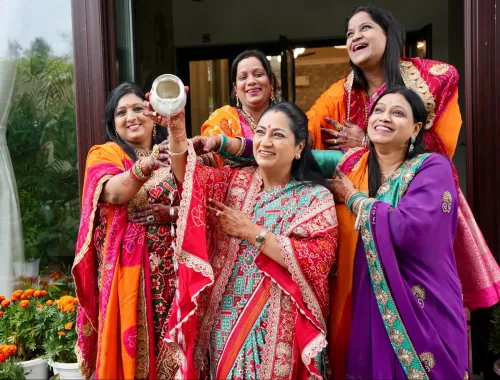
Dozens of Indian American women gathered at a temple in Atlanta on 30 October to observe Karwa Chauth, finding in shared ritual and friendship a way to bridge the distance from families back in India. The celebration at the Sadhana temple brought together women dressed in vibrant traditional attire, carrying decorated prayer plates and continuing customs that many have maintained for years — sometimes for decades — on American soil.
Familiar Rituals, New Roots
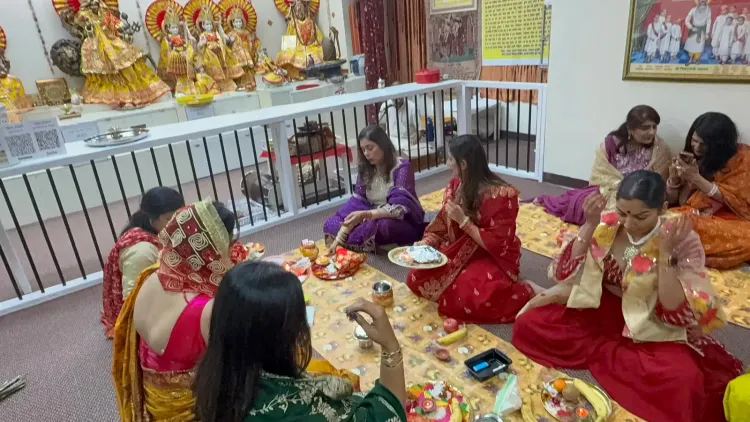
Inside the temple, participants sat facing one another on the floor, prayer plates in hand, small flames burning from oil lamps before them. Fruit, flowers, and ornate vessels completed the arrangement. Women wore embroidered dupattas draped over their heads, bangles on their wrists, and intricate henna patterns on their hands. The colours spanning the room — deep red, purple, pink, and bright green — reflected the festivity of the occasion. Behind the gathering stood a richly decorated altar housing the deities.
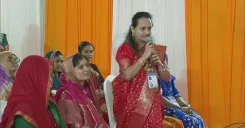
For several attendees, the Sadhana temple gathering has become an annual anchor. One woman, who said she had lived in the United States for 30 years, noted that the items required for the celebration are now readily available locally and that observing Indian festivals keeps her connected to her roots. 'I think we're able to come together as a community and still perform all the rituals and traditions,' a participant said.
Voices from the Gathering
The range of personal stories at the event illustrated both the continuity and adaptability of the tradition. Neha, one of the participants, said the celebration closely mirrored what is done in India, adding candidly: 'But we do miss the family.' Jaya, originally from Delhi, pointed to friendships as the remedy: 'We have friends. So we come together.'
Another attendee, who described attending the gathering for 15 to 20 years, praised the temple's consistent effort: 'The puja was very well done, as always. They've done always an amazing job.' The spirit of the occasion extended to some good-natured levity about the tradition of fasting: 'All of us are always looking forward to getting good gifts from our husbands,' one participant said, drawing laughter from the group.
Newlyweds Mark Their First Karwa Chauth Abroad
The celebration also drew women who are new to the festival. Kiran, who described herself as a newlywed, said it was her first time observing Karwa Chauth. Her companion, Ashwini, marked her second celebration and described the observance as a prayer for a husband's long life, invoking the devotion associated with Shiva and Parvati. Both women acknowledged the absence of their mothers-in-law — a reminder that even in community, some familial threads remain separated by distance.
Notably, the gathering also included women who said they were from Pakistan, adding another dimension to the shared practice of observing a tradition far from home.
About Karwa Chauth
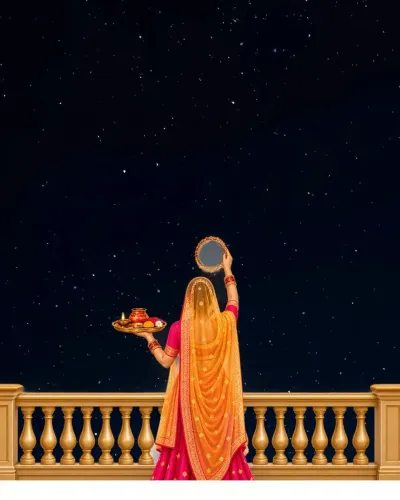
Karwa Chauth is observed primarily by married Hindu women, especially in northern India, who fast through the day for their husbands' long life and well-being. Evening rituals traditionally include sighting the moon through a sieve before breaking the fast — a practice handed down across generations. Preparations typically involve henna, festive clothing, and elaborately arranged prayer plates. The Atlanta gathering reflects a broader pattern seen across the Indian diaspora, where religious and cultural celebrations serve as communal anchors in a life built far from family.
Point of View
Rather than India-to-diaspora, marks a quiet but significant shift in how Indian culture travels. The inclusion of Pakistani women also points to a social truth that political borders rarely capture: shared traditions outlast the maps drawn around them.
NationPress
30 Oct 2026
Frequently Asked Questions
Where was Karwa Chauth celebrated in Atlanta?
The celebration took place at the Sadhana temple in Atlanta on 30 October 2026. Dozens of Indian American women gathered there to observe the fast and perform traditional rituals together.
What is Karwa Chauth and how is it observed?
Karwa Chauth is a fast observed primarily by married Hindu women, especially in northern India, praying for their husbands' long life and well-being. The day-long fast ends in the evening after the celebrant sights the moon through a sieve, a ritual passed down through generations.
How do Indian Americans maintain the Karwa Chauth tradition abroad?
Many Indian Americans recreate the festival by gathering at temples and community spaces, continuing rituals such as henna, festive dressing, and lamp-lit prayer plates. Participants in Atlanta noted that the items needed for the celebration are now easily available in the United States.
Who attended the Atlanta Karwa Chauth gathering?
Attendees ranged from long-time US residents who have observed the festival at the Sadhana temple for 15 to 20 years, to newlyweds celebrating for the first time. Women who identified as being from Pakistan were also part of the gathering.
Why does the Atlanta celebration matter for the Indian diaspora?
It illustrates how cultural and religious traditions are sustained and transmitted within diaspora communities, often without direct family links to India. The gathering shows the festival evolving into a community-anchored practice rather than a purely family-based one.