What Are the Human Rights Concerns in Khyber Pakhtunkhwa?
Synopsis
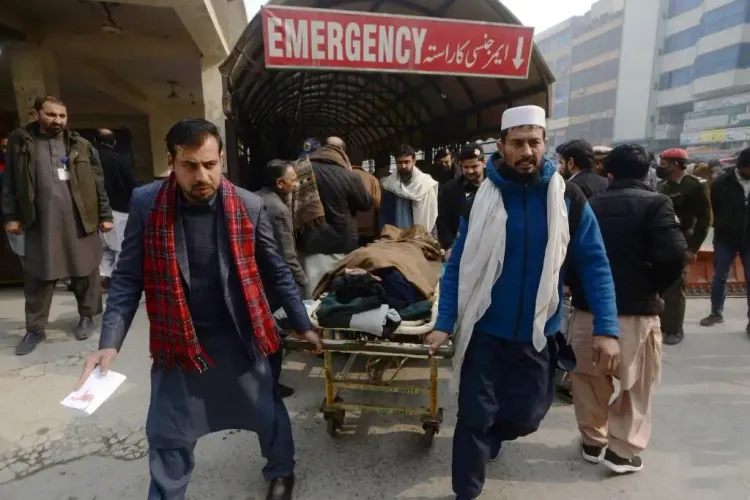
The Human Rights Commission of Pakistan has raised alarming concerns about the deteriorating security situation in Khyber Pakhtunkhwa, citing a surge in violent militant attacks and ongoing issues such as enforced disappearances and intimidation of journalists. This report sheds light on the precarious state of the region and its implications for democracy and civil rights.
Key Takeaways
Khyber Pakhtunkhwa is facing a severe security crisis marked by increasing militant attacks.
The HRCP emphasizes the need for accountability regarding enforced disappearances.
Political victimization threatens the integrity of democratic movements.
Journalists covering sensitive issues are at risk of censorship and violence.
The situation necessitates urgent attention from national and international bodies.
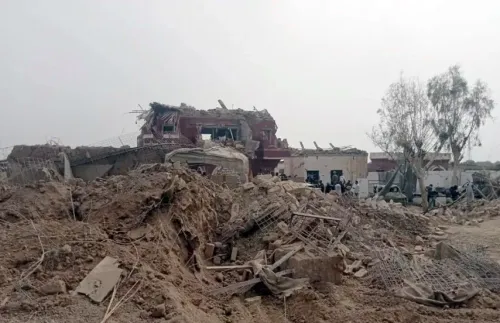
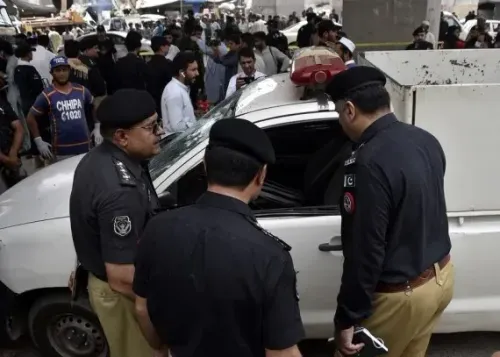
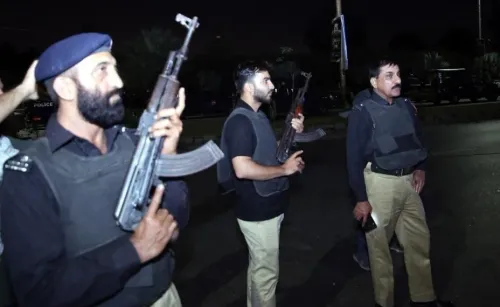
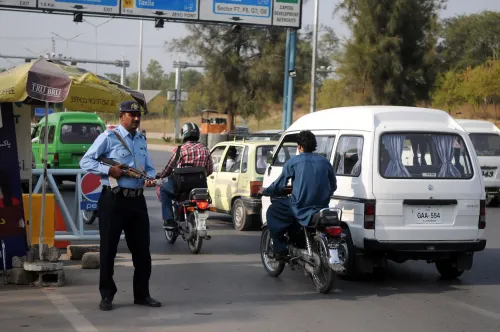
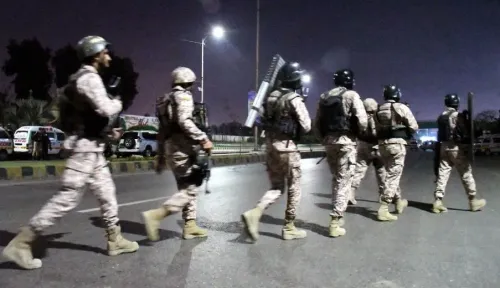
Islamabad, Jan 1 (NationPress) The Human Rights Commission of Pakistan (HRCP) has voiced serious concerns regarding the security and law and order conditions in Khyber Pakhtunkhwa province throughout 2025. The area is alarmingly unstable, experiencing frequent militant attacks.
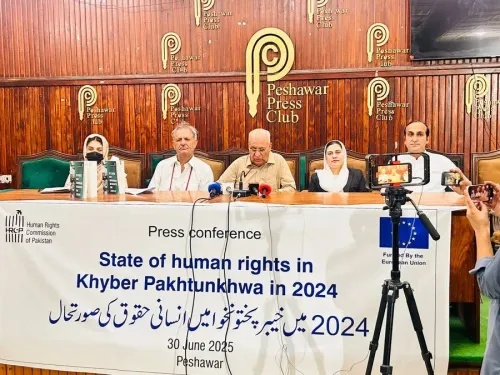
Referencing the Islamabad-based Pakistan Institute for Conflict and Security Studies, the HRCP in its recent report titled 'Caught in the Crossfire: Civilians, Security and the Crisis of Justice in Khyber Pakhtunkhwa's Merged Districts' highlighted that at least 82 militant attacks occurred nationwide in July 2025 alone, with Khyber Pakhtunkhwa, including its former tribal districts, accounting for nearly two-thirds of this total.
Furthermore, 45 militant attacks were recorded in the province in September 2025, resulting in the deaths of 54 individuals and injuring 49 others.
Among these incidents in September, the merged districts of the province “accounted for 20 militant attacks, claiming 21 lives,” which included six Pakistani security personnel, three militants, and 12 civilians, with seven others injured.
The HRCP reported that Mian Iftikhar Hussain, the President of the Awami National Party (ANP) in Khyber Pakhtunkhwa, characterized the security landscape as significantly more perilous than commonly believed. He noted that multiple militant organizations are active not only in the merged districts but also in settled areas of the province, with the terrorist group Daesh reportedly operating in the vicinity.
Similarly, the provincial president of the Qaumi Watan Party (QWP), Sikandar Sherpao, stated that “around 550 incidents of violence have transpired since January 2025, primarily in the merged districts.” The HRCP noted Sherpao’s remark that while “actual militant actors” exist in the area, they are now joined by “copycat groups and hardened criminal networks, intensifying law-and-order challenges.”
Sherpao also pointed out that the conditions in Waziristan and the Bajaur region in Khyber Pakhtunkhwa are particularly dire, asserting that the influence of the terror organization Daesh or Islamic State Khorasan Province is “expanding to the extent that civil servants and police personnel feel forced to seek refuge by late afternoon.”
The HRCP mission further emphasized that the ongoing practice of enforced disappearances remains a pressing issue.
“The testimonies collected by the mission suggest that individuals accused of ‘anti-state’ activities are often not presented before the courts in alignment with constitutional guarantees. The mission observes that the reported political victimization of rights-based movements such as the PTM (including arbitrary restrictions on members’ freedom of movement and assembly) and progressive parties like the ANP is harmful to democratic processes,” stated the rights body.
The HRCP also raised alarms regarding reports of “censorship, intimidation, and targeted assaults against journalists, particularly those reporting on enforced disappearances and militant violence” in the province.
Point of View
It is imperative to approach the alarming situation in Khyber Pakhtunkhwa with a balanced perspective. The ongoing violence poses significant threats not only to the rule of law but also to democratic integrity. Our commitment to reporting on these issues underscores the importance of accountability and transparency in governance. The safety and rights of citizens must remain paramount in the discourse surrounding this region.
NationPress
29 Sept 2026
Frequently Asked Questions
What is the current security situation in Khyber Pakhtunkhwa?
The security situation in Khyber Pakhtunkhwa is highly unstable, with frequent militant attacks reported throughout 2025.
How many militant attacks were reported in July 2025?
At least 82 militant attacks occurred nationwide in July 2025, with Khyber Pakhtunkhwa accounting for a significant portion.
What concerns have been raised regarding enforced disappearances?
The HRCP has highlighted ongoing enforced disappearances, indicating that individuals accused of 'anti-state' activities are frequently not presented in court.
What impact does violence have on journalists in the region?
There are alarming reports of censorship and targeted attacks against journalists covering enforced disappearances and militant violence.
What are the implications for democracy in Khyber Pakhtunkhwa?
The reported political victimization of rights-based movements and progressive parties poses a significant threat to democratic processes in the province.