Korean language schools overseas surge 54% in four years amid Hallyu wave
Synopsis
Korean-language education has gone global in a measurable way: overseas schools teaching Korean surged 54% in four years to 2,777 across 47 countries, with student enrolment up 38% to over 2.36 lakh. Oxford University's planned Korean studies centre, expected by October 2025, is the latest signal that the Hallyu wave has moved from pop culture into serious academic infrastructure.
Key Takeaways
Overseas schools offering Korean-language classes rose 54% from 1,806 in 2021 to 2,777 by end- 2024 .
Student enrolment in these schools grew 38% to 2,36,089 over the same period.
Korean is now taught in 47 countries , up from 42 in 2021; Uzbekistan added the most schools ( 68 ) between 2024 and 2025.
Oxford University plans to open the Oxford Centre for Korean Studies as early as October 2025 , following faculty approval in March 2025.
South Korea's education ministry credits the surge to Korean cultural influence, demand for studying in South Korea, and government financial support.
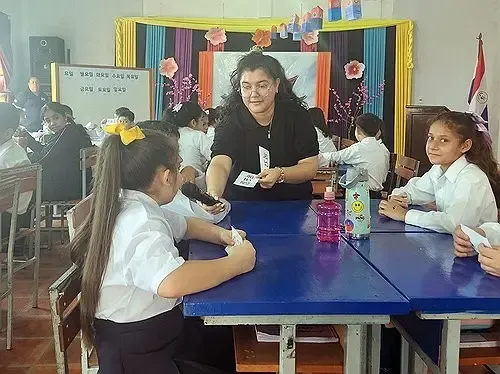
The number of schools overseas teaching the Korean language jumped 54 per cent over the last four years, rising from 1,806 in 2021 to 2,777 by the end of 2024, according to data cited by Rep. Kim Moon-soo of South Korea's ruling Democratic Party on Sunday, 10 May 2025. The lawmaker attributed the growth to the rising global popularity of Korean culture, increased demand for studying in South Korea, and active government support.
Year-on-Year Growth
The number of overseas schools offering Korean-language classes grew steadily each year — from 1,806 in 2021 to 1,928 in 2022, 2,154 in 2023, and 2,526 in 2024, before reaching 2,777 at the close of last year, a 9.9 per cent increase from 2024 alone. Over the same four-year period, the number of students enrolled in Korean-language classes at these schools rose 38 per cent to 2,36,089.
Which Countries Are Leading the Expansion
Korean-language programmes are now offered in 47 countries, up from 42 in 2021. Between 2024 and 2025, Uzbekistan recorded the highest addition with 68 new schools, followed by Sri Lanka with 43, Vietnam with 37, and the Philippines with 26. The spread across Central Asia and Southeast Asia underscores Korean culture's reach well beyond its traditional strongholds in East Asia.
What the South Korean Government Says
South Korea's education ministry attributed the increase to three key factors: the global influence of Korean pop culture and entertainment, growing demand among international students to pursue higher education in South Korea, and the government's sustained financial support covering Korean-language classes, textbooks, and teaching staff. This support has been part of a broader soft-power strategy that Seoul has pursued alongside the rise of K-pop, K-drama, and Korean cinema on the world stage.
Oxford University Joins the Movement
In a significant institutional endorsement of Korean studies, Oxford University announced plans in April 2025 to launch the Oxford Centre for Korean Studies as early as October 2025. The centre, which received final faculty approval in March 2025, is being led by professors Jieun Kiaer, James Lewis, and Chi Young-hae from Oxford's Korean studies programme. It was formally announced during the public opening of Oxford's Stephen A. Schwarzman Centre for the Humanities. The centre will oversee Korea-related research and lectures, and promote further work in modern Korean politics, economy, and literature. Notably, Oxford established centres for Japanese studies in 1981 and Chinese studies in 2008 — making the Korean centre the latest in a line of East Asian academic institutions at one of the world's most prestigious universities.
The Bigger Picture
The data reflects a decade-long cultural shift driven by the global Hallyu — or Korean Wave — phenomenon, which has seen South Korean entertainment, food, fashion, and language gain mainstream audiences across continents. The sustained institutional expansion, from government-backed school programmes to an Oxford research centre, signals that Korean language learning is no longer a niche interest but a structured academic and cultural priority worldwide. With demand still growing, analysts expect the number of Korean-language schools to continue rising through the decade.
Point of View
This expansion is partly state-engineered through textbook funding, teaching staff support, and diplomatic outreach. What is striking is the geographic spread: Uzbekistan, Sri Lanka, and the Philippines are not traditional Hallyu hubs, suggesting the wave has moved into second-tier markets. Oxford's entry into Korean studies is the clearest elite-institutional validation yet — and it will likely accelerate demand further. The question for Seoul is whether its education infrastructure at home can absorb the international students this pipeline is generating.
NationPress
23 Sept 2026
Frequently Asked Questions
By how much have Korean language schools overseas grown?
The number of overseas schools teaching Korean rose 54% over four years, from 1,806 in 2021 to 2,777 by the end of 2024, according to data cited by South Korean lawmaker Rep. Kim Moon-soo. Student enrolment at these schools also grew 38% to 2,36,089 over the same period.
Which countries added the most Korean language schools recently?
Between 2024 and 2025, Uzbekistan added the most schools at 68, followed by Sri Lanka with 43, Vietnam with 37, and the Philippines with 26. Korean is now offered in 47 countries, up from 42 in 2021.
Why is the number of Korean language schools growing globally?
South Korea's education ministry attributes the growth to the global influence of Korean culture — including K-pop and K-drama — rising demand to study in South Korea, and the government's financial support for Korean classes, textbooks, and teachers.
What is the Oxford Centre for Korean Studies?
It is a new academic centre at Oxford University, expected to launch as early as October 2025, that will oversee Korea-related research and lectures on modern Korean politics, economy, and literature. It received final faculty approval in March 2025 and is led by professors Jieun Kiaer, James Lewis, and Chi Young-hae.
How does the Oxford Korean studies centre compare to similar centres at the university?
Oxford established a centre for Japanese studies in 1981 and one for Chinese studies in 2008. The Korean studies centre is the latest addition in this East Asian academic series, reflecting Korean culture's growing global academic standing.