Are Lawmakers Sufficiently Prioritizing the Quad in US Indo-Pacific Strategy?
Synopsis
In a critical hearing, lawmakers scrutinized the Quad's role in the US Indo-Pacific strategy, expressing concerns over its limited mentions in the national security strategy. Assistant Secretary Paul Kapur defended the Quad's significance as a key platform in balancing China's influence and emphasized India's crucial role in regional stability.
Key Takeaways
Quad's Significance: Recognized as a crucial platform for balancing China's influence.
Bipartisan Support: Lawmakers from both parties agree on the importance of the Quad.
India's Role: Central to the Quad's strategic initiatives in the region.
Regional Stability: Focus on preventing any single power from dominating the Indo-Pacific.
Historical Context: Quad has evolved significantly since its revival in 2017.
Washington, Feb 12 (NationPress) Lawmakers raised concerns regarding the importance of the Quad within the United States' Indo-Pacific strategy, as the State Department defended the coalition as a critical platform vital for counterbalancing China's influence.
During a House subcommittee hearing focused on South and Central Asia on Wednesday (local time), Democratic Ranking Member Sydney Kamlager-Dove expressed worry that the Quad was mentioned only twice in the 2025 national security strategy.
“I hope you can emphasize, in your role, the significance of the Quad and its strategic importance to the work we’re striving to accomplish in the region,” she stated to Assistant Secretary of State for South and Central Asian Affairs Paul Kapur.
Kapur countered the notion that the administration was minimizing the grouping's significance.
“I believe the Quad is a very significant platform,” he noted, adding that it was revitalized “during the first Trump administration” after a period of inactivity.
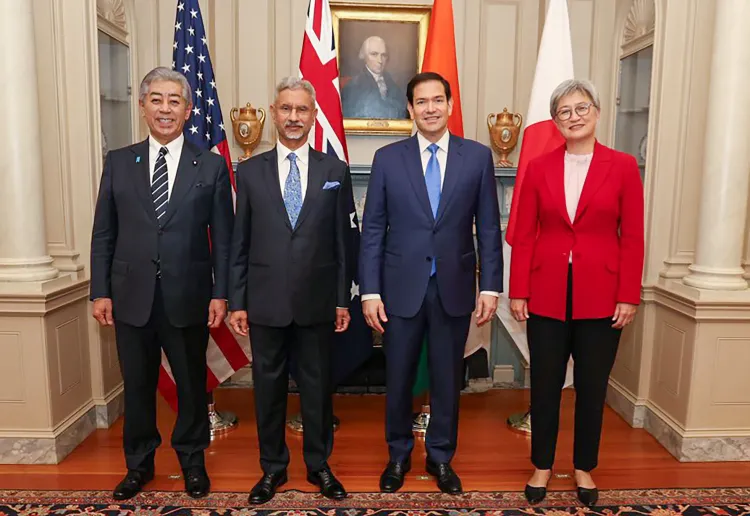
He emphasized that the Quad, which includes the United States, India, Japan, and Australia, “has gained importance since then” and “allows us to connect and collaborate in unique ways with our like-minded partners.”
Kapur explicitly linked the group to larger strategic goals in the Indo-Pacific.
“Our fundamental objective is not to exclude China from the region but to ensure that no single hegemon can dominate or exert coercive influence over it,” he elaborated.
In this context, India's role is crucial. “India has been an active participant in the Quad, and we engage with India both bilaterally and within the Quad framework, which I believe presents a promising opportunity for cooperation,” Kapur added.
Republican Rep. Keith Self further pressed, questioning whether the Quad was assertive enough in its stance against Beijing.
“Are they aggressive in the Quad?” Self inquired.
“I wouldn’t characterize them as aggressive, but they are significant members of the Quad,” Kapur replied.
This exchange highlighted the differing expectations within Congress regarding the Quad's assertiveness in response to China's expanding military and economic presence in the Indo-Pacific.
Earlier in the hearing, Kapur framed the US regional policy as focused on preventing any single power from dominating South Asia and the Indian Ocean.
“An independent India that can preserve its freedom of action effectively removes a substantial portion of the Indo-Pacific from China's influence, thereby preventing it from becoming the dominant force in the region,” he stated.
Lawmakers from both parties indicated bipartisan agreement on the overall strategy.
“This type of strategic thinking has persisted through both Democratic and Republican administrations,” Democratic Rep. Ami Bera remarked.
Kapur concluded the discussion by underscoring the early diplomatic initiatives under the current administration.
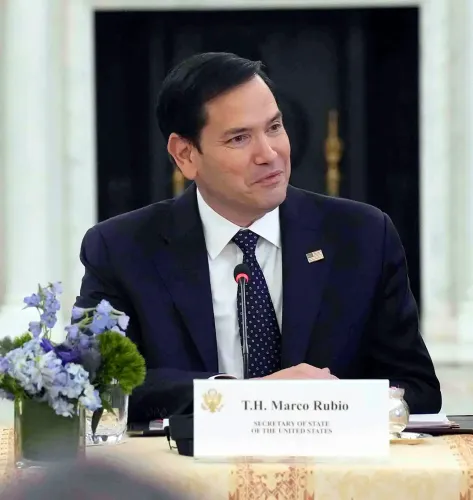
“The Quad holds great importance for us, and Secretary Rubio's first engagement as Secretary of State was indeed a Quad engagement,” he mentioned.
Originally launched in 2007, the Quad lapsed for nearly ten years before being revived in 2017. It has since developed into a central mechanism for Indo-Pacific coordination on maritime security, technological collaboration, and regional resilience amid escalating strategic competition with China.
Point of View
I recognize the importance of the Quad in shaping US foreign policy in the Indo-Pacific. It is crucial for lawmakers to ensure that strategic alliances are prioritized to effectively counterbalance rising global powers. The bipartisan support for the Quad reflects a unified approach towards maintaining regional stability and security.
NationPress
30 Sept 2026
Frequently Asked Questions
Why is the Quad important?
The Quad is significant for balancing China's influence in the Indo-Pacific and promoting regional security, maritime cooperation, and economic resilience among its member nations.
How does the US view its relationship with India in the Quad?
The US views India as a crucial partner within the Quad, emphasizing bilateral engagement and collaboration to enhance regional stability and counterbalance adversarial influences.
What challenges does the Quad face?
The Quad faces challenges such as differing strategic expectations among member countries and the need for a cohesive approach to counter China's expanding influence.
Is there bipartisan support for the Quad in Congress?
Yes, there is bipartisan support for the Quad's role in US foreign policy, with lawmakers from both parties recognizing its importance in maintaining regional security.