South Korea's Lee Hosts Cross-Party Luncheon Wednesday
Synopsis
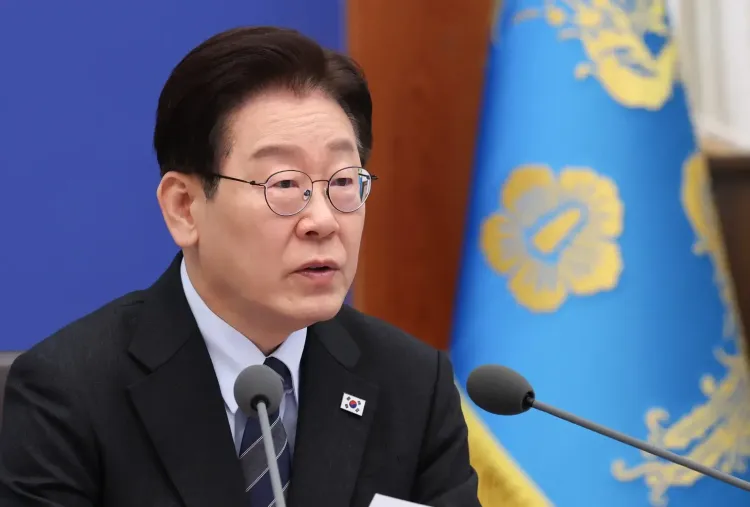
South Korean President Lee Jae Myung will host minor party and independent lawmakers for a policy luncheon on Wednesday, pushing prosecution reform and real estate legislation — just days after returning from a landmark India-Vietnam tour aimed at doubling bilateral trade and securing critical mineral supply chains.
Key Takeaways
President Lee Jae Myung will host a cross-party luncheon on Wednesday, April 30, 2025 , with minor party and independent lawmakers from the National Assembly .
Participants include lawmakers from five non-negotiating parties , including the Rebuilding Korea Party and New Reform Party , plus independents.
Lee will push for legislative cooperation on prosecution reform , real estate policy , and economy-related bills at the meeting.
A similar luncheon was held in January 2025 , establishing this as a recurring outreach strategy by the president.
Lee returned on April 25 from a six-day India-Vietnam tour where he agreed to target USD 50 billion in bilateral trade with India by 2030 , up from the current USD 25 billion .
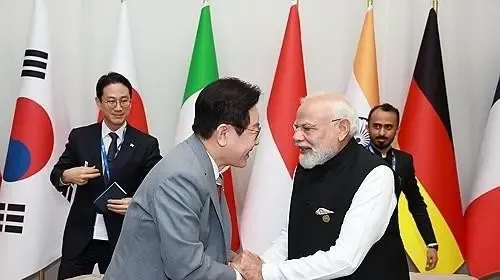
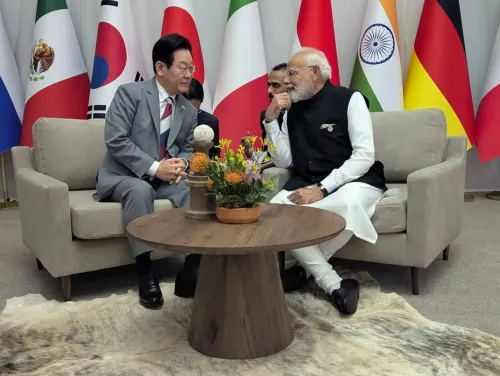
On April 20 , Lee and Indian PM Narendra Modi agreed to fast-track an upgrade to the Comprehensive Economic Partnership Agreement (CEPA) covering critical minerals, AI, and energy.
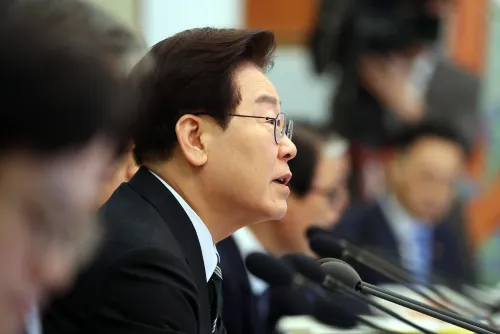
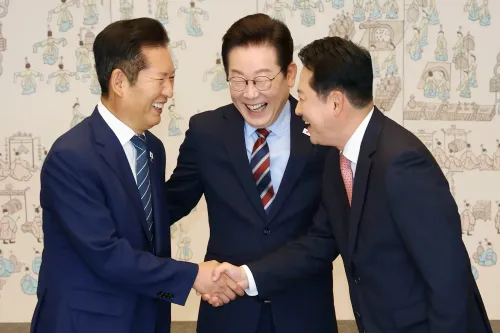
South Korean President Lee Jae Myung is set to host a cross-party luncheon on Wednesday, April 30, bringing together lawmakers from five non-negotiating minor parties and independent members of the National Assembly, the presidential office Cheong Wa Dae confirmed on Sunday, April 27. The meeting signals Lee's continued effort to build legislative consensus outside the dominant party blocs.
Who's Invited and What's on the Agenda
Presidential spokesperson Kang Yu-jung confirmed that participants will include lawmakers from five non-negotiating parties, among them the Rebuilding Korea Party and the New Reform Party, alongside independent legislators. The exact time and venue are yet to be officially announced.
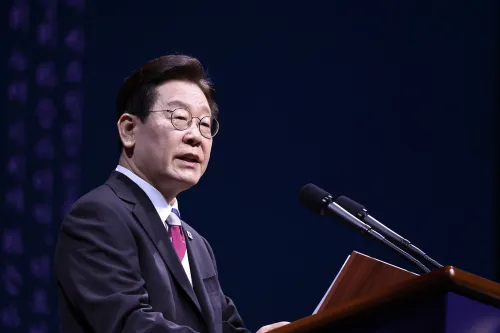
At the meeting, President Lee is expected to lay out his policy direction on critical national issues, particularly prosecution reform and real estate policy — two of the most politically charged debates in South Korea today. He will also seek legislative cooperation on matters directly affecting people's livelihoods and the broader economy, according to Yonhap News Agency.
Pattern of Outreach: January Precedent
This is not the first time Lee Jae Myung has reached out to smaller political forces. He previously hosted a similar luncheon with leaders of the five minor parties at the presidential office in January 2025, establishing a pattern of inclusive dialogue that bypasses the gridlock often seen between major parties.
Political analysts note that this strategy reflects Lee's awareness that pushing through contentious legislation — especially on prosecution reform — requires broader parliamentary support beyond his own party base. The move is seen as both pragmatic coalition-building and a signal to voters that his administration prioritises governance over partisan warfare.
Lee Returns from India-Vietnam Diplomatic Tour
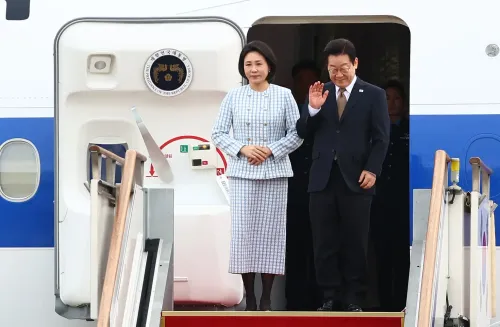
The domestic outreach comes just days after President Lee returned home on Friday, April 25, from a high-stakes six-day diplomatic tour covering India and Vietnam — two nations increasingly central to South Korea's strategic diversification away from supply chain vulnerabilities exposed by the Middle East conflict.
On April 20, Lee held a bilateral summit with Indian Prime Minister Narendra Modi in New Delhi, where both leaders agreed to deepen cooperation in critical minerals, energy, artificial intelligence, finance, and shipbuilding. The two sides also pledged to fast-track an upgrade to their Comprehensive Economic Partnership Agreement (CEPA), with a shared target of doubling bilateral trade from the current USD 25 billion to USD 50 billion by 2030.
On April 22, Lee met Vietnamese top leader To Lam in Hanoi, agreeing to strengthen ties across energy, infrastructure, and technology, and to enhance supply chain coordination. The following day, he held back-to-back sessions with Vietnamese Prime Minister Le Minh Hung and Vietnamese National Assembly Chairman Tran Thanh Man to advance bilateral relations further.
Strategic Significance: Domestic and Global Dimensions
The juxtaposition of Lee's foreign policy activism and domestic legislative outreach reveals a president navigating on two fronts simultaneously. Abroad, he is repositioning South Korea as a key partner in Asia's evolving economic architecture, particularly as global supply chains are being rewired away from overreliance on single-source dependencies.
At home, the push for prosecution reform carries personal and political weight — Lee himself has faced legal scrutiny in the past, making this reform a deeply contested issue that critics say blurs the line between national interest and personal interest. His opponents argue the reform is designed to curtail prosecutorial independence, while his supporters frame it as dismantling an overly powerful and politically weaponised institution.
The real estate policy dimension is equally significant. Housing affordability has been a persistent flashpoint in South Korean politics, with successive governments failing to cool an overheated market. Lee's ability to legislate meaningful reform here could define his domestic legacy.
What to Watch Next
With the Wednesday luncheon confirmed and the exact venue pending, attention will now focus on whether the minor parties and independents signal any willingness to back the administration's legislative priorities. Any commitments made at the table could accelerate the timeline on both prosecution reform and real estate legislation — two bills that have stalled in the National Assembly amid fierce opposition. The coming weeks will be a critical test of Lee's coalition-building strategy and his ability to translate diplomatic momentum abroad into legislative wins at home.
Point of View
In particular, remains a double-edged sword — framed as institutional reform by supporters but viewed as self-serving by critics who note Lee's own legal history. The real test of his presidency will be whether he can convert diplomatic goodwill into legislative results, or whether South Korea's fractured parliament continues to frustrate even the most active of presidents.
NationPress
19 Sept 2026
Frequently Asked Questions
Who will attend President Lee Jae Myung's Wednesday luncheon?
Lawmakers from five non-negotiating minor parties — including the Rebuilding Korea Party and New Reform Party — along with independent members of the National Assembly will attend. The exact time and venue are yet to be announced by the presidential office.
What issues will President Lee discuss at the cross-party luncheon?
President Lee is expected to outline his policy direction on prosecution reform and real estate policy, and seek legislative cooperation on economy and livelihood-related bills. These are among the most politically sensitive issues currently before South Korea's National Assembly.
What did President Lee achieve during his India and Vietnam visit?
During his six-day tour, Lee secured agreements with India to cooperate on critical minerals, AI, energy, and shipbuilding, with a target of doubling bilateral trade to USD 50 billion by 2030. In Vietnam, he agreed on closer ties in energy, infrastructure, and supply chain coordination.
Has President Lee hosted similar cross-party meetings before?
Yes, President Lee hosted a luncheon with leaders of five minor parties at the presidential office in January 2025. The Wednesday meeting follows the same format, reflecting a consistent strategy of outreach beyond the dominant party blocs.
Why is prosecution reform controversial in South Korea?
Prosecution reform is a deeply divisive issue in South Korea, with critics arguing it would weaken the independence of prosecutors who have historically investigated powerful political figures. Opponents of President Lee specifically contend the reform could benefit him given his own past legal challenges.