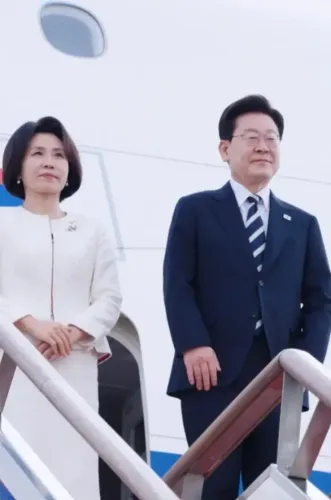
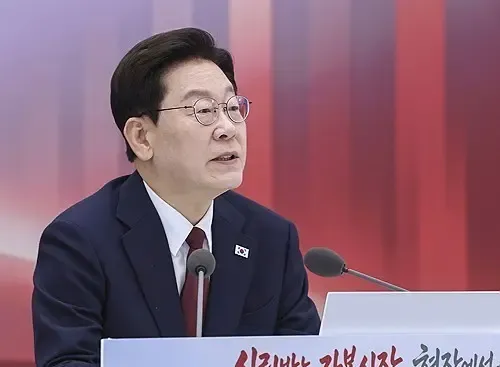
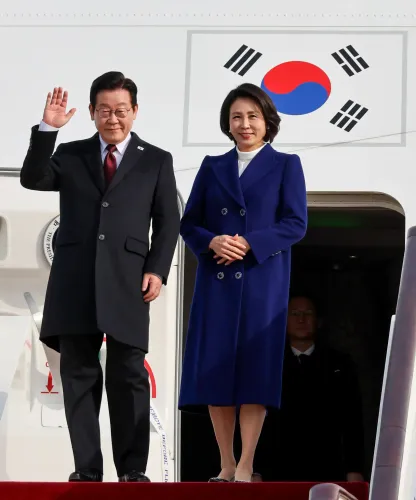
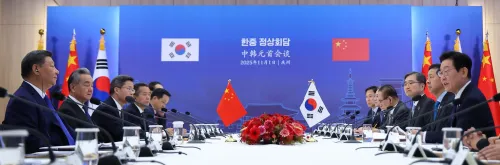
Lee, Putin agree to ease Korean Peninsula tensions at APEC Shenzhen
Synopsis
On the sidelines of APEC Shenzhen, South Korean President Lee Jae Myung held his first face-to-face meeting with Putin since taking office — a 10-minute exchange that underscores Seoul's urgent bid to stay relevant as Trump, Xi, and Putin prepare a historic trilateral that could reshape Korean Peninsula security without South Korea in the room.
Key Takeaways
Lee Jae Myung and Vladimir Putin met for 10 minutes at the APEC summit in Shenzhen on Wednesday — Lee's first in-person meeting with Putin since taking office in June last year .
The two leaders agreed to pursue cooperation 'in areas where there are no obstacles' and to work to ease tensions on the Korean Peninsula .
The meeting came one day before a landmark trilateral summit among Trump, Xi, and Putin expected to cover North Korea's nuclear ambitions , Ukraine, and arms reduction.
Seoul-Moscow ties have deteriorated sharply after North Korea dispatched troops to fight alongside Russian forces in Ukraine .
Cheong Wa Dae has insisted that South Korea's interests must be 'sufficiently reflected' in any Korean Peninsula discussions at the APEC summit.
The possibility of a Trump-Kim Jong-un sideline meeting at APEC remains unconfirmed, according to Seoul officials.
South Korean President Lee Jae Myung and Russian President Vladimir Putin held a brief bilateral meeting on the sidelines of the Asia-Pacific Economic Cooperation (APEC) summit in Shenzhen, China on Wednesday, agreeing to pursue cooperation where possible and work to prevent further deterioration of the security situation on the Korean Peninsula. The 10-minute meeting — Lee's first in-person encounter with Putin since taking office in June last year — came after a welcome dinner hosted by Chinese President Xi Jinping on the first day of the annual APEC leaders' gathering.
What the Two Leaders Agreed
A senior Seoul official, speaking on the condition of anonymity, described the exchange as constructive but cautious. '(Lee and Putin) reached a broad understanding that South Korea and Russia would pursue cooperation in areas where there are no obstacles, although this may not be easy given various circumstances,' the official told reporters late Wednesday. The two sides also shared an understanding on the need to prevent further deterioration of the security situation on the Korean Peninsula and to ease tensions, the official added.
Why the Meeting Matters
The brief encounter carries significant diplomatic weight given the current state of Seoul-Moscow relations, which have sharply deteriorated over Russia's deepening partnership with North Korea. Pyongyang has dispatched a large number of its troops to fight alongside Russian forces in the war with Ukraine, drawing fierce condemnation from Seoul. This is the backdrop against which Lee's outreach to Putin must be read — a calculated attempt to keep diplomatic channels open even as trust has eroded.
The Shadow of the Trump-Xi-Putin Trilateral
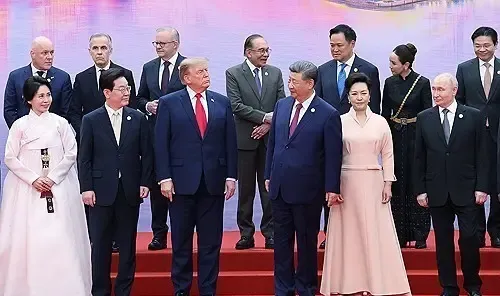
The Lee-Putin meeting took place a day before Putin was scheduled to hold a landmark trilateral meeting with Xi Jinping and US President Donald Trump. That three-way summit was expected to cover a wide range of issues, reportedly including nuclear arms reduction, the conflicts in Iran and Ukraine, and North Korea's nuclear ambitions. Seoul has been pressing Washington, Beijing, and Moscow to ensure that South Korea's interests are adequately represented in any discussions directly concerning the Korean Peninsula.
Seoul's Concerns Over Being Sidelined
Cheong Wa Dae — the South Korean presidential office — has publicly insisted that Seoul's views and national interests must be 'sufficiently reflected' in any talks on Korean Peninsula issues. Officials said the government was closely communicating and cooperating with relevant countries to that end. Notably, Seoul is also watching the possibility of a sideline meeting between Trump and North Korean leader Kim Jong-un at the APEC summit. The Seoul official said that matter remains unclear and nothing has been confirmed.
What Comes Next
The Trump-Xi-Putin trilateral on Thursday is likely to set the diplomatic tone for Korean Peninsula security discussions in the weeks ahead. Whether South Korea's voice will be adequately reflected in those outcomes remains an open question — one that will closely define the Lee government's foreign policy posture heading into the final quarter of 2026.
Point of View
Lee's government faces a credibility problem at home. Seoul's insistence that its views be 'sufficiently reflected' is diplomatically polite language for a much sharper fear — that great-power dealmaking in 2026 may leave middle powers, even those directly affected, on the outside looking in.
NationPress
19 Nov 2026
Frequently Asked Questions
What did Lee Jae Myung and Putin agree at the APEC summit?
They agreed to pursue cooperation in areas without obstacles and to work to prevent further deterioration of security on the Korean Peninsula. The meeting lasted 10 minutes and was described by a Seoul official as a 'broad understanding' rather than a formal agreement.
Why is the Lee-Putin meeting significant?
It was Lee's first in-person meeting with Putin since taking office in June last year, and it came amid sharply deteriorated Seoul-Moscow relations driven by North Korea's deployment of troops to fight alongside Russia in Ukraine. The timing — one day before a Trump-Xi-Putin trilateral — added strategic urgency.
What is the Trump-Xi-Putin trilateral meeting at APEC about?
The three-way summit among US President Donald Trump, Chinese President Xi Jinping, and Russian President Vladimir Putin at the APEC summit in Shenzhen is expected to cover nuclear arms reduction, the conflicts in Ukraine and Iran, and North Korea's nuclear ambitions. South Korea has urged that its interests be reflected in any Korean Peninsula discussions.
Could Trump meet Kim Jong-un at the APEC summit?
The possibility has not been ruled out, but Seoul officials said the matter remains unclear and nothing has been confirmed as of Wednesday. Any such meeting would have major implications for Korean Peninsula diplomacy.
How have South Korea-Russia relations deteriorated?
Relations have worsened significantly as Russia has deepened its partnership with North Korea during the Ukraine war, with Pyongyang reportedly dispatching a large number of troops to fight alongside Russian forces. Seoul has condemned this military cooperation and has been seeking to engage Moscow diplomatically to limit further escalation.