Human Rights Group Condemns Legal Manipulation in Baloch Leaders' Imprisonment
Synopsis
The Baloch Yakjehti Committee raises alarms over the detention of its leaders, including Mahrang Baloch, claiming it's a result of systematic legal manipulation by Pakistani authorities, prompting concerns over judicial independence.
Key Takeaways
The Baloch Yakjehti Committee is advocating for the release of its leaders, citing legal manipulation.
Imprisonment has been attributed to politically motivated charges.
Concerns have been raised about the independence of judicial processes in Pakistan.
The BYC emphasizes the distinction between peaceful political action and criminal behavior.
Delays in legal proceedings have significant consequences for detainees.
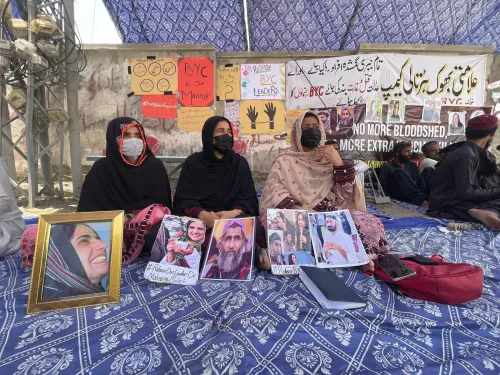
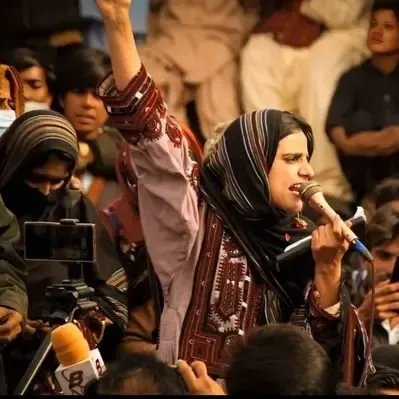
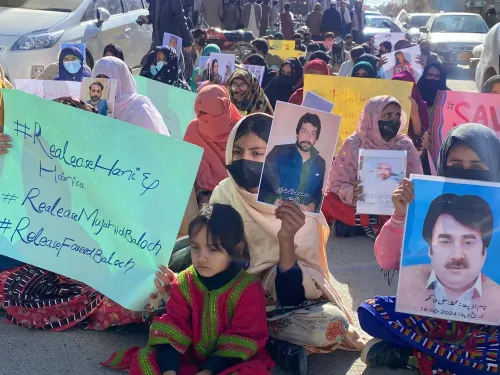
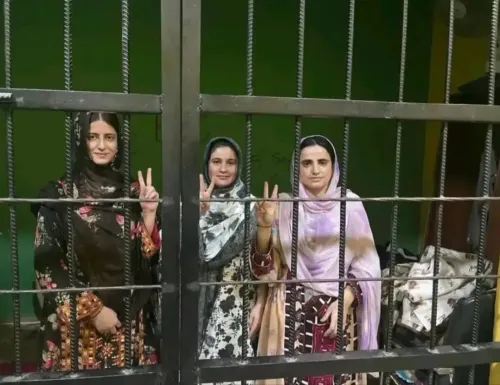
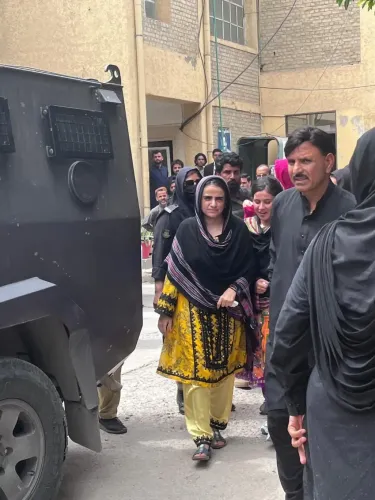
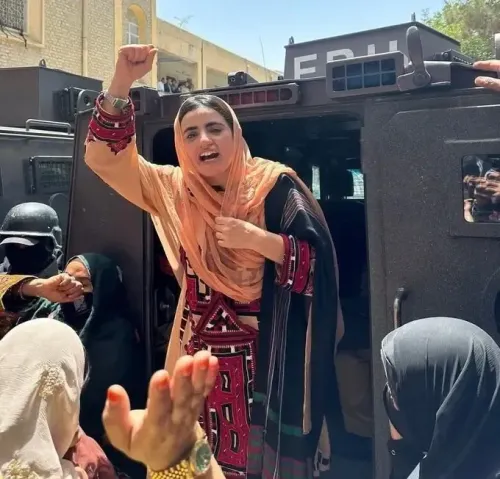
Quetta, Feb 26 (NationPress) The Baloch Yakjehti Committee (BYC), a prominent human rights organization, has raised significant alarms regarding the ongoing detention of its chief organizer, Mahrang Baloch, and other leaders. The committee has characterized their imprisonment as a result of a calculated scheme of “legal and procedural manipulation” orchestrated by the authorities in Pakistan.
The BYC reports that the incarceration of its leaders commenced under the Maintenance of Public Order (3-MPO), which permits “preventative detention” based on governmental evaluations of perceived threats to public safety.
Upon the expiration of this initial detention period, instead of releasing them, the BYC alleges that the authorities commenced a series of “politically motivated FIRs” designed to extend their confinement.
“Although many of these cases are legally bailable, their freedom has been impeded through repeated physical remands, unnecessary delays in submission of investigation reports, and intentional procedural hurdles meant to prolong their detention rather than achieve justice,” the rights body stated.
“In numerous instances, investigations have been finalized, and challans have been filed before the courts. Yet, bail continues to be denied or postponed in some jurisdictions, resulting in the ongoing imprisonment of these peaceful political leaders,” it added.
The BYC emphasized that the accusations against its leadership stem from their political dissent and their peaceful, organized efforts to combat enforced disappearances, human rights abuses, and systemic injustice throughout Balochistan.
On December 17, 2025, the High Court entertained the bail applications of BYC leaders, and following extensive arguments, the court reserved its decision. The BYC contended that, despite serious allegations, the prosecution failed to provide any substantive, individualized evidence linking Mahrang Baloch and others to violent acts.
Months later, on February 23, the court dismissed the bail application, asserting that there exists “prima facie material” and ordered that the case proceed to trial.
“This chain of events prompts a critical and unavoidable question: If the final decision was to deny bail and allow the trial to move forward, why was the judgment reserved for three months?” questioned the BYC.
The organization underscored that delays in bail proceedings carry significant ramifications, extending detention, heightening uncertainty, and raising public apprehensions about whether “judicial processes in politically sensitive cases are operating independently and free from outside influence.”
Reiterating that a peaceful political struggle cannot be conflated with terrorism, the BYC stated, “Articulating constitutional demands and advocating against enforced disappearances are not criminal acts. The ongoing detention of peaceful leaders through procedural delays conveys a distressing message regarding the democratic landscape of the nation.”
Point of View
Necessitating a careful examination of the facts.
NationPress
16 Sept 2026
Frequently Asked Questions
What is the Baloch Yakjehti Committee?
The Baloch Yakjehti Committee (BYC) is a human rights organization advocating for the rights of the Baloch people, focusing on issues such as enforced disappearances and systemic injustice.
Why are Baloch leaders imprisoned?
Baloch leaders, including Mahrang Baloch, are imprisoned under allegations of politically motivated charges, which the BYC claims are part of a systematic manipulation of legal processes.
What is the Maintenance of Public Order (3-MPO)?
The Maintenance of Public Order (3-MPO) is a law in Pakistan that allows for preventative detention based on the government’s assessment of potential threats to public order.
What does 'prima facie material' mean?
'Prima facie material' refers to evidence that is sufficient to establish a fact unless disproven, indicating that there is enough evidence to proceed with a trial.
What are the implications of the BYC's claims?
The BYC's claims suggest serious implications for the rule of law and judicial independence in Pakistan, raising concerns about the treatment of political dissent and the integrity of the legal system.