Malaysia's PM Advocates for Peaceful Solutions Amid Middle East Unrest
Synopsis
In a bid to reduce rising tensions in the Middle East, Malaysia's Prime Minister Anwar Ibrahim has engaged in discussions with regional leaders, emphasizing the need for peaceful approaches and restraint. As geopolitical risks rise, analysts predict the resilience of Malaysia's ringgit amidst these challenges.
Key Takeaways
Malaysia advocates for peaceful solutions in the Middle East.
Prime Minister Anwar Ibrahim held key discussions with regional leaders.
The Malaysian ringgit is expected to remain resilient despite geopolitical tensions.
Concerns over the implications of ongoing conflicts for global peace.
Economic fundamentals play a crucial role in the ringgit's performance.
Kuala Lumpur, March 7 (NationPress) In a recent series of discussions, Malaysia has reached out to various leaders in the Middle East, advocating for peaceful solutions and urging restraint to alleviate escalating tensions in the area.
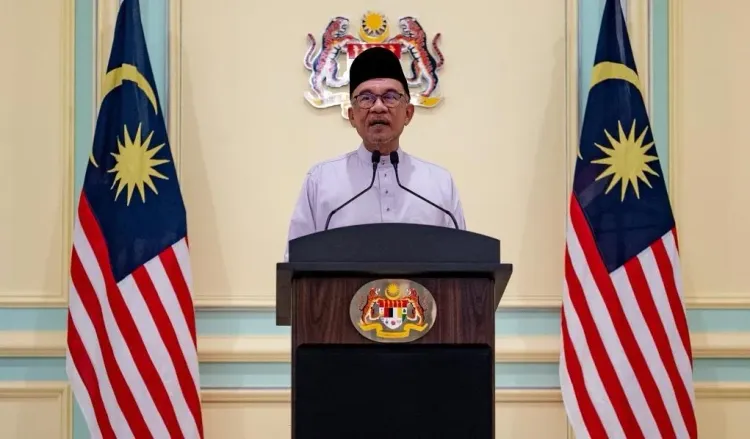
Malaysian Prime Minister Anwar Ibrahim shared in multiple social media updates on Saturday that Malaysia's stance was communicated in separate calls with Qatari Prime Minister Sheikh Mohammed bin Abdulrahman bin Jassim Al-Thani, UAE President Sheikh Mohamed bin Zayed Al Nahyan, and Bahraini Crown Prince and Prime Minister Salman bin Hamad Al Khalifa.
During these discussions, Anwar emphasized the importance of prioritizing peaceful methods and exercising caution to avoid actions that could destabilize the region. He remarked, "I also commend the efforts of the governments of Qatar and Bahrain in ensuring the safety and well-being of Malaysians in their countries."
Additionally, Anwar communicated with Iranian Foreign Minister Seyed Abbas Araghchi, expressing Malaysia's empathy and support for the Iranian populace during these challenging times, according to a report from Xinhua.
Anwar also voiced Malaysia's deep concern regarding the long-term effects of the ongoing conflict on global peace, stability, and welfare.
The situation escalated following significant attacks by the United States and Israel on Iran on February 28, resulting in the deaths of Khamenei, several high-ranking military officials, and numerous civilians. In retaliation, Iran has launched multiple missile and drone strikes targeting Israeli and US assets throughout the region.
Despite these geopolitical tensions, analysts predict the Malaysian ringgit will maintain a degree of strength, potentially outperforming other regional currencies due to solid economic fundamentals and a thriving technology sector.
According to Maybank Investment Bank's assessment, while the current conflict poses notable risks, the ringgit is expected to have a better performance compared to its counterparts, primarily because Malaysia is a net oil importer.
They also noted that the country’s strong economic fundamentals, a current account surplus, fiscal responsibility, and political stability contribute to the ringgit's resilience against the prevailing challenges. The report concluded by stating, "Additionally, elevated oil prices may lead to increased dividend distributions from state-owned enterprises towards the budget."
Point of View
The recent communications by Malaysia's Prime Minister highlight the importance of diplomatic engagement in times of conflict. Advocating for peaceful resolutions not only reflects Malaysia's commitment to regional stability but also emphasizes the nation's proactive stance in global affairs.
NationPress
20 Sept 2026
Frequently Asked Questions
What did Malaysia's PM call for regarding Middle East tensions?
Malaysia's PM Anwar Ibrahim called for peaceful approaches and restraint during discussions with Middle Eastern leaders to ease rising tensions in the region.
Which leaders did Malaysia's PM speak to?
He spoke with the Prime Minister of Qatar, the President of the UAE, and the Crown Prince of Bahrain.
What is the current economic outlook for Malaysia amidst these tensions?
Analysts expect the Malaysian ringgit to remain relatively resilient, potentially outperforming regional peers due to strong economic fundamentals.
What has triggered the recent tensions in the Middle East?
The tensions escalated following significant attacks by the United States and Israel on Iran.
How has Malaysia responded to the situation in Iran?
Malaysia has expressed sympathy and solidarity with the Iranian people through communications with Iranian officials.