Maldives and Chile Withdraw Key Nominations for UN Secretary-General
Synopsis
In a shocking development, both the Maldives and Chile have retracted their nominations for the UN secretary-general position, leaving only one female candidate in the race. This shift highlights the ongoing discourse about gender representation in leadership roles within the United Nations.
Key Takeaways
Maldives has retracted its nomination for Virginia Gamba .
Chile has also stepped back from nominating Michelle Bachelet .
Only one woman, Rebeca Grynspan , remains in the race for UN secretary-general .
The nomination landscape has reduced from five candidates to three.
Upcoming sessions will allow candidates to present their qualifications starting April 20.
United Nations, March 27 (NationPress) In a surprising turn of events, the Maldives has retracted its nomination of Virginia Gamba for the position of secretary-general. Similarly, Chile has also stepped back from its nomination of Michelle Bachelet, as stated by the spokesperson for the General Assembly president, La Neice Collins.
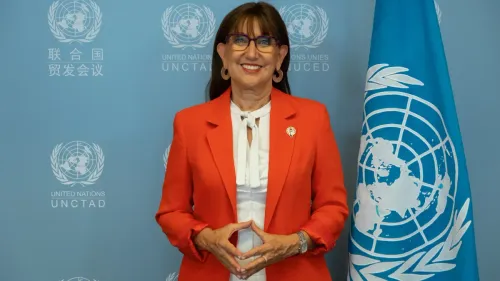
This development leaves only one female candidate, Rebeca Grynspan Mayufis, on the ballot amidst growing calls for a woman to lead the 80-year-old organization.
The withdrawal reduces the list of candidates from five to three, with the remaining contenders being male.
On Thursday, Collins revealed that the Maldives officially informed the presidents of both the Assembly and the Security Council about discontinuing Gamba's nomination. Gamba, who has served in significant roles within the UN, was an unexpected nominee, as she is an Argentinian with no known connections to the South Asian nation.
In his brief letter shared on social media, the Maldives' Permanent Representative, Ali Naseer Mohamed, did not provide a rationale for the withdrawal.
With this decision, Gamba will no longer be in the running, as confirmed by Collins.
Conversely, another Argentinian, Rafael Grossi, who leads the International Atomic Energy Agency, continues to vie for the position with support from his country.
Despite Chile withdrawing support, Bachelet remains on the ballot due to backing from Brazil and Mexico, the two nations that joined in her nomination, according to Collins.
Bachelet, a former president of Chile and ex-UN High Commissioner for Human Rights, has faced opposition for her past criticisms of human rights in the United States and Israel. Chuck Edwards, vice chairman of the US House of Representatives subcommittee on the State Department, indicated last week that he opposes her candidacy, with several Congress members planning to petition for the US to block her election.
As a permanent member of the Council, the US holds veto power, which could nullify the support from Mexico and Brazil if Bachelet reaches that stage.
The remaining candidate is Macky Sall, a former president and prime minister of Senegal, nominated by Burundi.
Unless another strong female candidate surfaces, Grynspan from Costa Rica may have an advantage due to the increasing pressure for a woman to succeed Antonio Guterres.
This sentiment is echoed in the Assembly resolution regarding the election, which emphasizes a desire for "equal and fair distribution" based on gender.
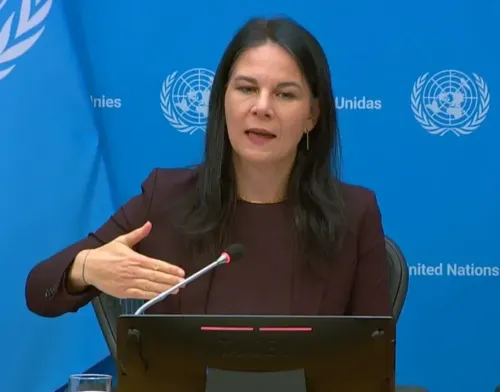
The Assembly President, Annalena Baerbock, along with the former president of the Security Council, advocated for female candidates when initiating the election process last year.
Unlike Bachelet, who has been involved in contentious human rights debates, and Grossi, who is engaged in nuclear discussions surrounding Iran and the Russia-Ukraine conflict, Grynspan's leadership at UNCTAD has not required her to take strong, controversial positions.
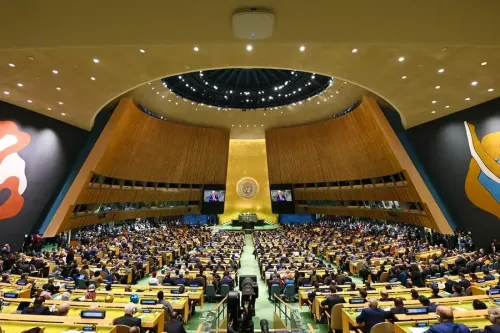
Nominations are set to close on Wednesday, and starting April 20, candidates will participate in three-hour interactive sessions to present their qualifications for leading the 193-member organization and respond to inquiries from diplomats and civil society.
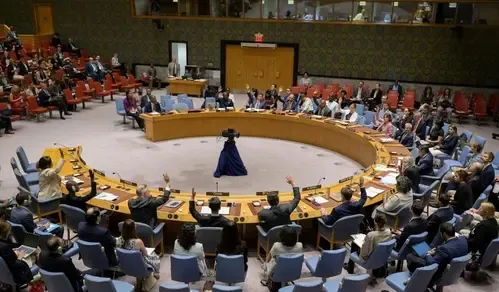
While the victor will need a simple majority from the General Assembly, the fractious Security Council, with its five permanent members holding veto powers, ultimately wields the real decision-making authority, as the UN Charter stipulates that the Assembly appoints the UN's top official "upon the recommendation of the Security Council."
Point of View
The withdrawal of nominations from the Maldives and Chile underscores a significant moment in the ongoing fight for gender equality in leadership roles. The reduced pool of candidates raises questions about the UN's commitment to diversity, especially with mounting calls for a female leader.
NationPress
24 Sept 2026
Frequently Asked Questions
Why did the Maldives withdraw its nomination for Virginia Gamba?
The Maldives did not provide a specific reason for the withdrawal but confirmed the decision through a brief letter from its Permanent Representative.
Who are the remaining candidates for UN secretary-general?
The remaining candidates are Rebeca Grynspan Mayufis, Macky Sall, and Rafael Grossi.
Is Michelle Bachelet still in the running for UN secretary-general?
Yes, despite Chile's withdrawal, Bachelet retains support from Brazil and Mexico, allowing her to remain on the ballot.
What are the next steps in the nomination process?
Nominations will close on Wednesday, and candidates will face three-hour interactive sessions starting April 20 to present their qualifications.
What is the significance of having a female UN secretary-general?
A female secretary-general would symbolize progress in gender equality and representation in global leadership, aligning with calls for a more diverse leadership structure.