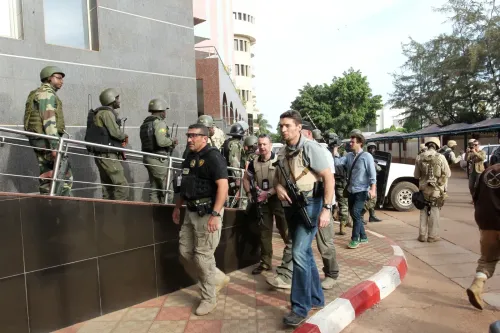
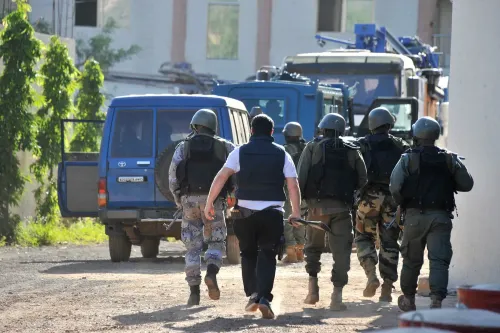
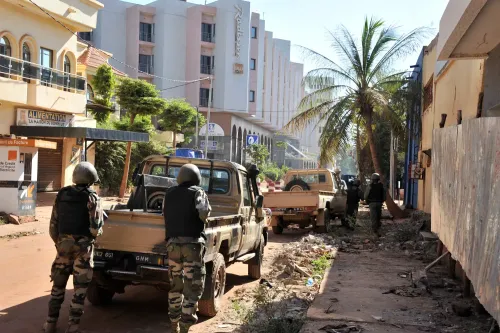
Mali army repels attacks on 5 military positions, 20 terrorists killed in Sevare
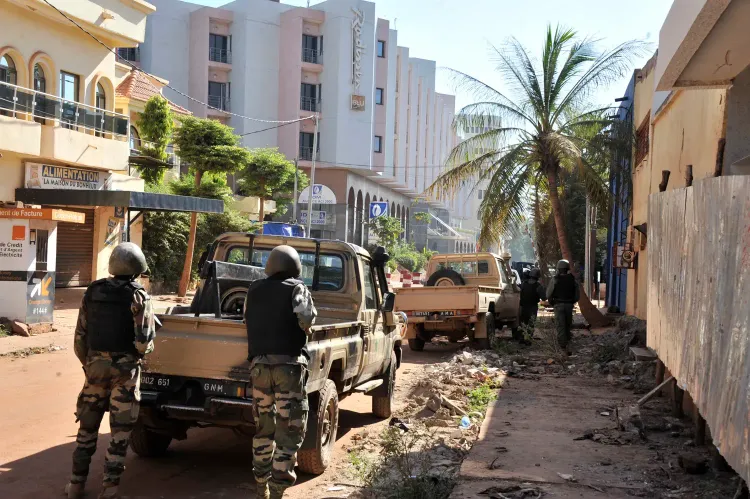
Synopsis
On a single day, armed groups struck five Malian military positions simultaneously — from the far north to just south of the capital Bamako. The multi-front assault, which killed at least 20 terrorists and one soldier, is the most geographically dispersed attack Mali has seen in recent months, and comes weeks after the army's own 'surgical strikes' in a forest 40 km from Bamako.
Key Takeaways
The Malian Armed Forces repelled coordinated attacks on 5 military positions on 4 July : Aguelhok , Anefis , Gao , Sevare , and Kenioroba .
20 terrorists were killed in Sevare ; 6 more killed and one vehicle destroyed in Gao .
One Malian soldier was killed and four wounded in Gao .
Aerial and ground clearing operations were still underway as of the army's last update.
In April , Defence Minister Sadio Camara was killed in an attack near Bamako , highlighting the depth of the security crisis.
Last month, the army neutralised more than 60 terrorists in 'surgical strikes' in the Faya Classified Forest , about 40 km from Bamako .
The Malian Armed Forces said on Saturday, 4 July that coordinated attacks on multiple military positions across the country had been repelled and the situation was 'fully under control.' The targeted positions were spread across Aguelhok, Anefis, and Gao in the north, Sevare in the central region, and Kenioroba, south of the capital Bamako.
Casualty Count and Combat Details
According to the army's statement, 20 terrorists riding motorcycles or travelling in armed vehicles were killed in the town of Sevare. In the city of Gao, one soldier was killed and four others were wounded, while six terrorists were killed and one vehicle was destroyed. The army confirmed that aerial and ground clearing operations were still underway at the time of the statement.
What the Army Said
In an initial brief statement, the army acknowledged the attempted attacks across all five positions, saying the situation was 'being monitored,' without immediately identifying the suspected attackers or detailing the circumstances surrounding the incidents. A follow-up statement confirmed the attacks had been repelled.
A Country Under Persistent Threat
This is not an isolated episode. Mali has faced a volatile security environment for years, with armed groups launching frequent strikes — particularly across the northern and central regions. In April, Defence Minister Sadio Camara was killed in an attack on his residence in Kati, near Bamako, carried out by armed terrorist groups — a stark indicator of how deep the threat has penetrated.
Last month, the Malian Armed Forces reported neutralising more than 60 terrorists during 'surgical strikes' in the Faya Classified Forest, approximately 40 km from Bamako. Those operations targeted three terrorist gathering points: a first strike east of Kassela neutralised around 20 terrorists; a second in the same area killed at least 30 and destroyed several motorcycles; a third strike west of Zantiguila, on the edge of the Faya forest, neutralised about 15 terrorists and destroyed motorcycles and logistical equipment.
Significance of the Scale
Saturday's multi-front assault — spanning five locations from the far north to the outskirts of the capital — signals a coordinated effort to stretch Mali's security forces simultaneously. The fact that positions near Kenioroba, south of Bamako, were targeted is particularly notable, as attacks this close to the capital have historically been rare. This comes amid Mali's ongoing military-led transition government, which has faced mounting pressure to stabilise a country that has seen two coups since 2020.
What Happens Next
Clearing operations were continuing as of the army's last update. No group had claimed responsibility for the attacks as of the time of reporting. With aerial support deployed, the military appears to be treating the incident as a coordinated insurgent push rather than isolated skirmishes. Analysts will be watching whether this escalation prompts a broader counter-offensive similar to the Faya forest operations.
Point of View
Weeks after a defence minister was assassinated, puts that claim under serious strain. The army's swift 'fully under control' messaging is standard crisis communication, but the real measure will be whether aerial clearing operations reveal a larger network — and whether any group claims responsibility.
NationPress
3 Oct 2026
Frequently Asked Questions
What happened in Mali on 4 July?
Armed groups simultaneously attacked five Malian military positions — in Aguelhok, Anefis, Gao, Sevare, and Kenioroba — on 4 July. The Malian Armed Forces said all attacks were repelled and the situation was 'fully under control,' though aerial and ground clearing operations were still ongoing.
How many people were killed in the Mali attacks?
At least 20 terrorists were killed in Sevare, and 6 more were killed in Gao, where one Malian soldier also died and four others were wounded. No group had claimed responsibility as of the army's last statement.
Which areas of Mali were targeted?
The attacked positions were in Aguelhok, Anefis, and Gao in northern Mali, Sevare in the central region, and Kenioroba south of the capital Bamako — indicating a geographically coordinated, multi-front assault.
How serious is Mali's ongoing security situation?
Mali has faced persistent armed group activity for years, particularly in its northern and central regions. In April, Defence Minister Sadio Camara was killed in an attack near Bamako, and last month the army conducted 'surgical strikes' in a forest 40 km from the capital, neutralising more than 60 terrorists.
Who carried out the attacks on Mali's military positions?
The army's statement did not immediately identify the attackers or their affiliations. The military described them as 'terrorists' but had not attributed responsibility to any specific group as of its last public update.