Mali army neutralises 200+ terrorists in Anefis after July 4 attacks
Synopsis
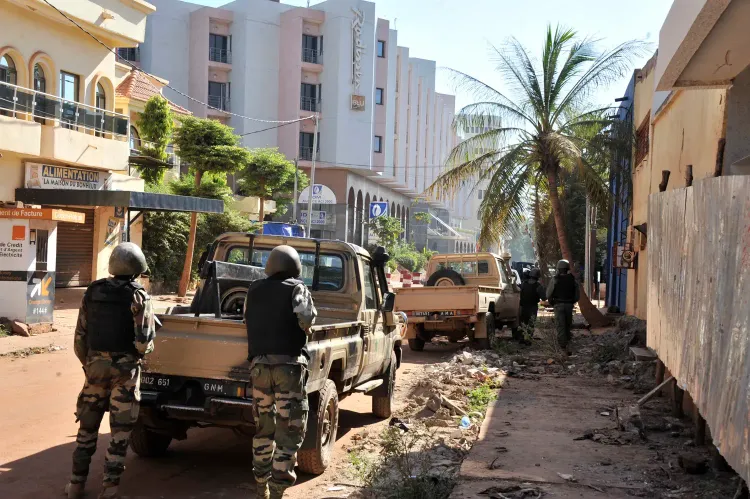
In one of the largest single operations in recent memory, Mali's army neutralised more than 200 terrorists in Anefis using 35 airstrikes and ground forces — a direct response to coordinated attacks across five localities on 4 July. With the Defence Minister killed in April and the AU now calling for continental solidarity, Mali's security crisis is escalating in ways that could reshape the Sahel's fragile stability.
Key Takeaways
The Malian Armed Forces neutralised more than 200 terrorists in Anefis , Kidal region , on 7 July .
The operation involved 35 airstrikes and destroyed 5 armoured vehicles , ~ 20 pickup trucks , and ~ 100 motorcycles .
The offensive followed coordinated attacks on 4 July targeting Aguelhok , Anefis , Gao , Sevare , and Kenioroba .
Defence Minister Sadio Camara was killed in an attack on his residence in Kati in April .
AU Commission Chairperson Mahmoud Ali Youssouf strongly condemned the coordinated terrorist attacks and reaffirmed the AU's support for Mali.
Malian army operations in Anefis were still ongoing as of the announcement.
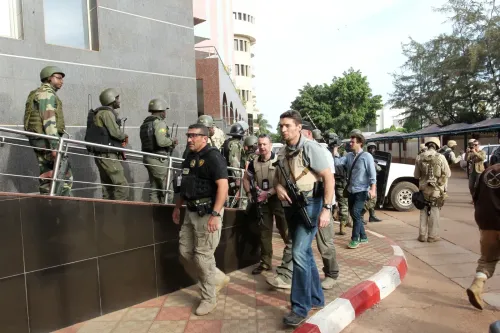
The Malian Armed Forces announced on Tuesday, 7 July that more than 200 terrorists were neutralised during coordinated air and ground operations in Anefis, located in the country's northern Kidal region. The offensive, which included 35 airstrikes, also destroyed five armoured vehicles, approximately 20 pickup trucks, and around 100 motorcycles, according to a statement issued by the General Staff of the Armed Forces.
Scale of the Operation
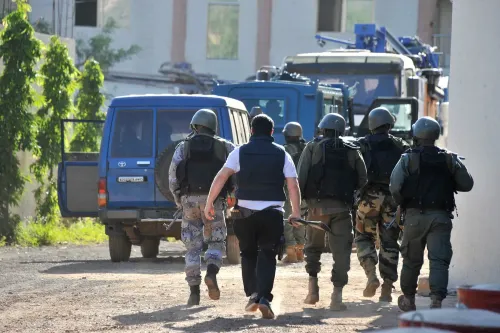
Monday's operations were described as a coordinated push combining aerial bombardment with ground forces. The provisional toll figures indicate one of the more significant single-operation strikes against armed groups in the Sahel nation in recent months. The army confirmed that operations in Anefis were still ongoing, signalling that the offensive had not yet concluded.
What Triggered the Offensive
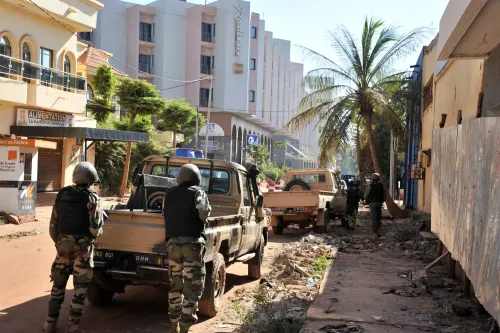
The military action followed a wave of attacks on 4 July that targeted multiple localities across Mali, including Aguelhok, Anefis, Gao, Sevare, and Kenioroba. The Malian army said it had repelled those attacks at the time. The July 4 strikes were part of a broader pattern of escalating violence that has gripped northern and central Mali for years, with armed groups repeatedly targeting both military and civilian areas.
Deepening Security Crisis
Mali's security situation has remained volatile for over a decade, with armed groups exploiting vast ungoverned territory across the north and centre of the country. The crisis took a particularly stark turn in April, when Defence Minister Sadio Camara was killed in an attack on his residence in Kati, a town near the capital Bamako, carried out by armed terrorist groups — a rare and deeply symbolic strike at the heart of the country's military establishment.
African Union Condemns the Attacks
The African Union (AU) condemned the coordinated attacks that preceded the military response. In a press statement issued on Sunday, AU Commission Chairperson Mahmoud Ali Youssouf said he 'strongly condemns the coordinated terrorist attacks carried out on Saturday against several localities in northern, central, and southern Mali.' Youssouf described the strikes as 'a stark reminder that terrorism and violent extremism continue to pose a serious threat to Mali, the Sahel, and the African continent as a whole.' The 55-member continental body reaffirmed its 'unwavering commitment' to supporting Malian authorities and regional initiatives aimed at combating terrorism and restoring lasting peace.
What Comes Next
With operations still active in Anefis, the Malian army has vowed to continue pursuing armed terrorist groups until its stated objectives are met. The escalation comes at a critical moment for the Sahel, where multiple governments are navigating deteriorating security with reduced international support following the withdrawal of French and UN forces in recent years. Regional and continental solidarity, as expressed by the AU, will be tested against the ground reality of an emboldened insurgency.
Point of View
35 airstrikes, five armoured vehicles destroyed — is significant, but context matters: Mali has been here before, with large tactical wins failing to translate into strategic stability. The killing of Defence Minister Sadio Camara in April was a watershed moment that exposed the depth of the insurgency's reach. The AU's condemnation, while symbolic, reflects a continental body that has consistently struggled to convert solidarity statements into effective intervention. Until Mali's partners move beyond rhetoric and the government addresses the governance vacuum in the north, operations like Anefis will remain necessary but insufficient.
NationPress
6 Oct 2026
Frequently Asked Questions
What happened in Anefis, Mali on 7 July?
The Malian Armed Forces conducted coordinated air and ground operations in Anefis, in the northern Kidal region, neutralising more than 200 terrorists. The offensive included 35 airstrikes and destroyed five armoured vehicles, around 20 pickup trucks, and approximately 100 motorcycles.
What triggered the Mali military operation in Anefis?
The operation was a direct response to coordinated terrorist attacks on 4 July that targeted multiple Malian localities including Aguelhok, Anefis, Gao, Sevare, and Kenioroba. The army said it had repelled those attacks before launching the follow-up offensive.
Who is Sadio Camara and why is his death significant?
Sadio Camara was Mali's Defence Minister, killed in April in an attack on his residence in Kati, near Bamako. His killing by armed terrorist groups was a rare and symbolic strike against the country's top military leadership, underscoring the severity of the ongoing security crisis.
What did the African Union say about the Mali attacks?
AU Commission Chairperson Mahmoud Ali Youssouf strongly condemned the coordinated terrorist attacks on several Malian localities, calling them 'a stark reminder that terrorism and violent extremism continue to pose a serious threat to Mali, the Sahel, and the African continent as a whole.' The AU reaffirmed its support for Malian authorities and regional peace efforts.
Is the security situation in Mali getting worse?
Mali has faced persistent and escalating violence for years, particularly in its northern and central regions. The July 4 multi-locality attacks, followed by the large-scale Anefis offensive, and the earlier killing of the Defence Minister in April all point to a deepening crisis that has outpaced the country's security capacity.