Sam Pitroda backs Mamdani's RSS criticism, cites minority concerns
Synopsis
Senior Congress leader Sam Pitroda has publicly backed New York City Mayor Zohran Mamdani's criticism of the RSS, calling it 'some truth' — a rare instance of an Indian opposition figure endorsing a US elected official's remarks on a domestic Hindu nationalist organisation. Pitroda's comments, rooted in childhood memories of communal harmony, sharpen the Congress's challenge to the RSS's growing international footprint.
Key Takeaways
Sam Pitroda backed NYC Mayor Zohran Mamdani 's criticism of the RSS on 28 August , calling his remarks 'some truth.' Pitroda alleged a gap between the RSS's stated positions and its actions, saying 'actions speak louder.' He cited rising communal conflict, hate, and fear in India over the past decade and a half as evidence supporting Mamdani's concerns.
Pitroda called on all Indian organisations, including the RSS, to return to the founding principle that 'India belongs to everybody.' The RSS was founded in Nagpur in 1925 and completed its centenary in 2025 ; it has not publicly responded to Pitroda's remarks.
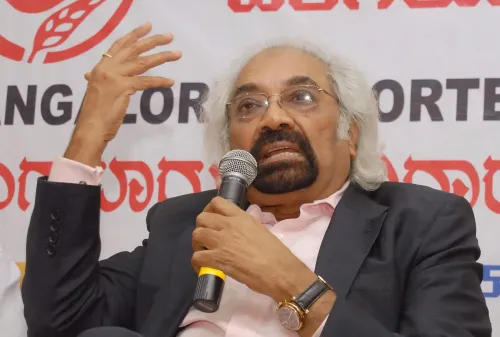
Senior Indian National Congress leader Sam Pitroda has endorsed New York City Mayor Zohran Mamdani's criticism of the Rashtriya Swayamsevak Sangh (RSS), stating that Mamdani's remarks carry 'some truth' and mirror widespread concerns about the treatment of religious minorities in India. Pitroda made the remarks in an interview in New York on 28 August.
Pitroda's Position on the RSS
While acknowledging that RSS chief Mohan Bhagwat's gathering in New York was a private event — and that every organisation has the right to hold one — Pitroda drew a clear distinction between the RSS's stated positions and what he described as its conduct. 'Their words mean one thing and their actions mean something else,' he alleged. 'I won't pay too much attention to their words. I'll pay more attention to their actions. To me, actions speak louder.'
Pitroda clarified that he had never personally met Bhagwat, though he said he knows some RSS members and maintains friendships across ideological lines. 'I respect them. I respect diversity. But when it becomes violent, I have a problem. When it becomes hateful, I have a problem,' he said.
Mamdani's Remarks and the Congress Response
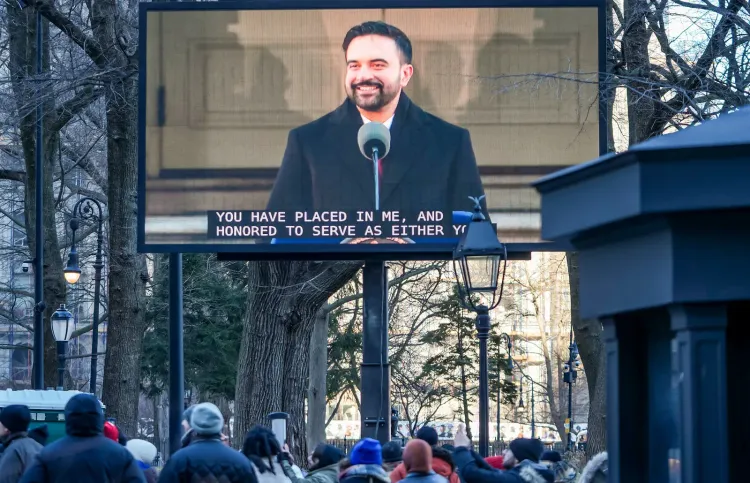
Mayor Mamdani had previously voiced criticism of the RSS, a position that drew attention given his role as an elected official in the United States. Pitroda characterised Mamdani's remarks as personal views while broadly agreeing with their thrust. 'I think these are his personal views. I do agree with the fact that I believe in secular India. I believe in India where there is no difference in religion, caste, language, state,' Pitroda said.
He invoked India's constitutional foundations and the vision of its founding leaders, saying any organisation — 'RSS, non-RSS' — should return to 'the core idea of India that our founding fathers had,' which he defined as a country belonging equally to Hindus, Muslims, Christians, Jews, and Dalits.
Personal Memories Versus Present Realities
Pitroda, born in 1942 during British rule, recalled growing up in a small tribal village where a Muslim household stood in front of his home, a Jain family to the left, a Sikh family to the right, and a tribal Oria family behind — all coexisting without conflict. He contrasted that memory with his assessment of present-day India.
'Today, conflict has increased substantially. Hate has increased, fear has increased,' he said. 'So I think what Mamdani said has some truth in it — that the India we grew up with was the India for everybody.'
Concerns Over Minorities and Institutional Influence
Pitroda alleged that Muslims and Christians have experienced growing anxiety over the past decade and a half, and questioned the RSS's influence on educational and other public institutions. 'You ask average Muslim or Christian how they feel in the last 15 years, what has happened to their churches, their communities, and they will tell you,' he said.
The RSS, founded in Nagpur in 1925 and marking its centenary in 2025, describes itself as a cultural and social organisation committed to national service and character-building. The organisation has not yet publicly responded to Pitroda's remarks. The Congress leader's comments are likely to intensify the political debate around the RSS's international profile and its relationship with India's minority communities.
Point of View
A position that is difficult to hold consistently. His allegations about minority anxiety are serious and deserve independent verification rather than treatment as partisan talking points. The RSS's centenary year and its growing international outreach make this a story about soft power as much as domestic politics.
NationPress
28 Aug 2026
Frequently Asked Questions
What did Sam Pitroda say about Zohran Mamdani's criticism of the RSS?
Pitroda said Mamdani's criticism of the RSS contains 'some truth' and reflects genuine concerns about the treatment of religious minorities in India. He broadly agreed with Mamdani's sentiments while noting they were the mayor's personal views.
What did Zohran Mamdani say about the RSS?
New York City Mayor Zohran Mamdani voiced criticism of the RSS in the context of RSS chief Mohan Bhagwat holding a private gathering in New York. The specific content of Mamdani's remarks was characterised by Pitroda as reflecting concerns about minority treatment in India.
Did Pitroda defend the RSS's right to hold a private event in New York?
Yes. Pitroda acknowledged that Bhagwat's gathering was a private event and said every organisation is entitled to hold one. He drew a distinction between the event's legitimacy and his broader critique of the RSS's conduct.
What is Pitroda's broader argument about India's founding principles?
Pitroda argued that any Indian organisation, including the RSS, should return to the founding principle that India belongs equally to all communities — Hindus, Muslims, Christians, Jews, and Dalits. He grounded this in the vision of India's independence-era leaders.
What is the RSS and why is it politically significant?
The Rashtriya Swayamsevak Sangh (RSS) is a Hindu nationalist cultural organisation founded in Nagpur in 1925, which completed its centenary in 2025. It is widely regarded as the ideological parent of the ruling Bharatiya Janata Party (BJP) and is one of India's largest civil society organisations, making any criticism of it politically charged.