Microsoft defends overseas data centres after Trump threat
Synopsis
Microsoft says overseas data centres must remain close to customers after Donald Trump threatened penalties on companies building facilities abroad. Its $17.5 billion India commitment has not been identified as a target, and Brad Smith announced no changes to it.
Key Takeaways
Microsoft President Brad Smith defended overseas data centres after US President Donald Trump threatened penalties on companies building them abroad.
Smith distinguished advanced AI model training from cloud services such as streaming, gaming and business applications.
US Treasury Secretary Scott Bessent said he had not discussed the proposal’s details with Trump after the news conference.
Microsoft announced a $17.5 billion India commitment for 2026–2029 , covering infrastructure, skills and ongoing operations.
Neither Smith nor Bessent identified India as a target, and Smith announced no changes to the investment.
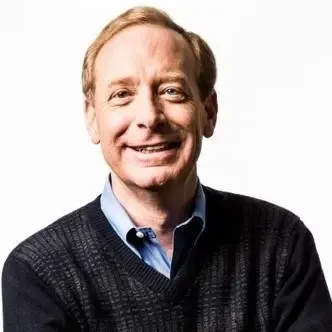
Microsoft President Brad Smith defended overseas data centres on 23 November after US President Donald Trump threatened penalties on companies building them outside the United States. Smith argued that cloud services used by businesses and consumers need to operate close to their customers, while distinguishing them from facilities used to train the most advanced artificial intelligence models.
The remarks have implications for India, where Microsoft has announced a $17.5 billion commitment covering cloud and AI infrastructure, skills and ongoing operations over 2026–2029. Neither Smith nor US Treasury Secretary Scott Bessent identified India as a target when discussing the proposed restrictions.
Microsoft draws a distinction between AI and cloud services
Speaking on CBS’s Face the Nation, Smith said there was room to discuss keeping the training of the most advanced AI models in the United States. He cautioned, however, against applying the same approach to every kind of data centre.
“My sense is that the president is making an important point, but there's some critical nuance we need to think about as well,” Smith said.
He said most data centres provide cloud services rather than train advanced AI systems. Cloud computing gives customers access to software, storage and processing power over a network without requiring them to maintain all the equipment themselves.
“They're cloud services to stream a video, play a video game, run your business. And those have to be located close to customers,” Smith said. He added that such services increasingly include AI features in business applications and video games.
To illustrate his argument, Smith compared serving Helsinki from New Jersey with supplying the Finnish city with electricity from a power plant in the US state. “Those have to be located locally,” he said of the facilities.
Trump’s warning and Bessent’s response
Trump said at a Friday news conference that the United States would not allow data centres to move to other countries. He threatened “tremendous penalties” against companies attempting to do so.
Asked how the policy would work, Bessent said he had attended the news conference but had not spoken to Trump afterwards. “I haven't spoken to the president about that,” he said.
Bessent interpreted the president’s concern as an effort to prevent a major transfer of technology overseas. He compared the issue with semiconductor manufacturing, arguing that reliance on production abroad had created a strategic vulnerability the administration was trying to address.
He also said technology companies needed to explain their plans more effectively to Americans and rebuild trust with communities hosting data centres. His remarks did not establish how the threatened penalties would be applied.
India investment remains unchanged in Smith’s remarks
Microsoft announced its $17.5 billion India programme in December 2025, saying it would build on an earlier $3 billion commitment. The plan covers expansion of cloud and AI infrastructure alongside training and ongoing operations over 2026–2029.
The announcement included plans to expand data-centre regions in Chennai, Hyderabad and Pune. It was a multiyear commitment, rather than an indication that the entire sum had already been spent.
Smith did not announce changes to those investments on Sunday. The distinction he drew leaves open the question of how any eventual US restrictions might treat infrastructure serving overseas customers, including those in India.
Policy details still to emerge
The debate separates two issues: where advanced AI models are trained and where the computing infrastructure for everyday services is located. Smith argued that the latter must be close to users, while Bessent framed the administration’s concern around technology moving abroad.
With Bessent saying he had not discussed the proposal’s details with Trump, the scope and operation of any penalties remain unclear. Companies and customers will be watching for further details of the proposed policy.
Frequently Asked Questions
Why is Microsoft defending overseas data centres?
Microsoft President Brad Smith says data centres providing everyday cloud services need to be located close to customers. He distinguished those facilities from centres used to train the most advanced AI models.
What did Donald Trump say about data centres abroad?
Trump threatened tremendous penalties against companies attempting to move data centres to other countries. He made the remarks at a Friday news conference.
Is Microsoft's $17.5 billion India investment affected?
Neither Brad Smith nor Scott Bessent identified India as a target of the proposed restrictions. Smith did not announce changes to Microsoft's India investment in his Sunday remarks.
What does Microsoft's India investment cover?
The $17.5 billion commitment covers cloud and AI infrastructure, skills and ongoing operations over 2026–2029. It includes plans to expand data-centre regions in Chennai, Hyderabad and Pune.
When would Trump's proposed data centre penalties take effect?
No implementation date was specified in the source. Bessent said he had not discussed the proposal’s details with Trump after the news conference.