Ursula von der Leyen: Middle East Conflict Inflates EU Energy Costs
Synopsis
European Commission President Ursula von der Leyen reveals that the ongoing Middle East conflict is causing significant economic strain on Europe, with energy prices skyrocketing and adding billions to import expenses. The EU is actively seeking solutions to mitigate these costs.
Key Takeaways
The Middle East conflict is significantly raising energy costs in Europe.
Gas prices have increased by 50% and oil prices by 27% .
The EU is looking into measures like price caps and tax reductions to alleviate costs.
Investment in nuclear technologies is being prioritized to enhance energy production.
The EU is maintaining a firm stance on Iran, calling for restraint and diplomatic solutions.
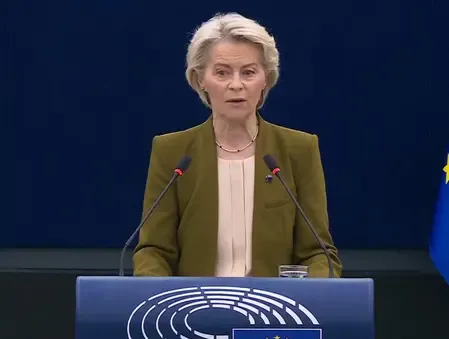
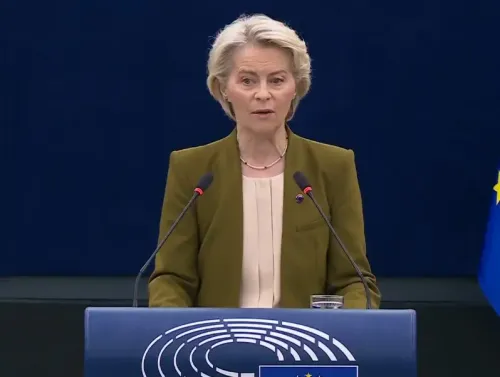
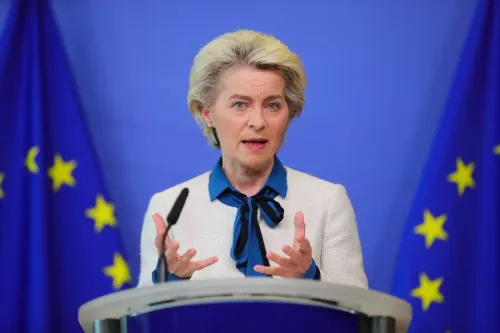
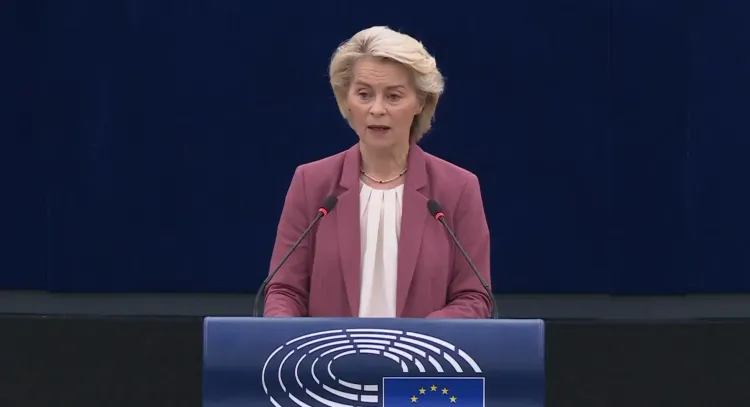
Strasbourg, March 11 (NationPress) - The President of the European Commission, Ursula von der Leyen, stated on Wednesday that the ongoing conflict in the Middle East is leading to significant economic repercussions for Europe, causing energy prices to surge and increasing import expenses by billions of euros.
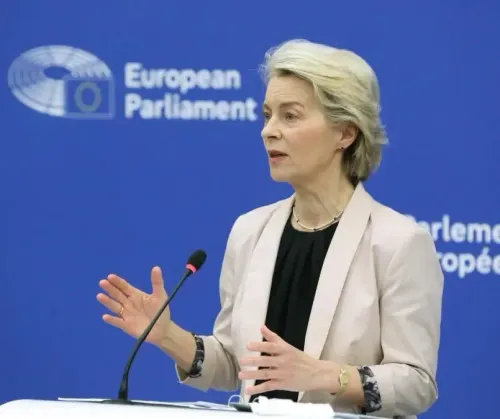
"Since the onset of the conflict, gas prices have surged by 50% and oil prices by 27%," von der Leyen informed the European Parliament in Strasbourg. She highlighted that just 10 days of warfare have already imposed an additional burden of 3 billion euros (approximately 3.48 billion US dollars) on European taxpayers for fossil fuel imports, as reported by Xinhua News Agency.
Von der Leyen mentioned that the European Commission is currently evaluating further measures to alleviate energy costs, including the potential implementation of a gas price cap.
While she acknowledged that the EU has successfully diversified its fossil fuel sources in recent years, she emphasized, "This does not imply that we are shielded from price fluctuations. Energy markets operate on a global scale."
This rise in energy costs marks the second instance in recent years where geopolitical tensions have led to sharp increases in EU energy expenses, following the Russia-Ukraine conflict in 2022.
The Commission is also advocating for increased reliance on nuclear energy to enhance production and reduce prices. Von der Leyen announced a 200 million euro (around 231.75 million dollars) EU guarantee aimed at encouraging private investment in innovative nuclear technologies.
EU Energy Commissioner Dan Jorgensen urged member states on Tuesday to lower energy taxes wherever feasible, particularly on electricity, in a bid to reduce consumer costs.
Additionally, the Commission has introduced a Clean Energy Investment Strategy aimed at directing private investment towards power grids, clean energy technologies, and energy efficiency improvements.
On February 28, Ursula von der Leyen expressed significant concern regarding the latest developments in Iran, reiterating the EU's unwavering commitment to maintaining regional security and stability. The EU confirmed it remains in close communication with regional partners.
"The situation in Iran is highly concerning. We maintain close contact with our regional partners and reaffirm our steadfast dedication to safeguarding security and stability in the area. Ensuring nuclear safety and averting actions that could further escalate tensions or undermine the global non-proliferation regime is of utmost importance," Ursula von der Leyen stated on X.
"The European Union has enacted extensive sanctions in response to the actions of Iran's oppressive regime and the Revolutionary Guards, consistently advocating for diplomatic efforts to address the nuclear and ballistic programs through negotiated solutions. In collaboration with EU Member States, we are prepared to take all necessary measures to ensure that EU citizens in the region can rely on our full support. We urge all parties to exercise maximum restraint, protect civilians, and respect international law in full," she added.
Point of View
Directly tied to Middle East tensions, call for urgent measures to protect consumers while navigating complex international dynamics.
NationPress
18 Sept 2026
Frequently Asked Questions
What impact has the Middle East conflict had on energy prices in Europe?
The conflict has driven gas prices up by 50% and oil prices by 27%, significantly increasing import costs for Europe.
What measures is the EU considering to address rising energy costs?
The European Commission is evaluating additional strategies, including a potential gas price cap and urging member states to reduce energy taxes.
How much has the conflict cost European taxpayers?
In just 10 days of conflict, the additional burden on European taxpayers for fossil fuel imports has reached approximately 3 billion euros.
What is the EU's stance on nuclear energy in light of rising costs?
The EU is promoting nuclear power as a means to boost production and lower energy prices, alongside a significant investment guarantee for innovative technologies.
What is the EU's response to developments in Iran?
The EU has expressed serious concerns and remains committed to regional security, advocating for diplomatic efforts while implementing sanctions against Iran's regime.