Moscow Accuses EU Leaders of Deliberately Igniting Crisis by Spurning Russian Energy
Synopsis
Moscow claims that European leaders are intentionally driving their nations into turmoil by rejecting Russian energy resources. This ongoing crisis, attributed to political decisions rather than natural events, raises significant concerns about energy security across the EU.
Key Takeaways
Moscow claims EU leaders are causing an energy crisis.
Europe faces significant challenges due to reliance on Russian energy.
Hungary's Prime Minister urges a reassessment of sanctions.
Rising fuel prices linked to geopolitical tensions.
Disruptions in oil deliveries raise concerns for EU energy security.
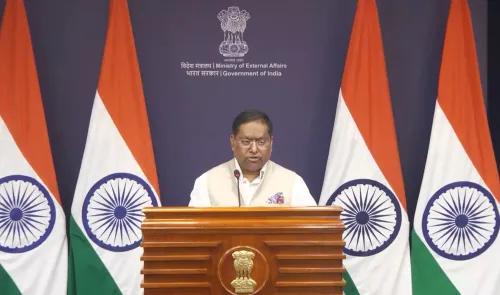
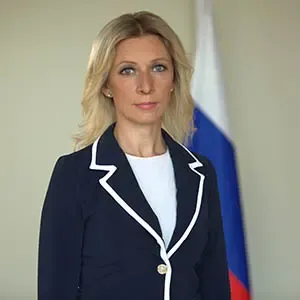
Moscow, March 21 (NationPress) The Russian Foreign Ministry's spokesperson criticized European leaders for purposefully driving their nations into crisis and darkness by persistently rejecting Russian energy supplies. "This crisis is not a result of technical failures or natural disasters but stems from the choices made by the EU's own leaders, who are essentially turning off the lights," stated Maria Zakharova in a message shared on her Telegram channel.
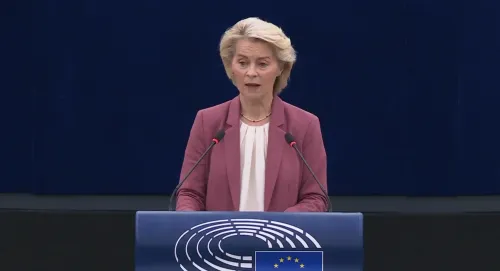
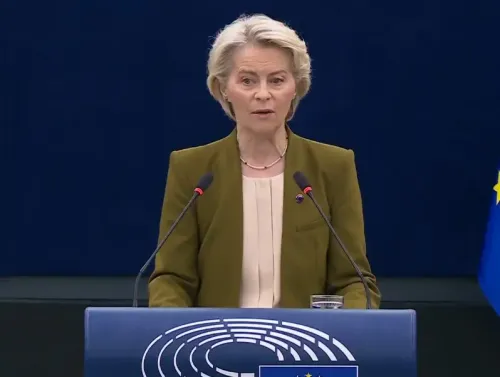
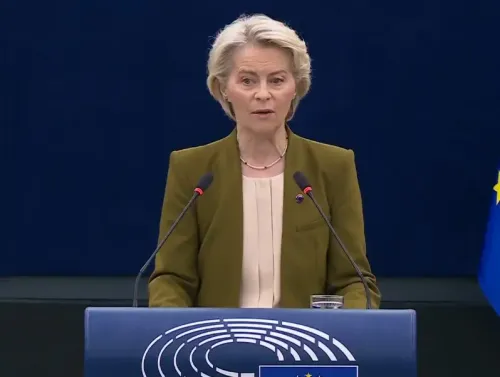
On the same day, European Commission President Ursula von der Leyen reaffirmed the EU's steadfast position, which explicitly prohibits member nations from acquiring Russian natural gas even during a critical energy crisis in Europe, amid escalating tensions in the Middle East.
This stance has faced opposition from several member states that are heavily dependent on Russian energy, according to reports from the Xinhua news agency.
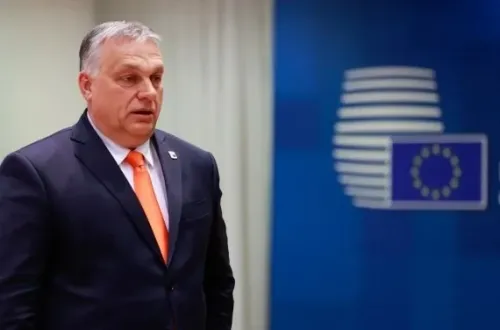
Earlier this month, Hungarian Prime Minister Viktor Orban urged the EU to reconsider and potentially lift sanctions on Russian energy, cautioning that surging oil prices and supply interruptions threaten regional energy security.
In a video message on social media, Orban linked the rising fuel prices in Hungary to what he termed a "Ukrainian oil blockade" and the increasing tensions in the Middle East. He revealed that he had sent a letter to Ursula von der Leyen, advocating for a reassessment of the sanctions on Russian energy.
"The Ukrainian oil blockade now poses a significant threat not only to Hungary and Slovakia but also to the entire EU," Orban remarked.
He emphasized that the Hungarian government must act to prevent gasoline and diesel prices from escalating to "unbearable levels," noting that an extraordinary cabinet meeting had been convened to tackle this issue.
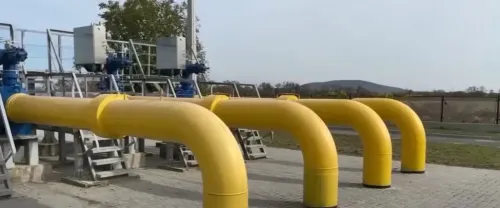
Recently, Hungary and Slovakia have encountered disruptions in oil deliveries through the Druzhba pipeline, which transports Russian crude oil to Central Europe via Ukraine.
This situation has intensified tensions between Hungary, Slovakia, and Ukraine, raising alarms about the potential ramifications for regional energy supplies.
Point of View
The unfolding energy crisis in Europe underscores the complex interplay between geopolitics and energy policies. While the EU's commitment to rejecting Russian energy may align with broader political goals, it raises substantial challenges for member states reliant on those resources. The situation demands careful consideration of both immediate needs and long-term strategic interests.
NationPress
22 Sept 2026
Frequently Asked Questions
Why is the EU rejecting Russian energy?
The EU's rejection of Russian energy is largely driven by political considerations, particularly in response to geopolitical tensions and the desire for energy independence.
What are the consequences of rejecting Russian energy?
Rejecting Russian energy may lead to energy shortages, rising fuel prices, and potential economic instability in EU member states reliant on these resources.
How has Hungary responded to the energy crisis?
Hungary's Prime Minister Viktor Orban has called for the EU to reconsider sanctions on Russian energy, citing the risks to regional energy security and rising fuel prices.
What is the Druzhba pipeline?
The Druzhba pipeline is a major pipeline system that transports Russian crude oil to Central Europe, including Hungary and Slovakia.
Are other EU countries facing similar issues?
Yes, several EU countries are experiencing challenges related to energy supply disruptions and rising prices due to their dependence on Russian energy.