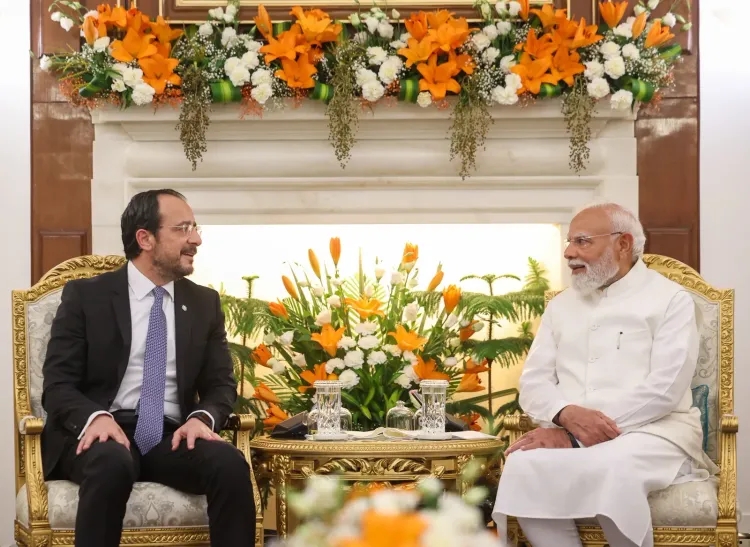
Modi, Cyprus President discuss IMEC's role in reshaping global trade
Synopsis
India and Cyprus have formalized a bilateral connectivity dialogue and upgraded ties to a strategic partnership — with IMEC at the centre of it all. Cyprus's EU membership and eastern Mediterranean location make it a pivotal node in the corridor's northern leg, and Friday's talks signal New Delhi is actively building the diplomatic scaffolding IMEC needs to move from MoU to reality.
Key Takeaways
PM Modi and Cyprus President Nikos Christodoulides discussed IMEC during a State Visit to New Delhi on 22 May 2025 .
Both leaders recognised IMEC's 'transformational potential' in reshaping global trade, connectivity, and prosperity.
India and Cyprus established a bilateral connectivity dialogue as a direct outcome of the talks.
Bilateral relations were elevated to a strategic partnership , with several MoUs and agreements exchanged.
India and Cyprus will mark 65 years of diplomatic relations in 2027 .
IMEC was originally launched at the G20 Summit in New Delhi in 2023 , backed by India, the EU, and six other nations.
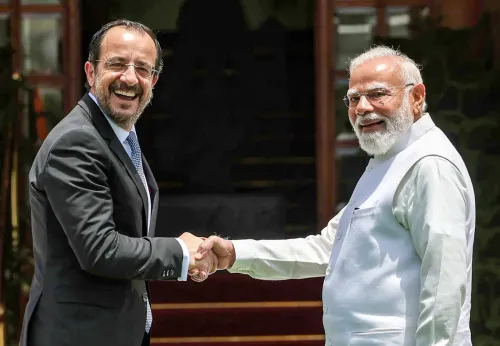
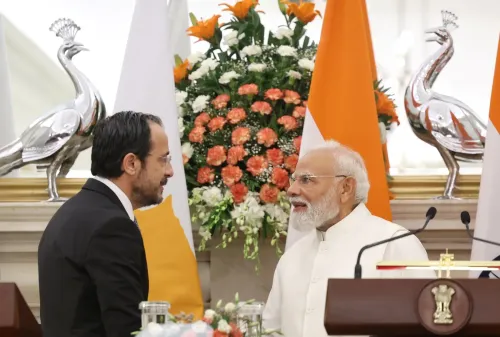
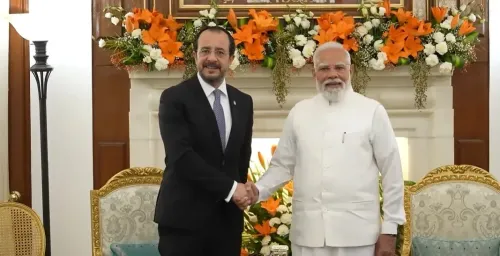
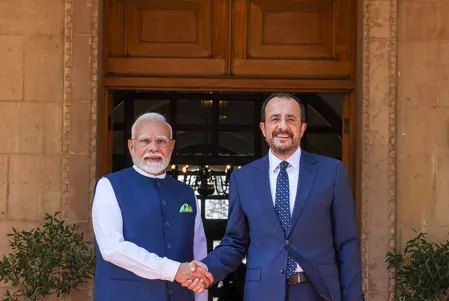
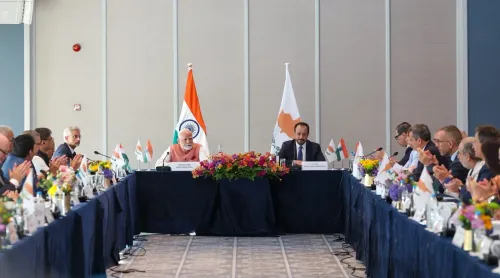
Prime Minister Narendra Modi and Cyprus President Nikos Christodoulides on Friday, 22 May held discussions in New Delhi on the India-Middle East-Europe Economic Corridor (IMEC), with both leaders acknowledging the initiative's 'transformational potential' in reshaping global trade, connectivity, and prosperity. The talks took place during President Christodoulides' ongoing State Visit to India.
What the Two Leaders Agreed On
Both leaders reaffirmed their shared commitment to promoting stability in the eastern Mediterranean and the broader Middle East, according to Ministry of External Affairs (MEA) Secretary (West) Sibi George, who addressed a special briefing on the visit. They emphasised the importance of fostering deeper engagement and corridors of interconnection from India through the wider Middle East to Europe.
George confirmed that the two nations have established a bilateral connectivity dialogue as a direct outcome of the discussions. 'Connectivity is a very important aspect of our engagement with the European Union, engagement with Cyprus, engagement with the countries in the region,' he said.
What IMEC Is and Why It Matters
The IMEC was formally launched on the sidelines of the G20 Leaders' Summit held in New Delhi in 2023, when leaders of India, the European Union, France, Germany, Italy, Saudi Arabia, the UAE, and the US signed a Memorandum of Understanding (MoU) to develop the corridor jointly.
The corridor comprises two segments: an east corridor linking India to the Gulf, and a northern corridor connecting the Gulf to Europe. Its stated objectives include enhancing connectivity, reducing trade costs, securing regional supply chains, improving trade accessibility, and generating employment — amounting to what proponents describe as a transformative integration of Asia, Europe, and the Middle East.
India-Cyprus Bilateral Ties Elevated
Beyond IMEC, the State Visit marked a significant upgrade in the overall bilateral relationship. George described the visit as an 'important milestone', noting that the two leaders have decided to elevate India-Cyprus relations to a strategic partnership. Several government-to-government MoUs and agreements were exchanged following the bilateral talks.
India and Cyprus are set to mark 65 years of diplomatic relations in 2027, which will be commemorated through activities in both countries. George stressed that the two nations share a 'close and time-tested relationship' that the new strategic partnership framework is designed to deepen further.
What Comes Next
The newly established bilateral connectivity dialogue is expected to keep IMEC-related discussions ongoing between New Delhi and Nicosia. Given Cyprus's position as an EU member state with strategic proximity to the eastern Mediterranean — a critical transit zone for the corridor's northern leg — the island nation's formal engagement adds a meaningful node to India's IMEC diplomacy. Further consultations under the dialogue framework are anticipated in the coming months.
Point of View
A chokepoint for the corridor's European leg, and its formal buy-in matters as the project moves from a G20 declaration to operational reality. Notably, IMEC has faced headwinds since the Gaza conflict complicated Gulf-Israel transit assumptions; India's effort to keep corridor diplomacy alive through bilateral dialogues suggests New Delhi is playing a long game. The real test will be whether these connectivity dialogues produce infrastructure commitments or remain in the realm of strategic statements.
NationPress
7 Oct 2026
Frequently Asked Questions
What is IMEC and why is it significant?
The India-Middle East-Europe Economic Corridor (IMEC) is a multi-nation trade and connectivity initiative comprising an east corridor linking India to the Gulf and a northern corridor connecting the Gulf to Europe. It was launched at the G20 Summit in New Delhi in 2023 and aims to reduce trade costs, secure supply chains, and generate employment across Asia, Europe, and the Middle East.
What did PM Modi and Cyprus President Christodoulides agree on regarding IMEC?
Both leaders recognised IMEC's transformational potential for global trade and reiterated their shared commitment to stability in the eastern Mediterranean and the Middle East. They also agreed to establish a bilateral connectivity dialogue to keep IMEC-related discussions ongoing between India and Cyprus.
How have India-Cyprus relations changed after the May 2025 visit?
India and Cyprus elevated their bilateral ties to a strategic partnership during President Christodoulides' State Visit on 22 May 2025. Several government-to-government MoUs and agreements were also signed, marking what MEA Secretary Sibi George called an 'important milestone' in the relationship.
When will India and Cyprus mark 65 years of diplomatic relations?
India and Cyprus are set to celebrate 65 years of diplomatic relations in 2027, with commemorative activities planned in both countries.
Which countries signed the original IMEC MoU?
The IMEC MoU was signed in 2023 by India, the European Union, France, Germany, Italy, Saudi Arabia, the UAE, and the United States on the sidelines of the G20 Leaders' Summit in New Delhi.