Cyprus calls itself India's 'secure ally' in Eastern Mediterranean amid Pakistan tensions
Synopsis
Cyprus is quietly becoming one of India's most strategically useful European partners — and Pakistan's ties with Turkey are a big reason why. President Christodoulides's latest meeting with PM Modi in New Delhi, built on last year's ceasefire-line tour in Nicosia, signals a bilateral axis that spans counter-terrorism, IMEC connectivity, and India's gateway into the EU during Cyprus's upcoming Council Presidency.
Key Takeaways
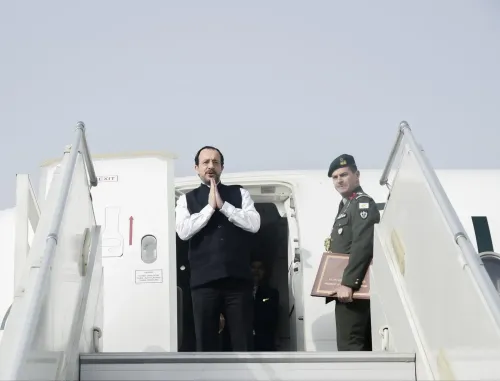
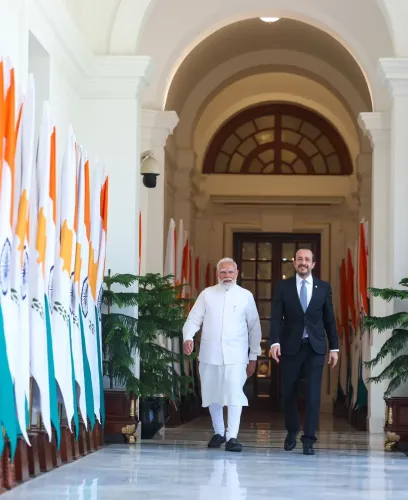
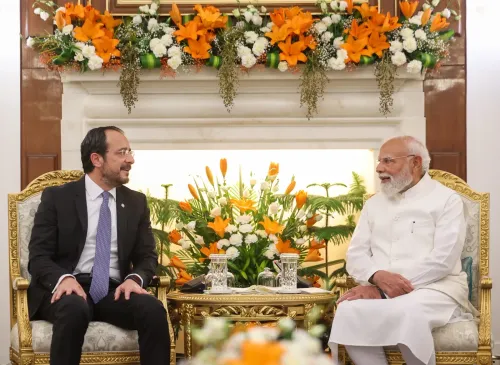
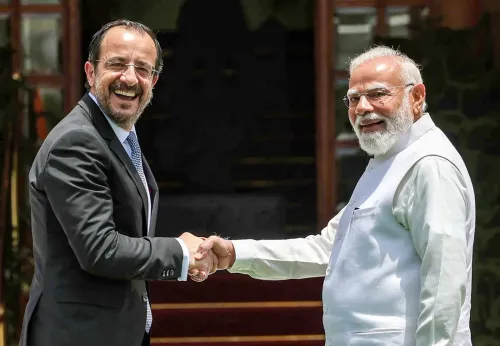
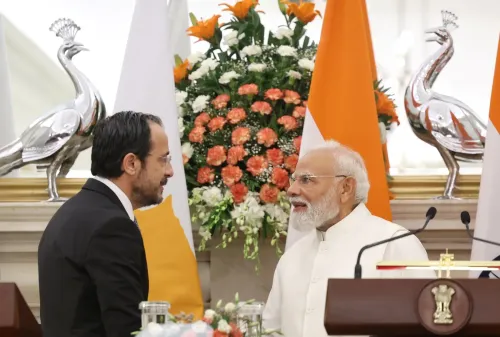
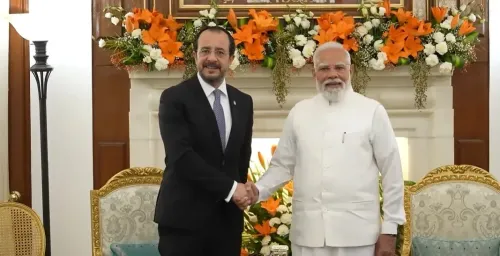
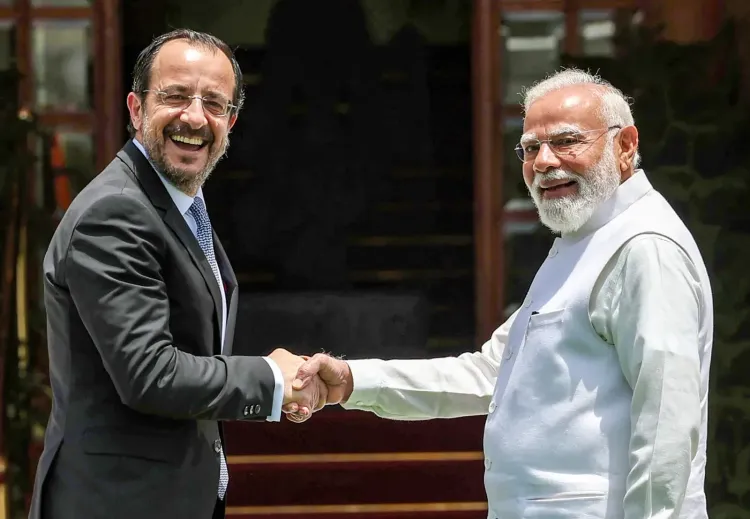
Cyprus President Nikos Christodoulides met PM Narendra Modi at Hyderabad House, New Delhi on 22 May 2025 , reaffirming Cyprus as India's 'secure ally' in the Eastern Mediterranean.
Both leaders categorically condemned cross-border terrorism and called for finalisation of the Comprehensive Convention on International Terrorism under the UN framework.
The Joint Statement urged action against entities listed under the 1267 UNSC Sanctions Committee , including proxy groups, financiers, and backers.
Cyprus's alignment with India is partly driven by Pakistan's failure to support Nicosia's territorial integrity and Islamabad's close ties with Turkey , which has occupied northern Cyprus since 1974 .
Both nations reaffirmed the transformational potential of IMEC and agreed to establish a Bilateral Connectivity Dialogue .
The Cyprus EU Council Presidency begins 1 January 2026 , positioning Nicosia as India's key conduit into the EU.
Cyprus President Nikos Christodoulides reaffirmed his country's position as a 'predictable and secure ally' of India during his meeting with Prime Minister Narendra Modi at Hyderabad House, New Delhi, on Friday, 22 May, expressing solidarity with India's fight against cross-border terrorism. The bilateral engagement underscores a deepening strategic alignment rooted in shared concerns over Pakistan's behaviour and Turkey's regional posture.
Why Cyprus Aligns with India
Analysts note that Nicosia has longstanding grievances with Pakistan, stemming in large part from Islamabad's failure to uphold Cyprus's territorial integrity as required under the UN Charter — and from Pakistan's close ties with Turkey, which has occupied the northern part of Cyprus since 1974. Cyprus believes its relationship with India is grounded in shared principles on the international system and multilateralism, making the two nations natural partners.
Turkey's recognition of the so-called Turkish Republic of Northern Cyprus — a status rejected by the international community — and ongoing disputes over gas exploration rights in the Eastern Mediterranean remain persistent fault lines between Ankara and Nicosia. India's own tensions with Turkey over Ankara's continuous backing of Pakistan have further cemented the India-Cyprus strategic convergence.
Modi's Historic Cyprus Visit and the Ceasefire Line Tour
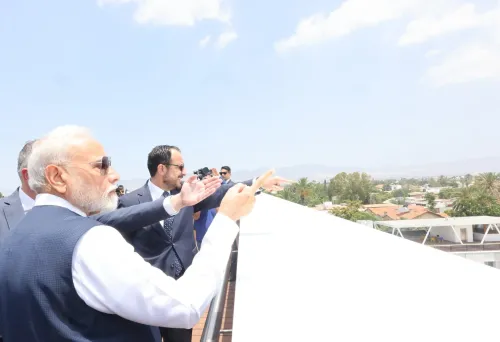
The current partnership builds on Prime Minister Modi's landmark two-day visit to Cyprus last year — the first by an Indian Prime Minister to the island nation in over two decades. During that visit, President Christodoulides personally guided Modi along the ceasefire line in the historic city of Nicosia.
The Government of the Republic of Cyprus posted on X: 'Tour with the Prime Minister of India Narendra Modi along the ceasefire line, in old Nicosia. Where the signs of the Turkish occupation remain visible.' The gesture was widely read as a pointed signal to Ankara about Nicosia's alignment with New Delhi.
A Joint Declaration adopted during that visit formally marked a new chapter in bilateral relations, with Christodoulides describing Cyprus as 'India's gateway to Europe' — a role he said would be amplified during the Cyprus Presidency of the Council of the EU, set to begin on 1 January 2026.
Joint Statement: Terrorism and Connectivity
At Friday's meeting, both leaders 'categorically and unequivocally condemned terrorism in all its forms and manifestations, including cross-border terrorism.' The Joint Statement issued after the talks called for strengthening multilateral counter-terrorism efforts and the 'expeditious finalization and adoption of the Comprehensive Convention on International Terrorism within the UN framework.'
The statement specifically urged 'strong and concerted action against all UN- and EU-designated terrorists and terrorist entities, including those under 1267 UNSC Sanctions Committee, their associated proxy groups, facilitators, sponsors, financiers and backers.' The reference to the 1267 Committee — under which Pakistan-linked groups such as Lashkar-e-Taiba and Jaish-e-Mohammed are listed — carries clear diplomatic weight.
IMEC and Strategic Connectivity
Beyond security, both leaders reaffirmed the 'transformational potential' of the India-Middle East-Europe Economic Corridor (IMEC) in reshaping global trade and connectivity. They agreed to establish a Bilateral Connectivity Dialogue and reiterated their shared vision of Cyprus and India as 'strategic partners and vital connectors between Europe, the Mediterranean, and the Indo-Pacific.'
Cyprus continues to work with India on what officials describe as a 'very specific positive agenda' — independent of Turkey's actions — making the partnership one of the more quietly consequential bilateral relationships in India's European diplomacy.
With the Cyprus EU Council Presidency approaching and IMEC gathering momentum, the India-Cyprus axis is poised to gain further strategic weight in the months ahead.
Point of View
A foothold in the Eastern Mediterranean, and an upcoming EU Council Presidency that could be leveraged to advance India's strategic interests in Brussels. The repeated invocation of the 1267 UNSC Sanctions Committee in the Joint Statement is not diplomatic boilerplate — it is a calibrated signal aimed squarely at Pakistan-linked terror networks. What mainstream coverage misses is that this relationship is not merely reactive to the Turkey-Pakistan axis; it is increasingly proactive, with IMEC giving it an economic spine that could outlast any single geopolitical moment.
NationPress
5 Oct 2026
Frequently Asked Questions
Why is Cyprus considered a strategic ally of India?
Cyprus is considered a strategic ally of India because of shared principles on multilateralism, mutual concerns over Pakistan's regional behaviour, and Cyprus's position as an EU member state in the geostrategically critical Eastern Mediterranean. Nicosia also has longstanding tensions with Turkey — which backs Pakistan — over the Turkish occupation of northern Cyprus since 1974.
What did the India-Cyprus Joint Statement say about terrorism?
The Joint Statement issued after the Modi-Christodoulides meeting on 22 May called for the expeditious finalisation of the Comprehensive Convention on International Terrorism within the UN framework. It also urged strong action against all UN- and EU-designated terrorist entities, including those under the 1267 UNSC Sanctions Committee and their proxy groups, facilitators, and financiers.
What is the significance of PM Modi's visit to Cyprus last year?
PM Modi's visit was the first by an Indian Prime Minister to Cyprus in over two decades. President Christodoulides personally guided Modi along the ceasefire line in Nicosia, where signs of the Turkish occupation remain visible — a symbolic gesture that underscored Cyprus's alignment with India amid shared concerns over Turkey and Pakistan.
What is IMEC and why does it matter for India and Cyprus?
The India-Middle East-Europe Economic Corridor (IMEC) is a proposed trade and connectivity route linking India through the Middle East to Europe. Both India and Cyprus have recognised its 'transformational potential' and agreed to establish a Bilateral Connectivity Dialogue, with Cyprus positioned as a key node connecting the Mediterranean to the broader corridor.
How does the Cyprus EU Council Presidency affect India?
Cyprus assumes the Presidency of the Council of the European Union on 1 January 2026. President Christodoulides has explicitly committed to using that platform to strengthen India's strategic relations with the EU, making Nicosia a potentially influential advocate for Indian interests within European institutions during that period.