India-Cyprus Strategic Partnership: Key outcomes of Christodoulides' state visit
Synopsis
Cyprus and India have formally upgraded their relationship to a Strategic Partnership — a move that goes beyond diplomatic symbolism. With a new counter-terrorism working group, education ties, and growing investment linkages now institutionalised, New Delhi is quietly building a structured European foothold through Nicosia, an EU member with outsized financial relevance to India.
Key Takeaways
Cyprus President Nikos Christodoulides concluded his state visit to India on 23 May 2025 .
India and Cyprus formally elevated bilateral ties to a Strategic Partnership — the most significant upgrade in the relationship to date.
Both sides agreed to establish a Joint Working Group on Counter-Terrorism .
Cooperation was announced between the Sushma Swaraj Institute of Foreign Service and Cyprus' Diplomatic Academy .
PM Modi described the partnership as 'strong and futuristic,' rooted in shared democratic values.
Cyprus is a significant conduit for foreign direct investment into India, making the economic dimension of the upgrade especially consequential.
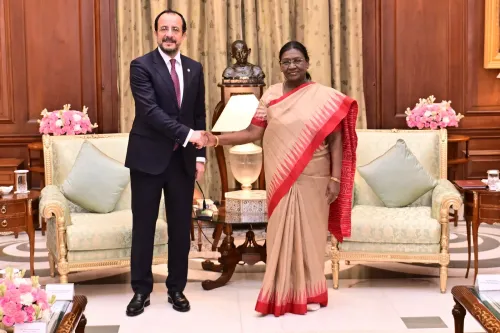
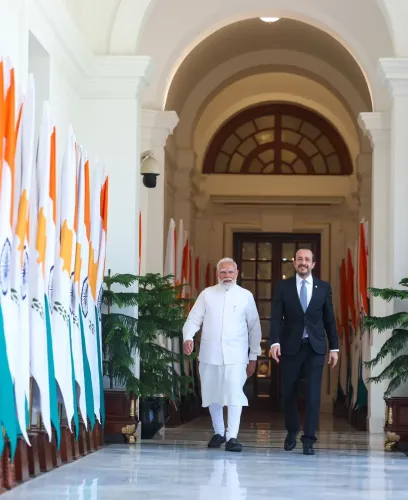
Cyprus President Nikos Christodoulides concluded a landmark state visit to India on Saturday, 23 May, with both nations formally elevating their bilateral relationship to a Strategic Partnership — a significant diplomatic upgrade that spans defence, trade, education, and counter-terrorism cooperation. The visit, centred on high-level talks at Hyderabad House in New Delhi, marks a new chapter in India-Cyprus ties that officials have described as rooted in shared democratic values.
How the Visit Concluded
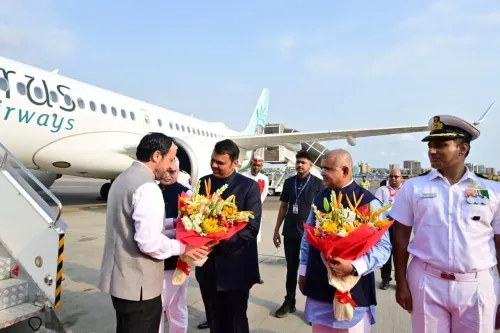
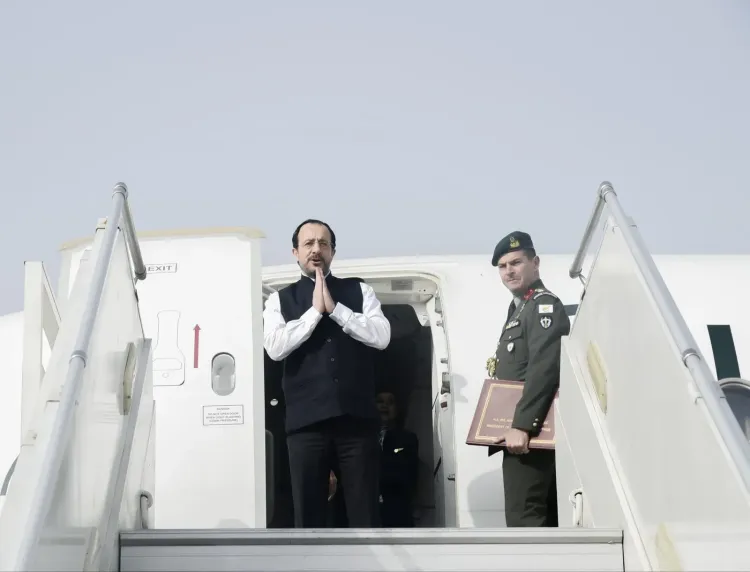
Ministry of External Affairs (MEA) spokesperson Randhir Jaiswal confirmed the conclusion of the visit, noting that President Christodoulides was seen off by Minister of State for Road Transport and Highways Ajay Tamta. Jaiswal described it as 'a productive visit,' adding that it 'gave a significant boost to India-Cyprus ties and marked a new chapter with the elevation of bilateral ties to a Strategic Partnership.'
President Christodoulides paid tribute to Mahatma Gandhi at Rajghat before proceeding to official engagements in the capital on Friday — a customary gesture extended to visiting heads of state that carries symbolic weight in India's diplomatic protocol.
What Modi and Christodoulides Agreed On
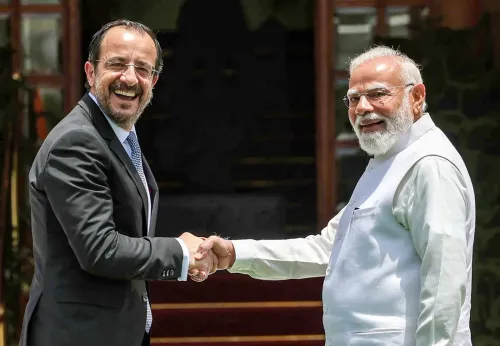
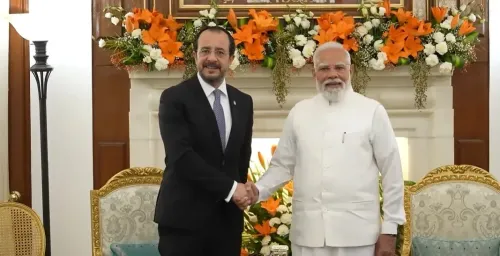
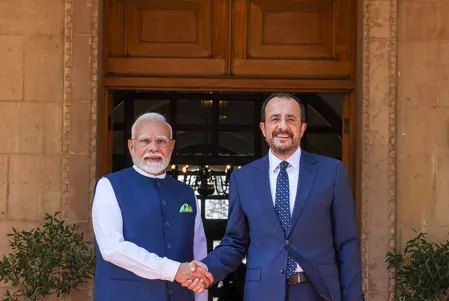
Prime Minister Narendra Modi, after delegation-level talks with the Cyprus President, described the partnership as 'strong and futuristic' and grounded in shared values. 'The growing investment linkages between our nations are a matter of immense joy, and we hope to increase trade and economic ties in the times to come,' Modi said.
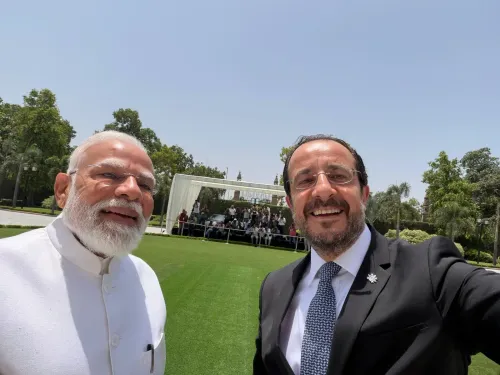
The two leaders also shared an informal moment — a selfie at Hyderabad House — which President Christodoulides posted on X, writing: 'Prime Minister Modi, my good friend Narendra, I wish to express my deepest appreciation to you personally, and to the people of India, for the warm welcome and hospitality extended to me and my delegation.'
Key Outcomes from Bilateral Talks
According to the MEA, several concrete deliverables emerged from the discussions. These include the establishment of a Joint Working Group (JWG) on Counter-Terrorism — a notable security-focused outcome — along with an agreement on cooperation between the Sushma Swaraj Institute of Foreign Service and Cyprus' Diplomatic Academy. Both sides also agreed to deepen collaboration in higher education and research.
The counter-terrorism working group is particularly significant given Cyprus' strategic location in the eastern Mediterranean and its role as a European Union member state, giving India an institutional channel into EU-level security conversations.
Why the Strategic Partnership Matters
India and Cyprus have historically maintained warm ties, partly owing to Cyprus' non-aligned tradition and its significant Indian diaspora. The formal elevation to a Strategic Partnership, however, signals a deliberate push to institutionalise cooperation beyond bilateral goodwill. Notably, Cyprus serves as a major conduit for foreign direct investment into India — a financial relationship that both governments appear keen to expand and formalise under the new framework.
This upgrade also fits a broader pattern in Indian foreign policy of deepening ties with European nations individually, complementing its engagement with the European Union as a bloc. With trade, education, and security now formally structured, the relationship is expected to gain greater operational depth in the months ahead.
Point of View
But the real signal is the counter-terrorism working group — an institutional mechanism India rarely establishes without strategic intent. Cyprus is an EU member with a unique financial relationship with India, and formalising that through a security and education framework suggests New Delhi is thinking beyond trade. What mainstream coverage underplays is that this visit also advances India's quiet strategy of cultivating bilateral depth within Europe, reducing dependence on bloc-level EU negotiations that have stalled for years. The test will be whether the JWG on counter-terrorism produces operational outcomes or remains a talking-shop — a distinction India's recent bilateral security frameworks have struggled to clarify.
NationPress
20 Sept 2026
Frequently Asked Questions
What is the India-Cyprus Strategic Partnership announced in May 2025?
India and Cyprus formally elevated their bilateral relationship to a Strategic Partnership during Cyprus President Nikos Christodoulides' state visit to New Delhi on 23 May 2025. The upgrade covers diplomacy, trade, education, and security cooperation, including a new Joint Working Group on Counter-Terrorism.
What were the key outcomes of President Christodoulides' visit to India?
Key outcomes include the establishment of a Joint Working Group on Counter-Terrorism, cooperation between the Sushma Swaraj Institute of Foreign Service and Cyprus' Diplomatic Academy, and agreements on higher education and research collaboration. The overarching outcome was the elevation of ties to a Strategic Partnership.
Why does the India-Cyprus relationship matter economically?
Cyprus has historically served as a major conduit for foreign direct investment into India. The new Strategic Partnership framework is expected to formalise and expand these investment linkages, with PM Modi specifically highlighting growing investment ties as a priority.
What did PM Modi say about India's partnership with Cyprus?
PM Modi described India's partnership with Cyprus as 'strong and futuristic' and rooted in shared democratic values. He also noted that growing investment linkages between the two nations were 'a matter of immense joy' and expressed hope to increase trade and economic ties.
Who received President Christodoulides at the conclusion of his visit?
President Christodoulides was seen off by Minister of State for Road Transport and Highways Ajay Tamta at the conclusion of his state visit on 23 May 2025, as confirmed by MEA spokesperson Randhir Jaiswal.