Modi's Australia visit hailed as 'good sign for economy and diplomacy'
Synopsis
A 35,000-strong crowd at Marvel Stadium, a uranium deal worth billions, defence pacts, and eight Australian university campuses approved in India — PM Modi's Australia visit delivered on nearly every front, prompting the country's top newspapers to declare it a watershed for the bilateral relationship, all while China's missile test in the South Pacific provided an unmistakable strategic backdrop.
Key Takeaways
PM Narendra Modi's visit to Australia was praised by major outlets including The Australian , Herald Sun , The Age , and the Australian Financial Review .
A uranium deal worth billions , closer military ties, and an investment treaty were among the key outcomes reported.
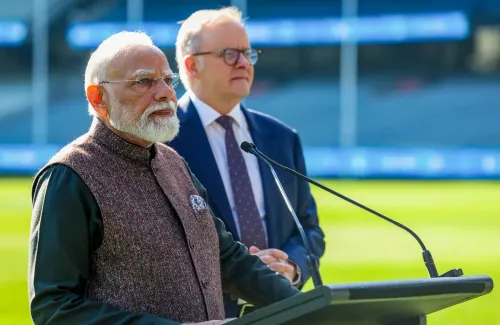
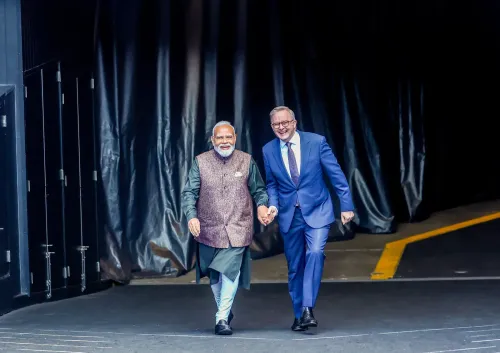
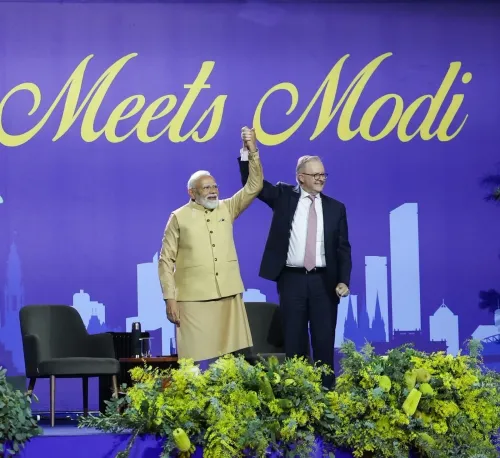
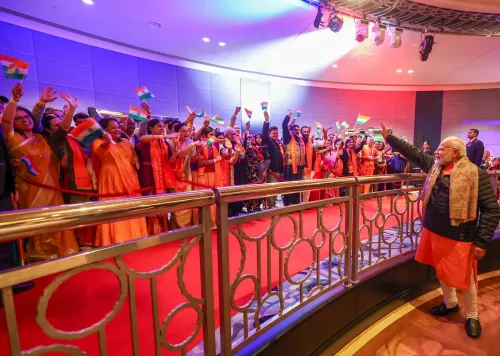
35,000 people attended Modi's reception at Marvel Stadium , Melbourne .
Eight Australian university campuses have now been approved to open in India , with at least one more cleared during the visit.
The visit coincided with China's missile firing at the South Pacific , which The Australian said underscored the strategic importance of the India-Australia relationship.
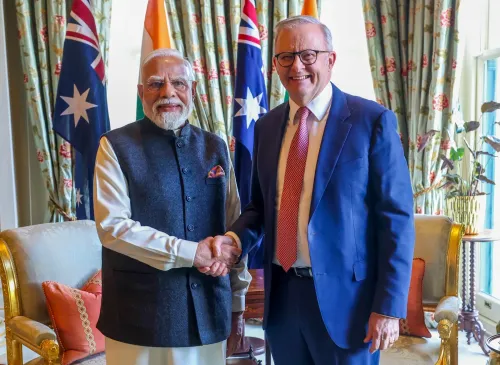
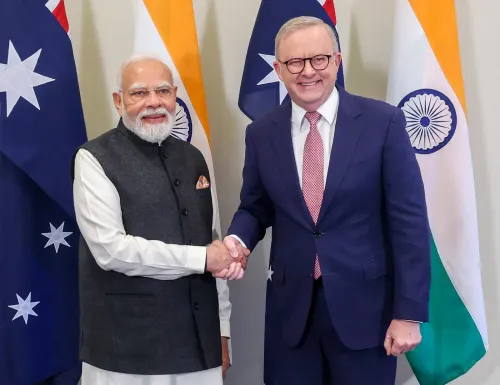
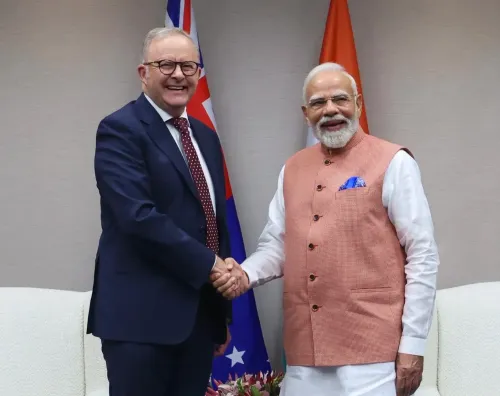
Talks on a bilateral Free Trade Agreement (FTA) were accelerated during meetings between PM Modi and PM Anthony Albanese .
Prime Minister Narendra Modi's visit to Australia drew widespread praise from the country's leading media outlets, which described it as a pivotal moment for bilateral ties spanning defence, trade, education, and strategic alignment. The visit, which included a landmark reception at Marvel Stadium in Melbourne, produced a raft of agreements that Australian commentators say could redefine the India-Australia relationship for years ahead.
How Australian Media Covered the Visit
The Australian, the country's largest nationally distributed newspaper, declared that 'Modi's visit is a good sign for the economy and diplomacy.' The paper drew a pointed geopolitical connection, noting that the visit coincided with China's missile firing at the South Pacific — an episode it said 'underlines the vital importance of our deepening relationship with New Delhi.' The paper argued that India's decades-long experience confronting what it termed 'Chinese communist aggression and subversive strategic chicanery' offered lessons that Australia and its Pacific partners would do well to absorb.
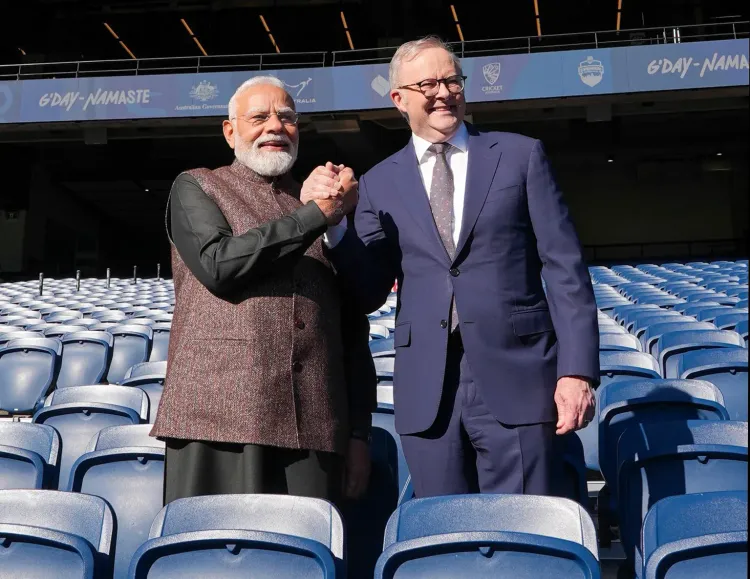
Herald Sun, Melbourne's biggest-selling newspaper, captured the popular mood with a front-page splash headlined 'Modi Mania: Indian PM's a Marvel Superhero,' referencing the 35,000-strong crowd that turned out at Marvel Stadium for Modi's reception. The paper noted that Prime Minister Anthony Albanese had 'feted his high-profile guest amid talks which included new defence and Uranium deals.'
Trade, Defence, and Uranium Deals
The Australian also highlighted the substantive outcomes of the visit, summarising them as: 'Modi comes bearing gifts on trade, defence. India promise: Uranium deal worth billions, closer military ties, investment treaty.' The uranium agreement, if finalised, would mark a significant expansion of energy cooperation between the two nations, with India's growing nuclear power programme representing a substantial long-term market for Australian uranium exports.
The visit also advanced discussions on a long-pending Free Trade Agreement (FTA). The Age, a prominent Melbourne daily, framed the development through the lens of the two leaders' personal rapport: 'Australia and India accelerate free trade moves in Melbourne as PMs Anthony Albanese and Narendra Modi strengthen their bond.'
Australian Universities Eye Indian Campuses
The Australian Financial Review reported a surge of interest among Australian universities in establishing campuses in India, with at least one additional institution receiving approval during Modi's visit. 'Another Australian university is primed to set up a campus in India after being given approval during a visit by Prime Minister Narendra Modi, taking the total opening in the fast-growing country to eight,' the publication reported. The development signals growing confidence in India's higher education market and aligns with New Delhi's push to attract foreign universities under its revised education policy.
Strategic Significance
This comes amid a broader Indo-Pacific realignment, with both nations deepening ties through the Quad framework alongside the United States and Japan. Analysts note that the convergence of trade, defence, and education agreements in a single visit is unusual and reflects the elevated priority both governments now assign to the bilateral relationship. Notably, the optics of a 35,000-person diaspora reception add domestic political weight to the diplomatic gains on both sides.
With multiple agreements now on the table, the focus shifts to implementation timelines and parliamentary ratification processes in both countries.
Point of View
Defence, FTA, and university campuses in a single visit — is diplomatically unusual and signals that both governments have decided to move from intent to delivery. What Australian media coverage captures, and what mainstream Indian reporting sometimes underplays, is the strategic subtext: the China missile test during Modi's stay was not incidental backdrop but a live demonstration of the threat environment that makes this partnership urgent. The real test now is ratification speed and whether the uranium deal clears domestic political hurdles in Australia, where nuclear exports remain contested. A bilateral relationship that has historically moved in fits and starts is being asked to institutionalise quickly — and that execution risk is real.
NationPress
11 Oct 2026
Frequently Asked Questions
What were the key outcomes of PM Modi's visit to Australia?
PM Modi's Australia visit produced agreements on a uranium deal worth billions, closer defence ties, an investment treaty, and the approval of additional Australian university campuses in India. Free trade agreement talks were also accelerated during meetings with Australian PM Anthony Albanese.
How did Australian media react to Modi's visit?
Leading Australian outlets including The Australian, Herald Sun, The Age, and the Australian Financial Review gave the visit prominent, largely positive coverage. The Australian called it 'a good sign for the economy and diplomacy,' while Herald Sun dubbed Modi a 'Marvel Superhero' after his 35,000-strong reception at Marvel Stadium.
What is the significance of the India-Australia uranium deal?
The uranium deal, described as worth billions, would allow Australia to supply uranium to India's growing nuclear power programme. It represents a major expansion of energy cooperation and signals deepening strategic trust between the two nations.
How many Australian universities are now approved to open campuses in India?
According to the Australian Financial Review, the total number of Australian universities approved to open campuses in India has reached eight, with at least one additional approval granted during PM Modi's visit.
Why did The Australian link Modi's visit to China's missile test?
The Australian noted that Modi's visit coincided with China's missile firing at the South Pacific, arguing it underlined the strategic importance of deepening India-Australia ties. The paper suggested Australia and its Pacific partners have much to learn from India's experience managing Chinese strategic pressure.