PM Modi begins four-nation Central Asia tour: Uzbekistan and Kyrgyzstan visits
Synopsis
Modi's four-day Central Asia swing is more than diplomatic courtesy — it pairs a bilateral push in Tashkent with the milestone 26th SCO Summit in Bishkek, where India's anti-terrorism and connectivity agenda will be tested against the bloc's fractious geopolitics. With this being his fourth Uzbekistan visit, the pattern signals a deliberate, long-game Central Asia strategy.
Key Takeaways
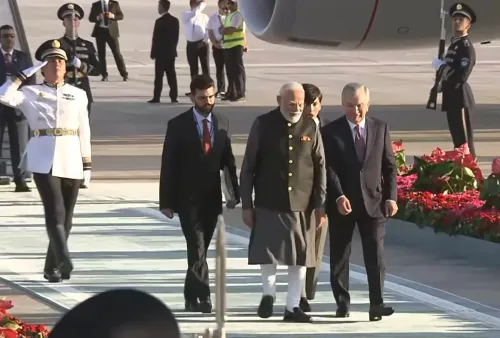
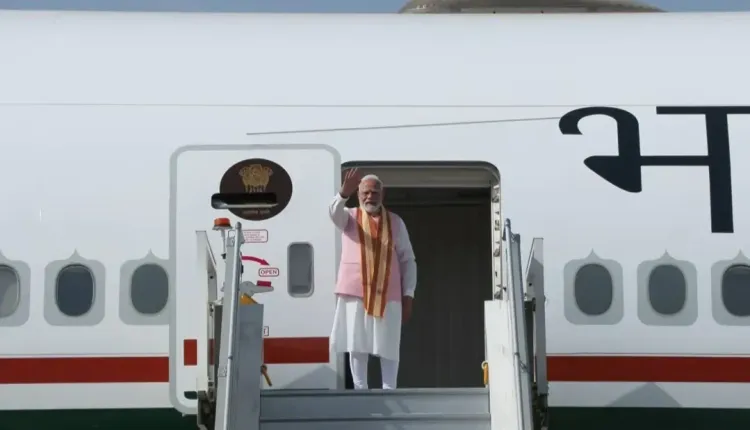
PM Narendra Modi departed on 29 August for a four-day two-nation visit to Uzbekistan and Kyrgyzstan .
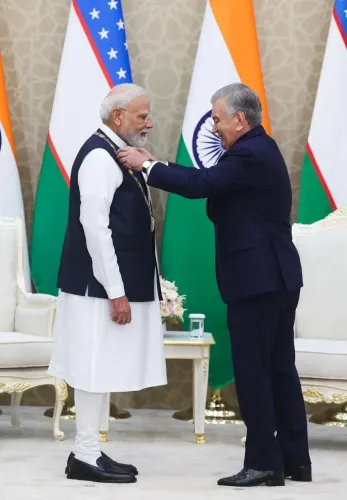
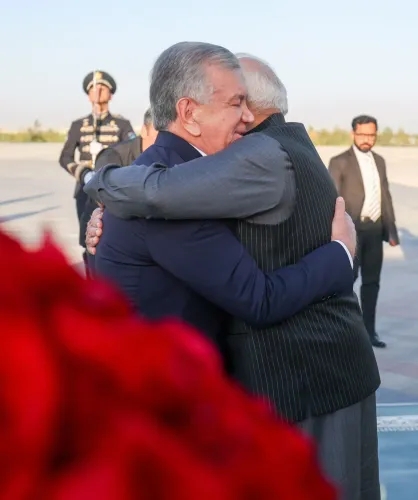
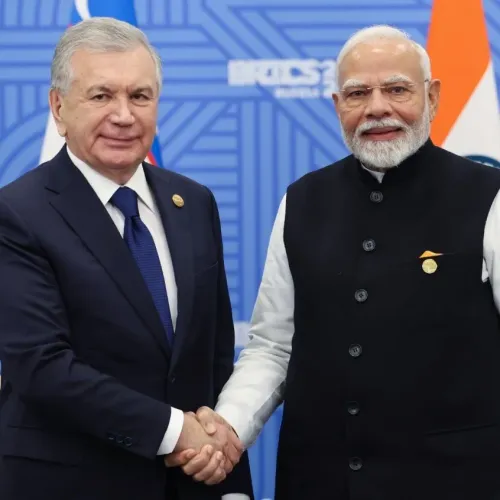
He will hold bilateral talks with Uzbekistan President Shavkat Mirziyoyev in Tashkent — his fourth visit to the country.
Modi will attend the 26th SCO Summit in Bishkek , marking 25 years of the organisation, at the invitation of President Sadyr Zhaparov .
India has been a full SCO member since 2017 ; Modi's stated priorities are Security, Connectivity and Opportunity.
He will also attend the Opening Ceremony of the 6th World Nomad Games in Bishkek.
Modi is scheduled to visit the Shastri Memorial and the Mahatma Gandhi Centre at Tashkent State University of Oriental Studies.
Prime Minister Narendra Modi departed for a four-day, two-nation visit to Uzbekistan and Kyrgyzstan on Saturday, 29 August, reaffirming India's deepening engagement with Central Asia. The visit marks Modi's fourth trip to Uzbekistan and includes participation in the 26th Shanghai Cooperation Organisation (SCO) Summit in Bishkek, which commemorates 25 years of the regional bloc.
Bilateral Agenda in Tashkent
Modi will first land in Tashkent for a two-day bilateral visit hosted by Uzbekistan President Shavkat Mirziyoyev. In his pre-departure statement, the Prime Minister said, 'In recent years, India-Uzbekistan Strategic Partnership has seen significant advancement. I look forward to my discussions with President Mirziyoyev on further deepening our cooperation in trade and investment, digital connectivity, defence, energy, and on advancing our shared visions of Viksit Bharat and Yangi Uzbekistan.'
Modi is also scheduled to visit the Shastri Memorial and the Mahatma Gandhi Centre at Tashkent State University of Oriental Studies — gestures he described as 'a tribute to the close cultural and people-to-people ties' between the two nations. The Uzbek President had previously visited India for a State Visit in 2018 and attended the Vibrant Gujarat Global Summit in 2019, underscoring the bilateral relationship's consistent momentum.
Modi's History with Uzbekistan
This is Modi's fourth visit to Uzbekistan. His earlier visits came in 2015 as part of a broader Central Asia tour, and subsequently in 2016 and 2022 to attend SCO Summits. The frequency of engagement reflects the strategic weight India assigns to the region, particularly as connectivity corridors and energy partnerships gain importance in India's foreign policy calculus.
SCO Summit in Bishkek
From Tashkent, Modi will travel to Bishkek at the invitation of Kyrgyzstan President Sadyr Zhaparov for the 26th SCO Summit. India has been a full member of the SCO since 2017. In his departure statement, Modi outlined India's priorities for the summit: 'I look forward to advancing India's vision for the region, anchored in Security, Connectivity and Opportunity, and to working with fellow members for a region free from the scourge of terrorism, separatism and extremism, which continue to threaten peace and stability in our neighbourhood and beyond.'
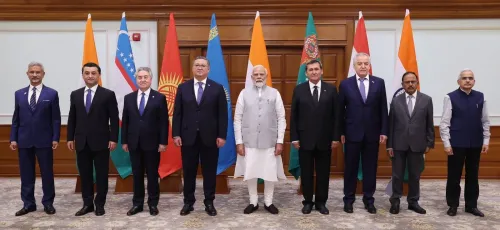
On the sidelines, Modi is expected to hold bilateral meetings with President Zhaparov and other SCO leaders. He will also attend the Opening Ceremony of the 6th World Nomad Games, which he called 'a celebration of the rich living heritage of Central Asia that India holds in deep respect.'
Strategic Significance
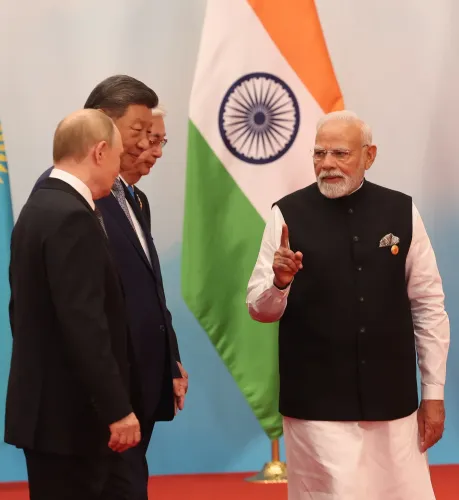
This comes amid India's sustained push to expand its footprint in Central Asia through the Connect Central Asia policy and the International North-South Transport Corridor (INSTC). The SCO platform also places Modi in proximity to leaders from China, Russia, and Pakistan, making the summit's sideline diplomacy as consequential as the formal agenda. Notably, the anti-terrorism and connectivity agenda at this SCO edition carries added weight given ongoing instability along the Afghanistan border. Modi concluded his departure remarks by saying he was 'confident that this visit will strengthen India's strategic partnerships in Central Asia, deepen our civilisational connect with the region, and advance our shared pursuit of peace, stability and prosperity.'
Point of View
Where India must navigate a bloc increasingly shaped by China-Russia dynamics while advancing its own connectivity and counter-terrorism agenda. India's SCO membership has yet to yield a landmark deliverable that matches its diplomatic investment; Bishkek is an opportunity to change that narrative. The World Nomad Games attendance is soft power, but the harder question is whether India's INSTC and trade corridor ambitions will move from MoUs to measurable freight flows.
NationPress
13 Oct 2026
Frequently Asked Questions
Where is PM Modi visiting on his four-day Central Asia tour?
PM Modi is visiting Uzbekistan and Kyrgyzstan. He will first travel to Tashkent for a two-day bilateral visit, then proceed to Bishkek for the 26th SCO Summit.
What is the 26th SCO Summit and why is India attending?
The 26th Shanghai Cooperation Organisation Summit is being held in Bishkek, Kyrgyzstan, marking 25 years of the bloc. India has been a full SCO member since 2017 and attends to advance its priorities of Security, Connectivity and Opportunity in the region.
What will PM Modi discuss with Uzbekistan President Mirziyoyev?
According to Modi's departure statement, discussions will cover trade and investment, digital connectivity, defence, energy, and the shared development visions of Viksit Bharat and Yangi Uzbekistan.
How many times has PM Modi visited Uzbekistan before this trip?
This is Modi's fourth visit to Uzbekistan. Earlier visits took place in 2015 as part of a Central Asia tour, and in 2016 and 2022 for SCO Summits.
What else is PM Modi attending in Bishkek besides the SCO Summit?
Modi will attend the Opening Ceremony of the 6th World Nomad Games in Bishkek, which he described as a celebration of Central Asia's rich living heritage. He is also expected to hold bilateral meetings with SCO leaders on the sidelines.