Fatima Asghar killing in Islamabad raises child labour concerns
Synopsis
The killing of 13-year-old Fatima Asghar in Islamabad has prompted former lawmaker Mehnaz Akber Aziz to call for scrutiny of child domestic work and enforcement of protections. A national report estimates that 86 lakh children are engaged in child labour in Pakistan.
Key Takeaways
Fatima Asghar , aged 13 , was killed in Islamabad , according to the source.
Former National Assembly member Mehnaz Akber Aziz wrote that two suspects had been arrested.
A postmortem reportedly found around 20 injuries, including old wounds and burn marks.
The State of Children in Pakistan 2025 says domestic workers account for 13.2% of working children aged five to 17 .
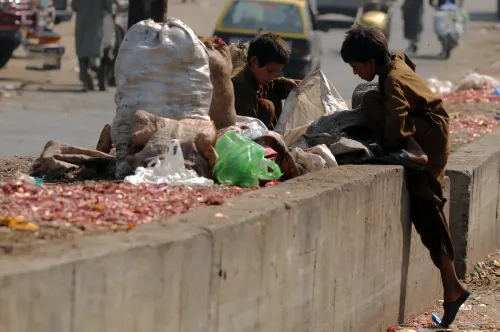
A national report estimated that 86 lakh children in Pakistan were engaged in child labour, including more than 66 lakh in hazardous labour.
The killing of 13-year-old Fatima Asghar in Islamabad has drawn attention to the vulnerability of children working in households in Pakistan. Former National Assembly member Mehnaz Akber Aziz said in an opinion piece that the case reflected a wider system in which children from poor families face exploitation.
Aziz wrote in The News International that two suspects had been arrested and called for an investigation. The source did not provide a date for the killing or details of the suspects’ response to the allegations.
Medical findings and investigation
According to the account cited by Aziz, a postmortem examination found around 20 injuries on Fatima’s body. These included old wounds, untreated injuries, infections and burn marks reportedly caused by a heated iron.
The medical findings indicated repeated physical assaults and severe trauma, the account said. Aziz called for an investigation to bring the perpetrator to justice; the source did not specify what charges, if any, had been filed against the two arrested suspects.
In her opinion piece, Aziz argued that Fatima’s death should prompt scrutiny of the treatment of domestic workers and of the enforcement of laws intended to protect vulnerable children. She also raised concerns about abuse that may remain hidden inside private households.
Domestic work and children in Pakistan
Domestic workers account for 13.2% of working children aged five to 17, according to the National Commission on the Rights of the Child’s State of Children in Pakistan 2025. Among those child domestic workers, 33.5% are girls, the commission’s data showed.
The commission noted that domestic work remains underreported in Pakistan. That qualification matters when interpreting the figures: the published share records identified work, while the commission has cautioned that such work is not always reported.
Aziz also referred to other children, including Kaneez Fatima, Iqra, Fatima Furiro, Zohra Bibi and Rizwana, in discussing violence against young girls. The source described them as having been murdered but did not provide details of their individual cases.
National child labour estimates
A national report launched in June by the National Commission for Human Rights (NCHR), in collaboration with the United Nations Children’s Fund (UNICEF), estimated that 86 lakh children were engaged in child labour in Pakistan. More than 66 lakh were involved in hazardous labour, according to the report.
The report, Pakistan: Child Labour Surveys, Evidence for Action, was described as the country’s first nationally representative child labour data set in nearly 30 years. It examined the distribution, sectors, risks and drivers of child labour, according to reporting in Dawn.
At the launch, NCHR chairperson Rabiya Javeri Agha said hazardous child labour affected children in every region of Pakistan. The source did not specify the year in which the report was launched.
Regional distribution and poverty
The report put the number of children involved in child labour at more than 60 lakh in Punjab, followed by 16 lakh in Sindh. It recorded 7,45,155 in Khyber Pakhtunkhwa, 2,01,352 in Balochistan and 15,180 in Islamabad Capital Territory.
According to the report, poverty was the principal driver, with the highest prevalence among the poorest households and families in which parents had less education. Boys were significantly more likely than girls to be involved in labour, including hazardous work.
The national estimates cover child labour across sectors, while the separate domestic-work figures describe a particular group of working children. As the investigation into Fatima’s killing continues, Aziz’s call for accountability and stronger protection for vulnerable children remains a focus of the debate.
Point of View
Particularly where work takes place behind closed doors. Authorities should make the progress of the investigation transparent and demonstrate how existing protections reach children whose work may not be visible.
NationPress
24 Nov 2026
Frequently Asked Questions
What happened to Fatima Asghar in Islamabad?
Fatima Asghar, a 13-year-old girl, was killed in Islamabad, Pakistan. Former lawmaker Mehnaz Akber Aziz wrote that two suspects had been arrested.
What did Fatima Asghar’s postmortem reportedly find?
The postmortem reportedly found around 20 injuries, including old wounds, infections and burn marks. The marks were reportedly caused by a heated iron.
Why has the case raised child labour concerns?
Former lawmaker Mehnaz Akber Aziz linked the case to the vulnerability of poor children working in domestic settings. She called for scrutiny of exploitation and the enforcement of protections.
How many children are involved in child labour in Pakistan?
A national report estimated that 86 lakh children are engaged in child labour in Pakistan. More than 66 lakh are involved in hazardous labour, according to the report.
What happens next in the Fatima Asghar case?
Mehnaz Akber Aziz has called for an investigation following the arrest of two suspects. The source did not specify whether charges had been filed or provide a timetable.