Navi Pillay's 2026 Nobel Peace Prize a 'powerful message' for South Africa: High Commissioner
Synopsis
Navi Pillay's Nobel Peace Prize is more than a personal milestone — it is a thread connecting Tamil Nadu's indentured labour history of the 1890s, apartheid-era South Africa, and the highest offices of international justice. South Africa's envoy to India says the honour carries a pointed message for a world fracturing along lines of conflict and unilateralism.
Key Takeaways
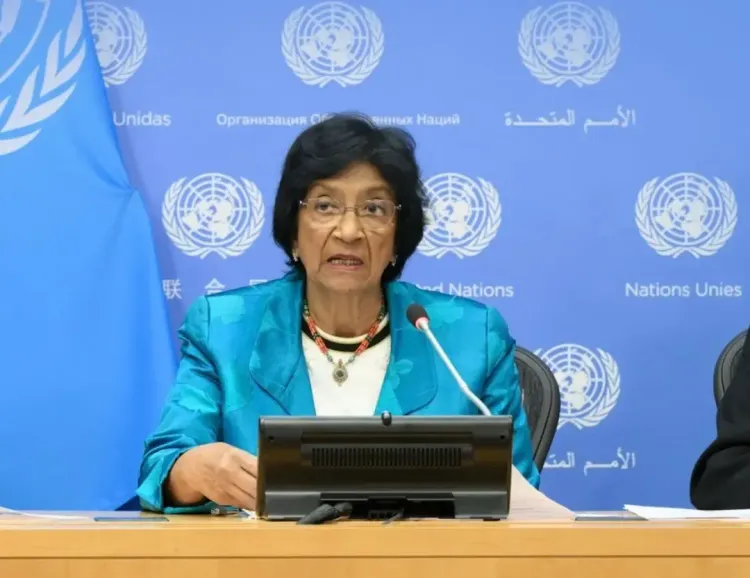
Navanethem 'Navi' Pillay , 85 , has won the 2026 Nobel Peace Prize 'for her efforts to promote peace and international law.' She is the fifth South African and the first South African woman to receive the Nobel Peace Prize.
Her ancestors left Tamil Nadu in the 1890s as indentured labourers; she became the first Black woman to open a law practice in KwaZulu-Natal .
In 1973 , she secured legal rights for political prisoners on Robben Island , including Nelson Mandela .
At the ICTR , she helped establish that rape and sexual violence constitute a war crime in international law.
South Africa's High Commissioner Anil Sooklal called the prize a 'very powerful message' about peace, the rule of law, and the Global South's capacity for exceptional leadership.
Indian-origin South African jurist Navanethem 'Navi' Pillay has won the 2026 Nobel Peace Prize, and South Africa's High Commissioner to India, Anil Sooklal, on Friday, 9 October 2026, described the honour as sending a 'very powerful message' about South African society, the African continent, and the values of the rule of law. Pillay, 85, is the fifth South African and the first South African woman to receive the Nobel Peace Prize, joining a list that includes Nelson Mandela, Archbishop Desmond Tutu, former African National Congress (ANC) president Albert Luthuli, and former South African President F W de Klerk.
Who Is Navi Pillay
Born into a family of Indian Tamil descent in Durban, Pillay's parents and great-grandparents left Tamil Nadu in the 1890s as indentured labourers to work on sugar plantations in South Africa. She became the first non-white woman judge of the High Court of South Africa and the first Black woman to open a law practice in KwaZulu-Natal, establishing her own law firm in 1967. The Norwegian Nobel Committee awarded her the prize 'for her efforts to promote peace and international law,' according to the Nobel Prize website.
A Career Built Against Apartheid and Injustice
During the apartheid era, Pillay dedicated herself to defending anti-apartheid activists, including members of the ANC and other liberation movements. Her husband was also detained by the apartheid regime because of his own activism. In 1973, she won a landmark case securing the right of political prisoners on Robben Island — including Nelson Mandela — to access lawyers and certain basic rights.
Following South Africa's democratic transition, she was elevated to the High Court in 1995. In 1999, she became a judge and then President of the International Criminal Tribunal for Rwanda (ICTR), where she helped establish, in the trial of Hutu leader Jean-Paul Akayesu, that rape and sexual violence qualify as a war crime — a landmark ruling in international humanitarian law. She subsequently served as a judge at The Hague and later as the UN High Commissioner for Human Rights.
Personal Pride and Community Celebration
High Commissioner Sooklal noted a deeply personal connection to the laureate. 'I am particularly proud because she comes from the same area where I was born and raised, and she attended the same high school as I did. There is a great deal of celebration in our community today because she came from a humble and difficult background. The local community pooled its resources to support her education, and she has now risen to the highest levels of public service,' he said.
Why the Timing Matters
Sooklal described the award as especially significant in the current global moment. 'The message being conveyed is one of peace, and that is the need of the hour. Conflicts, divisions, and unilateral actions by some countries that use their power to undermine the sovereignty of others remind us that we share a common humanity,' he said. He added that the prize highlights the need for collective action to address ongoing conflicts that claim innocent lives, and reaffirms commitments to multilateralism, the United Nations Charter, and fundamental human rights.
Sooklal also noted the broader symbolism of South Africa now counting five Nobel Peace Prize laureates — a considerable number, he said, for a democracy just over three decades old — and argued that Pillay's recognition demonstrates that 'exceptional leadership can emerge from Africa and the Global South.' Pillay's honour is expected to deepen the India–South Africa cultural and diplomatic conversation, given her Tamil roots.
Point of View
The UN human rights architecture, multilateral accountability mechanisms — are under unprecedented strain from powerful states that treat international law as optional. The Nobel Committee's choice is a deliberate counterstatement. What is often underreported is the Tamil Nadu connection: Pillay's story is also India's story, a reminder that the descendants of indentured labourers from the subcontinent helped shape the architecture of global justice. For New Delhi, which often frames its diaspora narrative around software engineers and billionaires, Pillay's laureacy offers a more substantive, if less commercially convenient, point of pride.
NationPress
9 Oct 2026
Frequently Asked Questions
Who is Navi Pillay and why did she win the 2026 Nobel Peace Prize?
Navanethem 'Navi' Pillay is an 85-year-old South African jurist of Indian Tamil descent who won the 2026 Nobel Peace Prize 'for her efforts to promote peace and international law,' according to the Norwegian Nobel Committee. She is the first non-white woman to have served as a judge on South Africa's High Court and has held senior roles at the International Criminal Tribunal for Rwanda, the International Criminal Court in The Hague, and as UN High Commissioner for Human Rights.
What is Navi Pillay's connection to India?
Pillay's parents and great-grandparents left Tamil Nadu in the 1890s as indentured labourers to work on sugar plantations in South Africa. She hails from the Tamil community in Durban, and South Africa's High Commissioner to India, Anil Sooklal, noted that her Tamil roots make the prize a source of particular pride for both communities.
How many South Africans have won the Nobel Peace Prize?
Navi Pillay is the fifth South African to win the Nobel Peace Prize. She joins Nelson Mandela, Archbishop Desmond Tutu, ANC president Albert Luthuli, and former President F W de Klerk on that list, and is the first South African woman to receive the honour.
What are Navi Pillay's most significant legal achievements?
Among her landmark achievements: in 1973 she won a case securing legal access and basic rights for political prisoners on Robben Island, including Nelson Mandela. At the International Criminal Tribunal for Rwanda, she helped establish that rape and sexual violence qualify as a war crime in the trial of Hutu leader Jean-Paul Akayesu — a precedent that reshaped international humanitarian law.
Why does South Africa's High Commissioner to India consider the prize particularly timely?
High Commissioner Anil Sooklal said the prize carries special significance given current global conflicts and violations of international law, arguing it highlights the need for collective action, multilateralism, and adherence to the UN Charter. He called it a 'very important message' to a world he described as increasingly divided and marked by unilateral actions that undermine the sovereignty of other nations.