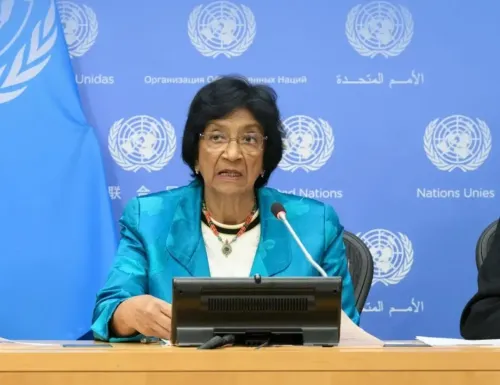
Navi Pillay's 2026 Nobel Peace Prize sparks pride in Tamil Nadu's Dindigul
Synopsis
The 2026 Nobel Peace Prize has found its way to a small town in Tamil Nadu's Dindigul district, where relatives of South African jurist Navi Pillay trace a family line that left for Sri Lanka in 1890 before migrating to South Africa. For them, Pillay's landmark career — from defending anti-apartheid activists to delivering a genocide-defining judgment at the Rwanda tribunal — is a story that began on their street.
Key Takeaways
Navanethem 'Navi' Pillay was awarded the 2026 Nobel Peace Prize by the Norwegian Nobel Committee for her efforts to promote peace and international law.
Her ancestral family in Pazhaya Vattalagundu, Dindigul district, Tamil Nadu has celebrated the honour, tracing roots that left the town for Sri Lanka in 1890 before relocating to South Africa.
Pillay visited the town in 2007 after travelling to Rameswaram for religious rites following her father's death.
Born in Durban on 23 September 1941 , she became the first non-white woman on South Africa's High Court in 1995 and later served as UN High Commissioner for Human Rights .
She helped deliver the landmark 1998 Akayesu judgment , which recognised rape and sexual violence as genocide under international law.
The award of the 2026 Nobel Peace Prize to South African jurist Navanethem 'Navi' Pillay has sparked celebrations among her relatives in Pazhaya Vattalagundu, a small town in Tamil Nadu's Dindigul district, drawing international recognition to an ancestral connection that stretches back over a century. The honour has revived memories of migration, hardship, and a family reunion nearly two decades ago.
The Ancestral Link to Dindigul
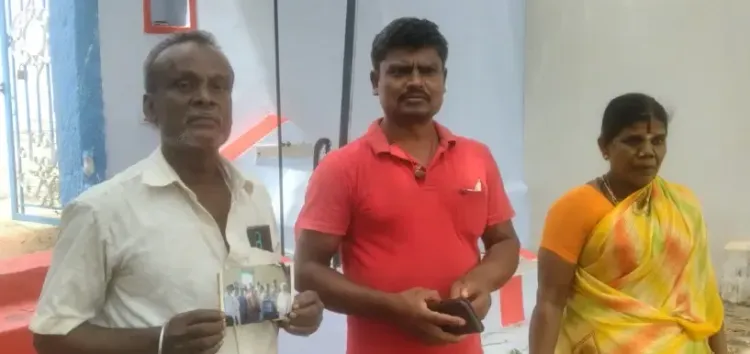
According to relatives in Pazhaya Vattalagundu — also known as Batlagundu — Pillay's forefathers left the town for Sri Lanka in 1890 before eventually moving to South Africa in search of a livelihood. Muthumani, a relative, said Pillay was the daughter of his grandfather's elder brother, making her a figure who, despite generations overseas, remained connected to her Tamil roots.
'She pursued higher education in law, overcame numerous challenges and achieved great success, bringing pride to our entire family,' Muthumani said, adding that he wished her good health and continued success.
The 2007 Visit That Families Still Remember
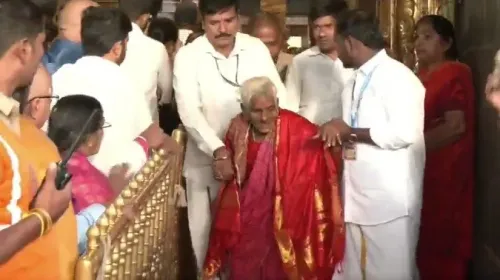
The Nobel announcement has renewed interest in photographs from Pillay's visit to the town in 2007. According to relatives, she had travelled to Rameswaram to perform religious rites following her father's death before meeting family members in Pazhaya Vattalagundu. Tirupathi, who described Pillay as his aunt, said he was a young child during that visit but still treasured the family photographs from the occasion.
'They came here, enquired about everyone's well-being and extended whatever help they could,' Tirupathi recalled. He said the award had now brought the entire family happiness and pride.
A Life Defined by Justice and Resilience
Born in Durban on 23 September 1941, Pillay grew up navigating both poverty and apartheid discrimination. She studied law at the University of Natal and earned a doctorate from Harvard Law School in 1988. Her legal career took her from defending anti-apartheid activists to becoming the first non-white woman appointed to South Africa's High Court in 1995.
She subsequently served at the International Criminal Tribunal for Rwanda, where she helped deliver the landmark 1998 Akayesu judgment — a ruling that, for the first time under international law, recognised that rape and sexual violence could constitute genocide under specified circumstances. She later served as United Nations High Commissioner for Human Rights.
Why the Nobel Committee Honoured Her
The Norwegian Nobel Committee cited Pillay's sustained efforts to promote peace and international law as the basis for the prize. Notably, her journey from a modest Tamil-origin family in apartheid South Africa to one of the most consequential figures in international human rights law is a trajectory that has resonated far beyond Dindigul.
What the Recognition Means for the Tamil Community
For her relatives in Dindigul, the global honour carries a deeply personal weight. A family connection preserved through stories and a handful of photographs has become a source of pride not just for Pazhaya Vattalagundu, but for the wider Tamil diaspora community. The Nobel Prize has, in effect, brought a century-old migration story full circle.
Point of View
To rewriting the boundaries of international humanitarian law — is not a footnote to South African history but a central chapter. That her relatives in a small Tamil Nadu town preserve photographs from a 2007 visit as their proudest possession speaks to a diasporic identity that outlasted colonial-era migration by over a century. Indian coverage of this award should go beyond the 'local connection' hook and interrogate why figures of Pillay's stature are better recognised in The Hague than in Chennai.
NationPress
14 Oct 2026
Frequently Asked Questions
Who is Navi Pillay and why did she win the 2026 Nobel Peace Prize?
Navanethem 'Navi' Pillay is a South African jurist of Tamil-origin descent, honoured with the 2026 Nobel Peace Prize for her efforts to promote peace and international law. Her career spans defending anti-apartheid activists, serving on South Africa's High Court, delivering the landmark 1998 Akayesu genocide judgment at the Rwanda tribunal, and serving as UN High Commissioner for Human Rights.
What is the connection between Navi Pillay and Tamil Nadu's Dindigul?
Pillay's forefathers originally lived in Pazhaya Vattalagundu in Dindigul district, Tamil Nadu, before migrating to Sri Lanka in 1890 and later to South Africa. Relatives in the town say she is the daughter of their grandfather's elder brother's line, and she visited the area in 2007 after performing religious rites at Rameswaram.
What was the 1998 Akayesu judgment that Navi Pillay helped deliver?
The Akayesu judgment, issued by the International Criminal Tribunal for Rwanda in 1998, was a landmark ruling that for the first time recognised rape and sexual violence as constituting genocide under specified circumstances in international law. Pillay's role in that judgment is widely regarded as a turning point in international humanitarian law.
When did Navi Pillay visit her ancestral family in Tamil Nadu?
Pillay visited Pazhaya Vattalagundu in Dindigul district in 2007, according to her relatives there. She had first travelled to Rameswaram to perform religious rites following her father's death before meeting family members in the town.
What is the significance of the Nobel Prize for the Tamil community?
For both Pillay's relatives in Dindigul and the broader Tamil diaspora, the Nobel Prize represents international validation of a story rooted in colonial-era migration and perseverance. It has renewed attention on a centuries-old connection between Tamil Nadu and the South African Tamil community.