Kishan Reddy Highlights e-Shram Reach: 47L+ Telangana Workers
Synopsis
Union Minister G. Kishan Reddy on October 14, 2026 highlighted e-Shram's reach in Telangana, citing over 47.2 lakh worker registrations statewide and 3.84 lakh in Hyderabad, with enrolled workers eligible for up to ₹2 lakh accidental insurance under PMSBY.
Key Takeaways
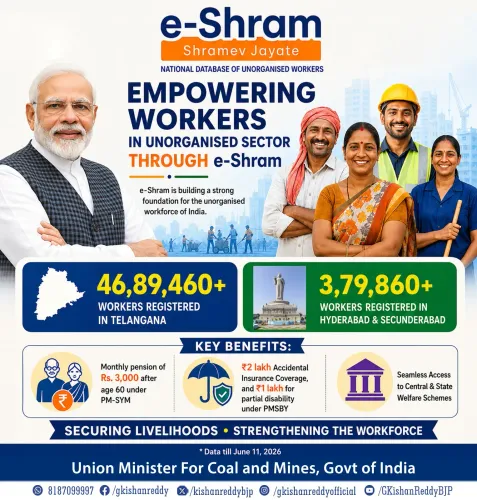
47,21,780-plus workers have registered under e-Shram across Telangana as of August 14, 2026 .
3,84,770-plus of those registrations are from Hyderabad district alone.
Registered workers receive a 12-digit Universal Account Number (UAN) valid across all Indian states.
Enrollment unlocks up to ₹2 lakh accidental death cover and up to ₹1 lakh partial disability cover under PMSBY .
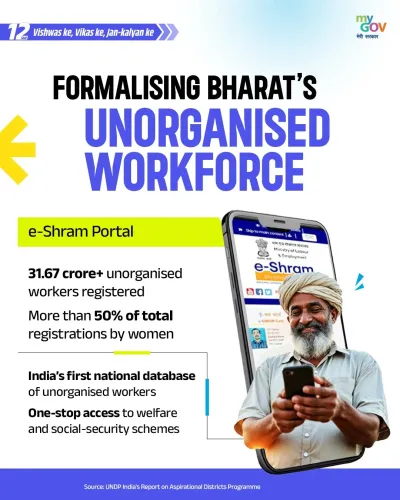
The e-Shram portal was launched in August 2021 by the Ministry of Labour and Employment to build a national database of unorganised workers.
The scheme operates within the broader Code on Social Security, 2020 framework aimed at covering India's informal workforce.
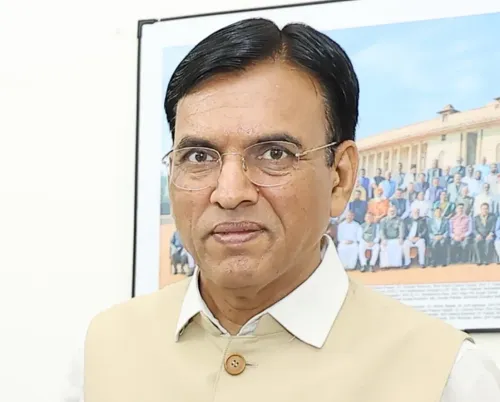
Over 47 lakh unorganised workers in Telangana now carry a digital identity that connects them to India's formal social security net — and Union Coal and Mines Minister G. Kishan Reddy wants that number known. On Wednesday, October 14, 2026, the BJP's Telangana state president posted a detailed breakdown of the e-Shram portal's reach in the state, spotlighting figures current as of August 14, 2026.
The Telangana count — and what it means on the ground
The numbers Kishan Reddy cited are striking in their specificity. 47,21,780-plus workers have registered across Telangana under e-Shram, with 3,84,770-plus of those registrations coming from Hyderabad district alone. For context, India's unorganised sector — daily-wage labourers, construction workers, domestic helpers, street vendors — has historically existed outside any formal welfare architecture. A 12-digit Universal Account Number (UAN), valid across every state in India, changes that equation at a fundamental level.
Each registered worker becomes eligible for up to ₹2 lakh in accidental death insurance cover and up to ₹1 lakh for partial disability under the Pradhan Mantri Suraksha Bima Yojana (PMSBY) — a low-premium scheme that would otherwise remain out of reach for most informal earners. The UAN also serves as a gateway to multiple Central and State welfare programmes, making the registration act a single-window entry into a broader safety net.
e-Shram's origins and the Code on Social Security
The Ministry of Labour and Employment launched the e-Shram portal in August 2021, with the explicit goal of building a national database of India's vast informal workforce. The initiative sits within the larger framework of the Code on Social Security, 2020, which consolidated multiple labour laws to extend coverage to gig workers and unorganised labourers — a population estimated in the hundreds of millions. Until e-Shram, no single, portable identity linked these workers to welfare delivery. The portal was the missing plumbing.
Kishan Reddy's post, addressed to the Ministry of Labour and Employment's official handle, reads as both a status update and a political signal — underscoring the Narendra Modi government's framing of digital welfare infrastructure as a flagship governance achievement in Telangana, a state where the BJP has been steadily building its organisational footprint.
Why Hyderabad's district-level figure stands out
Drilling down to the Hyderabad district figure — rather than just citing the state total — reflects how the Centre has been pushing state-level granularity in scheme reporting. Hyderabad is Telangana's urban economic engine, home to a dense informal workforce in construction, hospitality, and logistics. Nearly 3.85 lakh registrations in a single urban district signal meaningful penetration into exactly the population these schemes are designed to protect.
The road from a registration number to an actual insurance payout involves banking linkages, awareness campaigns, and claim settlement machinery — but the database is the prerequisite for all of it. Without the UAN, the worker does not exist in the system.
India's informal workforce built its cities and runs its daily economy — e-Shram is, at its core, the government's attempt to make sure those workers are no longer invisible to it.
Point of View
And demonstrating scheme penetration in the state capital directly challenges the narrative that Centre-driven welfare has not reached Telangana's urban poor. More broadly, the post is part of a sustained BJP effort to nationalise social security credit — attaching the Modi government's brand to a scheme that disburses benefits through state machinery, shifting accountability perception upward. The e-Shram data also serves as a governance metric: the size of the registered database increasingly drives future scheme design, budgetary allocations, and targeted outreach under the Code on Social Security, 2020.
NationPress
14 Oct 2026
Frequently Asked Questions
What is e-Shram and who can register?
e-Shram is a national portal launched in August 2021 by India's Ministry of Labour and Employment to register unorganised workers — including daily-wage labourers, construction workers, domestic helpers, and street vendors — and link them to social security benefits. Any unorganised worker aged 16-59 who is not a member of EPFO or ESIC can register.
What benefits does e-Shram registration give workers?
Registered workers receive a 12-digit Universal Account Number (UAN) valid across India, and become eligible for up to ₹2 lakh in accidental death insurance and up to ₹1 lakh for partial disability cover under Pradhan Mantri Suraksha Bima Yojana (PMSBY), along with access to multiple Central and State welfare schemes.
How many workers are registered under e-Shram in Telangana?
As of August 14, 2026, over 47,21,780 workers had registered under e-Shram across Telangana, including more than 3,84,770 registrations in Hyderabad district alone, according to figures shared by Union Minister G. Kishan Reddy.
What is Pradhan Mantri Suraksha Bima Yojana (PMSBY)?
PMSBY is a Central government accident insurance scheme that provides up to ₹2 lakh in coverage for accidental death and up to ₹1 lakh for partial disability. It is available at a low annual premium and is one of the key benefits linked to e-Shram registration.
What is the Code on Social Security 2020 and how does e-Shram relate to it?
The Code on Social Security, 2020 consolidated multiple Indian labour laws to extend formal welfare coverage to gig workers and the unorganised sector. e-Shram is the digital infrastructure that operationalises this framework by creating a portable worker identity and database to route scheme benefits.