HP CM to lay foundation of 66/22 kV sub-stations in Spiti, inaugurate solar plant
Synopsis
Himachal Pradesh's Chief Minister will lay the foundation of 66/22 kV sub-stations at Kaza and Sumdo, inaugurate a 2 MW solar plant with 1 MWh battery storage at Rongtong, open two intra-valley roads, and address a public gathering at Ladarcha Maidan on October 14, 2026.
Key Takeaways
Foundation stones for 66/22 kV sub-stations will be laid at Kaza and Sumdo in Lahaul-Spiti district.
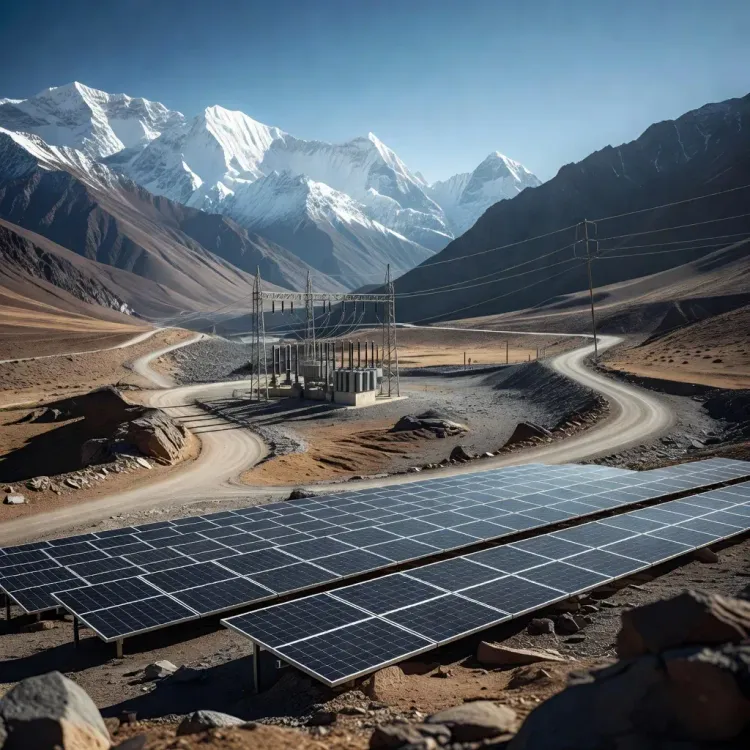
A 2 MW solar power plant with a 1 MWh Battery Energy Storage System at Rongtong will be inaugurated, pairing renewables with storage for off-grid stability.
Two road corridors — Chidang-Tangti-Khar Tailing and Tanjit-Hikim — will be formally opened to traffic.
A jansabha (public gathering) at Ladarcha Maidan in the Spiti area will follow the inauguration events.
The investments target one of India's most remote and sparsely populated high-altitude tribal districts, which faces seasonal grid isolation and limited road connectivity.
Deep inside the cold desert of Spiti valley, where winter can cut off villages for months and the grid has never been fully reliable, Himachal Pradesh's Chief Minister is bringing transformative infrastructure on Wednesday, October 14, 2026 — laying the foundation of new power sub-stations and inaugurating a solar plant equipped with battery storage, before addressing residents at Ladarcha Maidan.
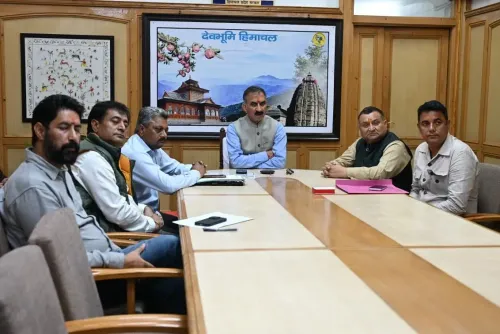
The Chief Minister's Office of Himachal Pradesh announced the day's agenda on X, detailing plans to lay the foundation stone of 66/22 kV sub-stations at Kaza and Sumdo — two key nodes in Lahaul-Spiti — and to formally inaugurate a 2 megawatt solar power plant (with a 1 megawatt-hour Battery Energy Storage System) at Rongtong. Two road corridors — Chidang-Tangti-Khar Tailing and Tanjit-Hikim — will also be opened to traffic.
Why Kaza and Sumdo need a 66/22 kV upgrade
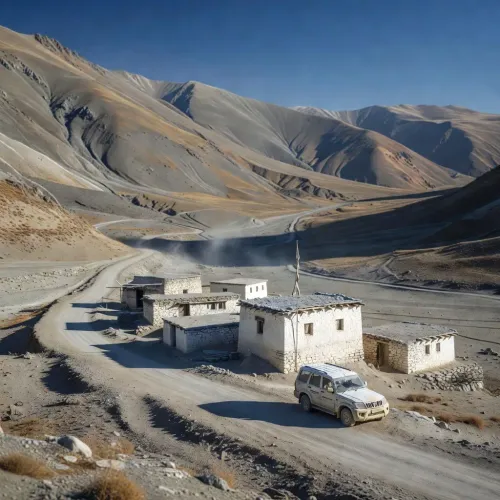
Kaza, the administrative headquarters of Lahaul and Spiti district, sits at roughly 3,800 metres above sea level. Sumdo, even more remote, is a sparse riverside settlement near river confluences deep in tribal Spiti. For communities here, unreliable low-voltage power is not an inconvenience — it is an existential problem that drives migration and stalls economic activity. A 66/22 kV sub-station represents a qualitative jump in transmission capacity, allowing heavier loads to be served with greater stability and reducing the line-loss that plagues weak high-altitude grids.
The foundation-stone ceremony signals the start of construction on infrastructure that, once commissioned, will substantially raise the ceiling on electrification for the entire sub-division.
Rongtong's solar plant with battery storage — a model for grid-isolated Himalayan towns
The 2 MW solar plant at Rongtong comes bundled with a 1 MWh Battery Energy Storage System (BESS) — a detail that matters enormously at altitude. Solar generation in Himalayan valleys is abundant in daylight but drops to zero after sunset, precisely when heating demand spikes in autumn and winter. A BESS absorbs surplus daytime generation and dispatches it into the evening hours, effectively bridging the gap without diesel backup.
Himachal Pradesh has been pairing renewables with storage across remote districts since the early 2020s, recognising that standalone solar without a buffer is of limited value in off-grid or weak-grid locations. The Rongtong plant follows that same logic — and its inauguration today sets a template other Spiti settlements may replicate.
Two new road corridors opening up inner Spiti
The inauguration of the Chidang-Tangti-Khar Tailing road and the Tanjit-Hikim road addresses the district's perennial connectivity deficit. Lahaul and Spiti is Himachal Pradesh's largest but most sparsely populated district; its dispersed hamlets rely on narrow mountain tracks that wash out or freeze over seasonally. All-weather road access is the precondition for every other development outcome — from schoolchildren reaching town to patients reaching hospitals to produce reaching markets.
Road inaugurations in this valley are not ribbon-cutting ceremonies. They are lifelines arriving decades late.
Ladarcha Maidan address — connecting infrastructure to community
After the inauguration rounds, the Chief Minister will address a jansabha (public gathering) at Ladarcha Maidan, a traditional community ground in the Spiti area regularly used for state functions. The address provides both a political moment and a practical one: residents of remote hamlets who may rarely have direct access to the state government can raise concerns, and the government can contextualise the day's investments within a longer development narrative for the valley.
For Spiti's tribal communities, today is not just about kilowatts and kilometres. It is about whether the state remembers them when it draws up its infrastructure maps. Today, it does.
Point of View
Renewable generation, and road access in a single high-visibility visit to a remote tribal district. The inclusion of battery storage alongside solar is the more consequential signal: it tells other Himalayan states that off-grid reliability, not just installed capacity, is now the benchmark. Politically, a jansabha in Ladarcha Maidan reinforces that even the most isolated tribal constituencies are being pulled into the state's electoral and developmental calculus ahead of any future state polls. The real test will come in the commissioning timelines — foundation stones are promises; sub-stations delivering power are proof.
NationPress
14 Oct 2026
Frequently Asked Questions
What is the 66/22 kV sub-station being built in Kaza and Sumdo?
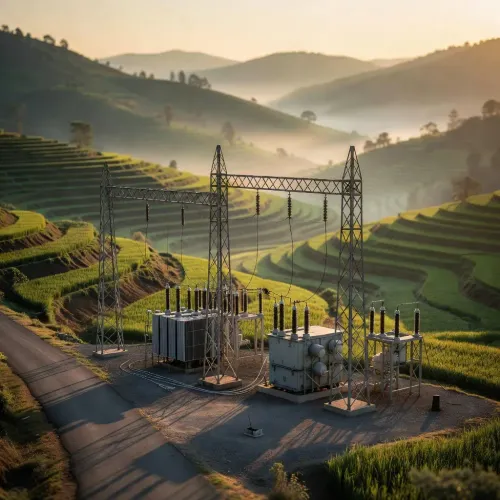
A 66/22 kV sub-station steps down high-voltage transmission electricity to a level that local distribution networks can use. The foundation stones for such sub-stations at Kaza and Sumdo were laid on October 14, 2026 to improve power supply reliability in the high-altitude Spiti valley of Himachal Pradesh.
What is the Rongtong solar power plant?
The Rongtong solar power plant is a 2 megawatt facility in the Lahaul-Spiti region of Himachal Pradesh, inaugurated on October 14, 2026. It includes a 1 megawatt-hour Battery Energy Storage System (BESS) to stabilise supply during evenings and cloudy periods in this remote high-altitude location.
Why does Lahaul-Spiti need battery storage with solar power?
Lahaul-Spiti faces long winters, grid isolation, and high evening energy demand for heating. Battery storage paired with solar panels stores surplus daytime generation and releases it when the sun is not shining, reducing dependence on diesel generators and stabilising supply in weak-grid or off-grid Himalayan communities.
Which roads were inaugurated in Spiti in October 2026?
The Chidang-Tangti-Khar Tailing road and the Tanjit-Hikim road were inaugurated in the Spiti valley on October 14, 2026, improving intra-valley connectivity for residents of remote hamlets in Lahaul-Spiti district.
What is Ladarcha Maidan?
Ladarcha Maidan is a public ground in the Spiti area of Himachal Pradesh commonly used for community gatherings, state functions, and political addresses. The Chief Minister addressed a public meeting (jansabha) there on October 14, 2026, following the day's inauguration events.