HP CM Office: New Sub-Station Linked to Tauni Devi, Sujanpur
Synopsis
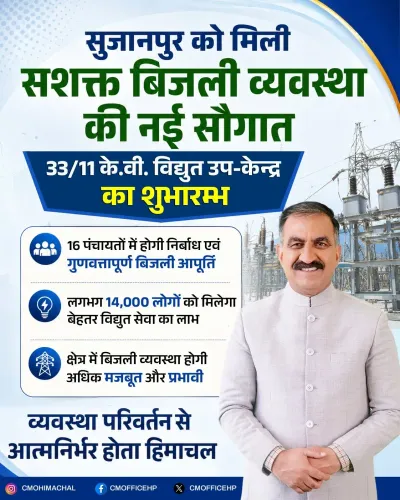
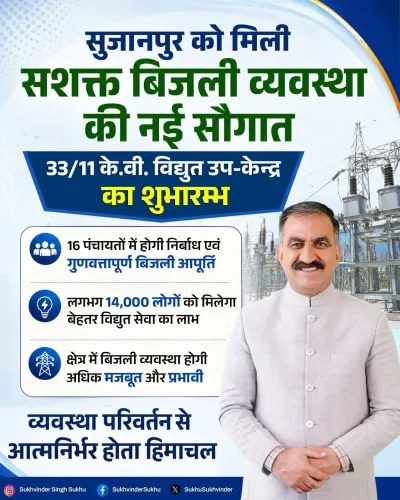
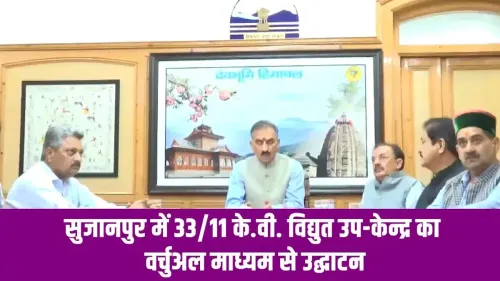
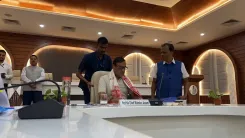
The Chief Minister's Office of Himachal Pradesh announced on 7 July 2026 that a new electricity sub-centre has been connected to 33 KV sub-stations at Tauni Devi and Sujanpur. Industry Minister Harshvardhan Chauhan, Rural Development Minister Anirudh Singh, and HPCC President Vinay Kumar were present at the event.
Key Takeaways
A new electricity sub-centre in Himachal Pradesh has been linked to the 33 KV Vidyut Up-Kendra Tauni Devi and 33 KV Vidyut Up-Kendra Sujanpur for reliable power supply.
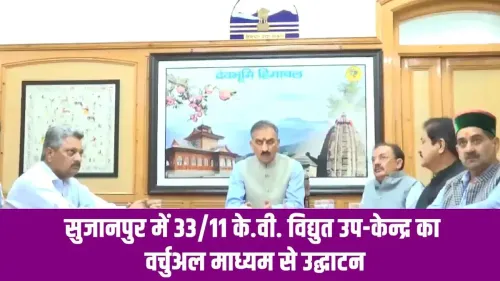
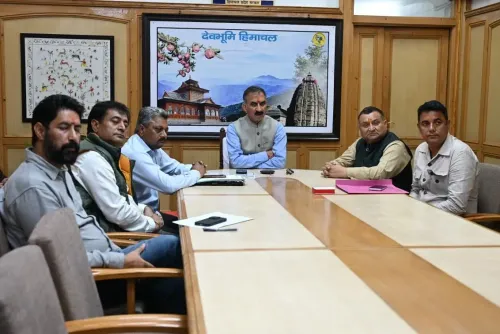
Industry Minister Harshvardhan Chauhan , Rural Development and Panchayati Raj Minister Anirudh Singh , and HPCC President Vinay Kumar attended the event on 7 July 2026 .
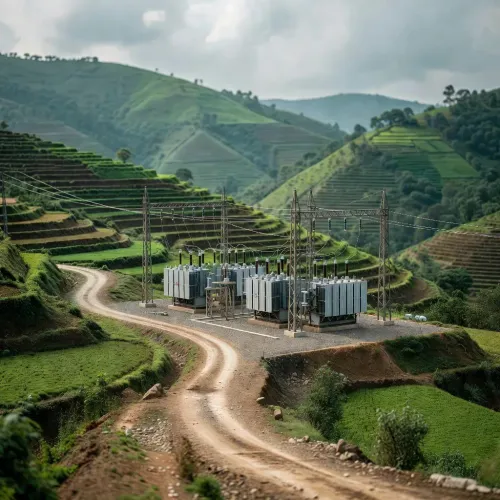
The dual-linkage approach provides load balancing and supply redundancy, critical for Himachal Pradesh's hilly terrain.
The upgrade aligns with the central Deen Dayal Upadhyaya Gram Jyoti Yojana framework for rural electrification active since 2015 .
Primary beneficiaries include rural households, agricultural units, and small industries in the sub-centre's catchment area.
The Chief Minister's Office of Himachal Pradesh announced on Tuesday, 7 July 2026 that a new electricity sub-centre has been connected to two existing 33 KV power sub-stations — Tauni Devi and Sujanpur — to strengthen power supply arrangements in the region. The event was attended by senior state ministers and party leadership, signalling the government's emphasis on rural power infrastructure.
Context
The official post from the Chief Minister's Office of Himachal Pradesh states that the sub-centre has been linked to the 33 KV Vidyut Up-Kendra Tauni Devi and the 33 KV Vidyut Up-Kendra Sujanpur ('33 ke.vee. vidyut up-kendra' — 33 KV electricity sub-station) to ensure reliable power supply arrangements. The dual-linkage model is designed to provide redundancy and load balancing, a common engineering approach in hilly terrain where single-source supply is vulnerable to outages.
Present at the occasion were Industry Minister Harshvardhan Chauhan, Rural Development and Panchayati Raj Minister Anirudh Singh, and Himachal Pradesh Congress Committee President Vinay Kumar, underscoring the political and administrative importance the state government has attached to this infrastructure step.
Policy Backdrop
Himachal Pradesh has pursued rural electrification and distribution-network upgrades under the central Deen Dayal Upadhyaya Gram Jyoti Yojana (DDUGJY), launched in 2015, which channelled funds into feeder separation, metering, and sub-station strengthening across rural India. The state's hilly geography makes it particularly reliant on robust sub-station networks to prevent voltage fluctuations and supply interruptions.
Linking new sub-centres to existing 33 KV infrastructure at Tauni Devi and Sujanpur follows a well-established state practice of expanding grid capacity incrementally, reducing transmission constraints without requiring entirely new high-tension corridors. Such upgrades directly benefit rural households, small agro-based industries, and local enterprises that depend on consistent electricity for productivity.
Stakeholders and Impact
The primary beneficiaries of this sub-station linkage are rural households in the catchment area of the new sub-centre, who stand to gain more stable and reliable power supply. Local industries and agricultural units — which are sensitive to voltage dips and load-shedding — are also expected to see improved operational conditions.
The presence of Industry Minister Harshvardhan Chauhan at the event points to the government's framing of power reliability as a prerequisite for industrial growth in the region. Rural Development Minister Anirudh Singh's attendance further ties the initiative to broader rural welfare objectives under the state's panchayati raj framework.
What's Next
The Himachal Pradesh government is expected to continue identifying sub-centres requiring similar dual-linkage arrangements across other hilly districts. Observers will watch whether additional sub-station upgrades feature in the next state budget or in the power department's annual review, particularly for areas that remain underserved by the existing 33 KV network.
Progress on these linkages will be a key indicator of the state's ability to translate electrification targets into ground-level supply reliability, especially as rural demand grows with increased household appliance penetration and small-enterprise activity.
Point of View
Not merely a welfare measure. With HPCC President Vinay Kumar also present, the event carries a political dimension, reinforcing the Congress-led state government's outreach in the region ahead of continued electoral cycles. This pattern of sub-station upgrades, if sustained, could meaningfully reduce the supply gaps that have historically hampered small enterprise growth in Himachal's rural belts.
NationPress
6 Oct 2026
Frequently Asked Questions
What is the new electricity sub-station project announced by the Himachal Pradesh government?
The Chief Minister's Office of Himachal Pradesh announced that a new electricity sub-centre has been connected to two 33 KV sub-stations — Tauni Devi and Sujanpur — to ensure reliable power supply in the area.
Who attended the 33 KV sub-station linkage event in Himachal Pradesh?
Industry Minister Harshvardhan Chauhan, Rural Development and Panchayati Raj Minister Anirudh Singh, and Himachal Pradesh Congress Committee President Vinay Kumar were present at the event on 7 July 2026.
Where are the Tauni Devi and Sujanpur sub-stations located?
Both Tauni Devi and Sujanpur are locations in Himachal Pradesh where 33 KV electricity sub-stations are situated, and these have been used to provide dual-linkage to the new sub-centre.
What is the Deen Dayal Upadhyaya Gram Jyoti Yojana and how does it relate to this project?
The Deen Dayal Upadhyaya Gram Jyoti Yojana is a central government scheme launched in 2015 for rural electrification and distribution strengthening. Himachal Pradesh has used this framework to fund sub-station upgrades across rural areas, and the current linkage project fits within that broader policy lineage.
How does linking a sub-centre to two 33 KV sub-stations help power supply in Himachal Pradesh?
Connecting a sub-centre to two separate 33 KV sub-stations provides load balancing and supply redundancy, which is especially important in hilly terrain where single-source connections are prone to outages and voltage fluctuations.