PM Modi outlines shift from permit raj to trust-based governance

Synopsis
Prime Minister Narendra Modi on 21 August 2026 articulated India's governance reform as a foundational inversion: from 'prohibited unless permitted' to 'permitted unless prohibited.' Anchored in the Jan Vishwas Act 2023 and the repeal of over 1,500 obsolete laws since 2014, the push aims to replace a licence-permit mindset with a trust-based regulatory framework for citizens and businesses.
Key Takeaways
PM Modi on 21 August 2026 described India's reform direction as moving from 'Prohibited unless permitted' to 'Permitted unless prohibited.' The Jan Vishwas (Amendment of Provisions) Act, 2023 amended 42 central laws to decriminalise minor offences and reduce compliance burdens.
The central government repealed more than 1,500 obsolete laws between 2014 and 2023 as part of statute-book pruning.
The stated goal is a trust-based regulatory framework that benefits entrepreneurs, small businesses, and investors .
Further decriminalisation bills and compliance-reduction disclosures are expected in upcoming parliamentary sessions.
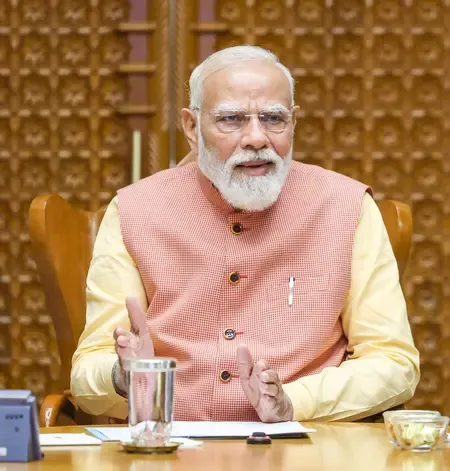
A single philosophical sentence is doing a lot of heavy lifting. Prime Minister Narendra Modi, writing on X on Friday, 21 August 2026, framed India's decade-long regulatory overhaul in the starkest possible terms: the country is moving from 'Prohibited unless permitted' to 'Permitted unless prohibited' — a reversal of the foundational logic that has governed Indian bureaucracy since the licence-permit era.
The phrase captures something real. For most of independent India's history, citizens and businesses operated under a presumption of suspicion — every activity required prior sanction, every default risked criminal liability. The architecture Modi's government has been dismantling, brick by brick since 2014, was built on exactly that logic.
What the Jan Vishwas Act actually changed
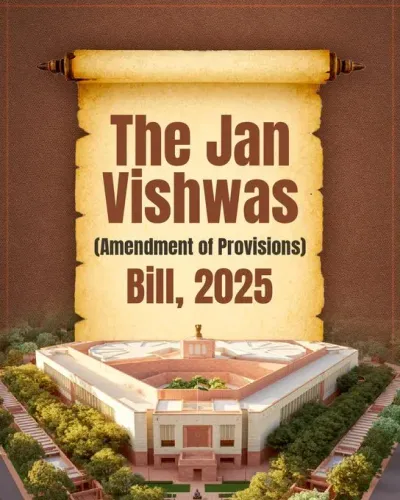
The most concrete legislative expression of this shift is the Jan Vishwas (Amendment of Provisions) Act, 2023. Passed by Parliament, the law amended 42 central statutes in one sweep — converting criminal penalties for minor regulatory offences into civil fines or compoundable violations. The target was a specific absurdity: jail terms and prosecution for technical, paperwork-level breaches that had nothing to do with public safety or fraud. A small business owner who missed a filing deadline should not face the same legal machinery as a fraudster. Jan Vishwas drew that line.1,500 laws off the books
Jan Vishwas sits inside a longer exercise. Between 2014 and 2023, the central government repealed more than 1,500 obsolete laws — colonial-era statutes, redundant regulations, and legislation that had outlived any practical purpose. Each repeal was individually modest; cumulatively, they represent the most sustained pruning of India's statute book in the post-independence period. Modi's post references the removal of 'thousands of compliances' alongside those repeals — a metric the government has tracked across successive budget cycles as a proxy for ease of doing business.The trust-based framework and what it means for business
The philosophical shift Modi describes has a concrete audience: entrepreneurs, small businesses, and investors who have historically navigated a regulatory environment where the default answer was 'no' until paperwork proved otherwise. Moving the default to 'yes' — permitted unless specifically prohibited — reduces the cost of starting, running, and scaling a business without requiring legislative action on every individual rule. It also shifts accountability: the state must now justify restriction rather than the citizen justify permission. That inversion, if embedded in implementation, changes the relationship between regulator and regulated at every level. Further decriminalization bills and periodic government disclosures on compliance reduction remain the markers to watch as this reform arc continues into the next legislative session.Point of View
Not just rhetoric. The risk, analysts would note, is the gap between statutory decriminalisation and ground-level implementation: regulators and inspectors do not automatically change behaviour when laws change. How far the philosophical inversion actually reaches into day-to-day enforcement is the real test of whether this reform arc delivers on its promise.
NationPress
6 Oct 2026
Frequently Asked Questions
What is the Jan Vishwas Act and what does it do?
The Jan Vishwas (Amendment of Provisions) Act, 2023 amended 42 central laws to convert criminal penalties for minor regulatory offences into civil fines, reducing the compliance and legal burden on citizens and small businesses.
How many obsolete laws has the Modi government repealed?
The central government repealed more than 1,500 obsolete laws between 2014 and 2023 as part of an ongoing exercise to simplify India's statute book.
What does 'permitted unless prohibited' mean in governance?
It means the default regulatory stance is that an activity is allowed unless a specific law bans it — the reverse of the older 'licence-permit raj' logic where everything required prior government approval.
How does decriminalisation help businesses in India?
By replacing criminal prosecution for minor technical violations with civil penalties, decriminalisation reduces the legal risk for entrepreneurs and small businesses, lowering the cost and fear associated with regulatory compliance.
What reforms is the Modi government expected to announce next on governance?
Further decriminalisation bills in Parliament and periodic government releases tracking the number of compliances eliminated are the key developments to watch in the next legislative session.