Government to Evaluate 5 Crore Minor Offence Cases Under Jan Vishwas Bill: Piyush Goyal
Synopsis
Explore the government's potential review of 5 crore minor offence cases as part of the Jan Vishwas Bill reforms. Discover how this initiative aims to enhance the ease of doing business while prioritizing compliance over criminal penalties.
Key Takeaways
5 crore minor offence cases under review.
Jan Vishwas Bill replaces criminal penalties with fines.
Focus on Ease of Doing Business and Ease of Living .
Streamlining of over 1,000 offences .
Encouragement of a compliance-based enforcement approach.
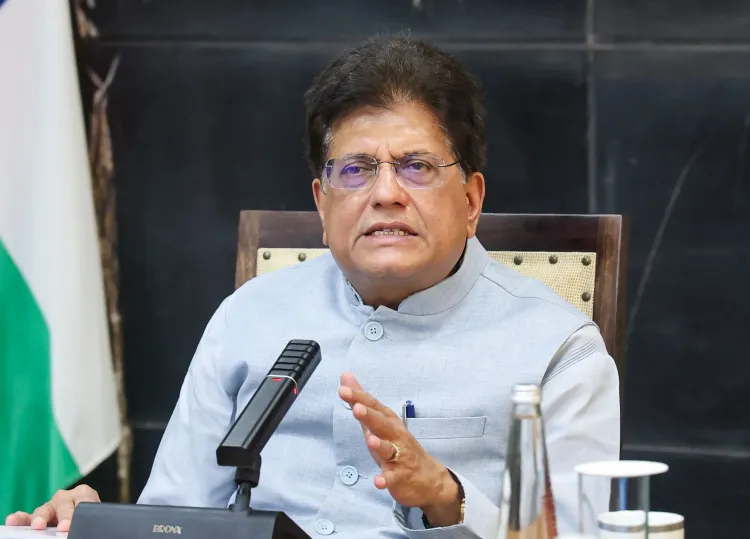
New Delhi, April 3 (NationPress) On Friday, Commerce and Industry Minister Piyush Goyal announced that the government is considering the review of approximately five crore pending minor offence cases in light of the recent passage of the Jan Vishwas (Amendment of Provisions) Bill, 2026. This initiative is part of broader reforms aimed at enhancing the ease of doing business.
During a press briefing, Goyal indicated that prosecutors could seek court intervention to resolve these cases under the new regulations, which are designed to minimize criminal proceedings associated with minor regulatory infractions.
“We are encouraging local officials and prosecutors to expedite the resolution of these cases based on the new legislation,” the minister clarified.
Individuals impacted by these cases now have the option to approach prosecuting offices, allowing authorities to act under the newly established provisions to close ongoing litigation.
A pivotal aspect of these Jan Vishwas reforms is the substitution of criminal penalties, particularly imprisonment for minor procedural infractions, with scaled monetary fines.
This represents a significant shift towards a more supportive regulatory structure while maintaining strict measures for serious violations that pose risks to public health and safety.
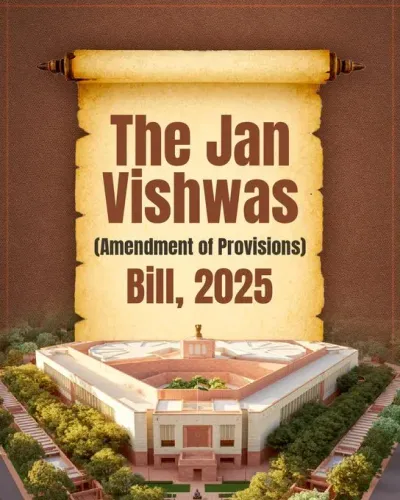
The Jan Vishwas (Amendment of Provisions) Bill, 2026, successfully passed by both Houses of Parliament, is a landmark step towards improving both Ease of Doing Business and Ease of Living across the nation.
The legislation demonstrates the government's dedication to promoting a governance model based on trust and ensuring that regulations are proportionate by alleviating the compliance burden for individuals and businesses.
As outlined in the Bill, amendments have been made to 784 provisions across 79 Central Acts overseen by 23 Ministries. Among these, 717 provisions have been decriminalised to enhance the Ease of Doing Business, while 67 provisions have been modified to improve Ease of Living.
Overall, this legislation aims to streamline over 1,000 offences by eliminating minor offences, thereby fostering a more favorable regulatory environment for both businesses and citizens.
Goyal emphasized that the government's goal is to shift away from criminal penalties in cases lacking deliberate intent to contravene the law and to instead embrace a compliance-oriented enforcement strategy.
In such instances, regulators may issue warnings or improvement notices, or impose minimal penalties that could increase with repeated violations, he noted.
Serious offences that inflict harm on the public or specific communities, or damage public property, would still warrant criminal prosecution.
Point of View
The government aims to foster a more conducive environment for economic growth while ensuring public safety remains a priority.
NationPress
25 Sept 2026
Frequently Asked Questions
What is the Jan Vishwas Bill?
The Jan Vishwas Bill aims to reform minor regulatory offences by replacing criminal penalties with monetary fines, enhancing the ease of doing business and living in India.
How many cases will the government review?
The government is considering the review of approximately 5 crore pending minor offence cases.
What changes does the Jan Vishwas Bill introduce?
The Bill decriminalizes 717 provisions and modifies 67 others to streamline regulations and reduce compliance burdens for individuals and businesses.
What is the goal of these reforms?
The goal is to create a trust-based governance framework and facilitate a more supportive regulatory environment while maintaining accountability for serious violations.
How can affected individuals respond to pending cases?
Individuals affected by pending cases can approach prosecuting offices to seek resolution under the new provisions established by the Jan Vishwas Bill.