What Did the Delhi Cabinet Approve to Decriminalise Minor Offences?
Synopsis
In a significant move, the Delhi Cabinet has approved the Delhi Jan Vishwas (Amendment of Provisions) Bill, 2026, aimed at decriminalising minor offences. This initiative seeks to simplify compliance and enhance the Ease of Doing Business and Living in the capital, a step that reflects a commitment to proportionality in punishment.
Key Takeaways
Delhi Cabinet has approved a new bill to decriminalise minor offences.
The bill aims to promote Ease of Doing Business and Ease of Living .
Minor offences will be transitioned to civil penalties .
Serious offences will continue to be strictly regulated.
The bill will not impose additional financial burdens on the government.
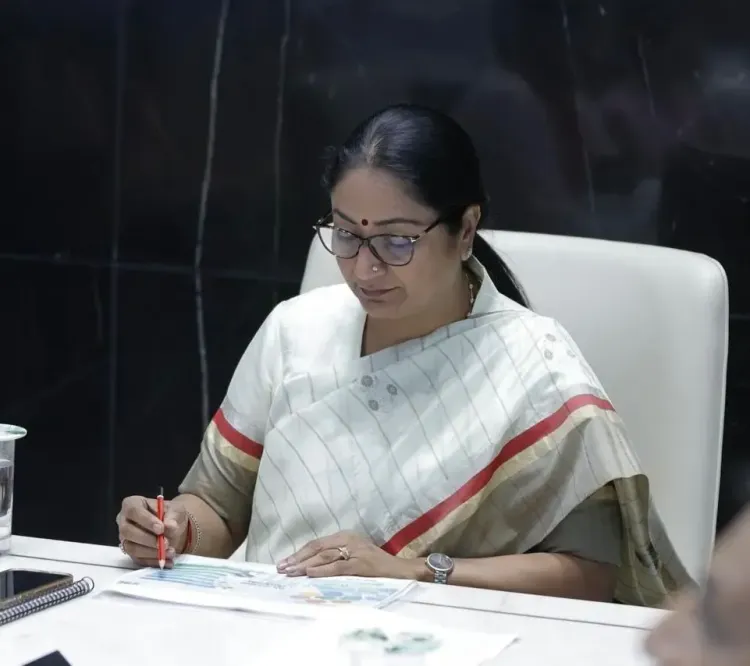
New Delhi, Dec 30 (NationPress) Inspired by Prime Minister Narendra Modi, the Delhi Cabinet has sanctioned the Delhi Jan Vishwas (Amendment of Provisions) Bill, 2026, aimed at decriminalising minor offences while enhancing Ease of Doing Business and Ease of Living, as stated by Chief Minister Rekha Gupta on Wednesday.
According to Chief Minister Gupta, the Bill intends to streamline compliance processes and decriminalise minor infractions, thereby alleviating court burdens and improving administrative efficiency.
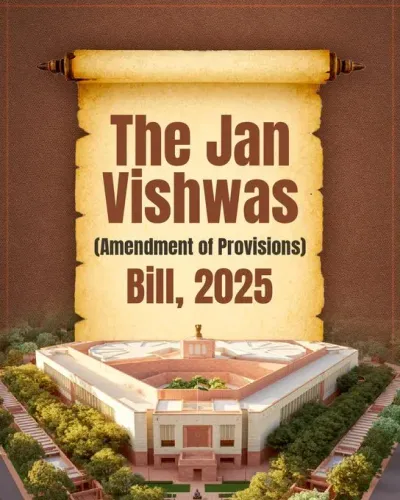
The Bill aligns with the Jan Vishwas (Amendment of Provisions) Act, 2023/2025, enacted by the Central Government, which decriminalised minor offences under Central laws.
Further elaborating, the Chief Minister asserted that this legislation reflects the Delhi government's commitment to fostering Ease of Doing Business and Ease of Living.
She pointed out that the Jan Vishwas (Amendment of Provisions) Act from 2023 removed minor, technical, and procedural violations from the category of criminal offences.
Following this, states and union territories were prompted to reassess their laws. Responding to this, the Delhi Government conducted a thorough review and identified that civil penalties are often more fitting than criminal sanctions.
The Chief Minister clarified that the Bill aims to promote proportionality in punishment rather than endorse lawlessness.
Upon the Bill's enactment, criminal actions for minor, technical, and procedural violations will be replaced by civil penalties, administrative fines, and an appeal process, she explained.
Serious offences concerning public health, safety, and life will remain strictly regulated. This initiative is expected to alleviate the caseload on courts and bolster administrative efficiency.
The following Acts will be encompassed within this Bill: Delhi Industrial Development, Operation and Maintenance Act, 2010; Delhi Shops and Establishments Act, 1954; National Capital Territory of Delhi ‘Incredible India’ Bed and Breakfast Establishments (Registration and Regulation) Act, 2007; Delhi Agricultural Produce Marketing (Regulation) Act, 1998; Delhi Jal Board Act, 1998; Delhi Professional Colleges/Institutions Act, 2007; and Delhi Diploma-Level Technical Education Institutions Act, 2007.
Under these Acts, minor offences will be decriminalised and transitioned to civil penalties.
The Bill also suggests a mandatory 10% increase in fines every three years post-implementation to ensure penalties remain relevant with inflation and rising costs.
According to the Chief Minister, the Bill will not impose any additional fiscal burden on the Government, will not require new positions, and will utilise existing departmental resources for implementation.
The Finance Department has raised no objections to the proposal. She noted that the Bill is set to be ratified in the forthcoming winter session of the Delhi Legislative Assembly.
Point of View
It's imperative to recognize the Delhi Cabinet's proactive approach in addressing minor offences. This move reflects a broader commitment to reform, aiming to alleviate the judicial system's burdens while promoting a balanced regulatory framework. It’s a significant step towards modernizing governance in Delhi, aligning with national standards.
NationPress
5 Oct 2026
Frequently Asked Questions
What is the Delhi Jan Vishwas Bill?
The Delhi Jan Vishwas (Amendment of Provisions) Bill, 2026, aims to decriminalise minor offences to enhance administrative efficiency and promote Ease of Doing Business and Living.
How will the Bill affect minor offences?
The Bill proposes to transition minor offences to civil penalties rather than criminal charges, thereby simplifying compliance processes.
What is the rationale behind this legislation?
The legislation seeks to reduce the burden on courts and ensure proportionality in punishment for minor violations, aligning with central government reforms.
Will any serious offences be decriminalised?
No, serious offences related to public health, safety, and life will remain unchanged and strictly regulated.
When will the Bill be passed?
The Bill is expected to be ratified in the upcoming winter session of the Delhi Legislative Assembly.