Did the Sale of Pakistan International Airlines Fall Flat?
Synopsis
The sale of Pakistan International Airlines has been revealed to yield only Rs 10 billion to the government, a stark contrast to the claimed Rs 135 billion. This discrepancy highlights critical issues in public finance and privatization efforts. Discover the implications of this deal on the country's economy and what it means for future reforms.
Key Takeaways
The sale of PIA yielded only Rs 10 billion .
Publicly announced sale value was Rs 135 billion .
Only 7.5% of the winning bid is paid in cash .
Pakistan’s annual interest payments exceed several trillion rupees .
Public finance needs transparency and accountability .
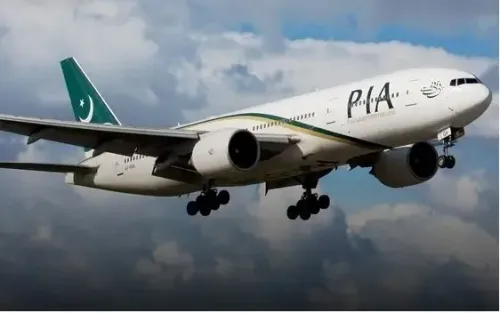
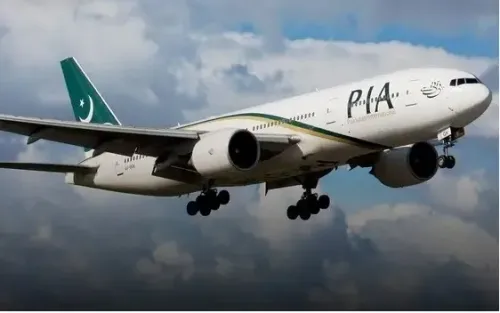
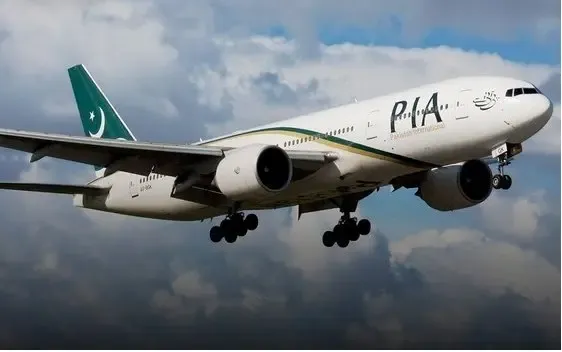
New Delhi, Jan 11 (NationPress) The divestiture of Pakistan International Airlines has reportedly yielded the Pakistani government merely Rs 10 billion, a small portion of the publicly claimed Rs 135 billion sale price, according to a report from Pakistani media.
"The most misleading economic decisions are not dishonest. They are technically correct, structurally complex, and publicly celebrated, yet yield almost nothing a treasury can utilize," an article in The News International stated.
"Had the government of Pakistan disclosed that it received Rs 10 billion from the sale of PIA, the public's response would have been rightly muted. Ten billion rupees does not seem to represent reform. Thus, the government announced a different figure: Rs 135 billion. The inconvenient truth is that the initial number is the one that counts. Public finance, unlike press conferences, is firmly tied to cash," the article continued.
The sale of PIA did not substantially alter the government's balance sheet; it merely shifted the narrative. Under the government's privatization framework, only 7.5 percent of the winning bid is disbursed to the state in cash, while the remaining 92.5 percent is mandated to be reinvested into PIA as equity to stabilize operations. When applied to the much-publicized Rs 135 billion bid, this results in approximately Rs 10.1 billion in actual fiscal inflow—a mere fraction of the claimed amount. The rest does not reach the government’s treasury as it remains within the airline, the article mentioned.
Pakistan's annual interest payments now surpass several trillion rupees; the revenue obtained from the PIA transaction would hardly suffice for a few days of debt servicing. It neither alters the nation’s borrowing trajectory nor enhances its credit outlook, nor does it provide leverage in negotiations with creditors. In macroeconomic terms, it’s a rounding error masquerading as reform. The issue is not merely the small cash inflow but its presentation as significant, the article lamented.
It's important to note that this structure was not accidental. PIA could not be sold in its original state due to deep insolvency. Public disclosures indicated its total liabilities at approximately Rs 800 billion, far exceeding its assets. Before any buyer could be attracted, the government absorbed or restructured a large share of this debt, estimated at Rs 600 billion to Rs 670 billion. These liabilities did not disappear; they simply transitioned from the airline’s books to those of the state, the article pointed out.
This scenario reflects the socialization of losses prior to the privatization of control. "Sometimes it is the least bad exit. However, it has one undeniable implication: once the state has settled the bill, the sale price should not be misconstrued as profit," the article observed.
The article also highlighted that during PIA’s bidding process, an all-cash bid of Rs 26.5 billion was dismissed as it was lower than the winning bid of a purported Rs 135 billion. However, this winning bid, in reality, brought only Rs 10 billion to the government, significantly lower than Airblue’s all-cash offer of Rs 26.5 billion.
"In fiscal terms, the smaller bid would have benefited the government more. This is not a matter of interpretation; it is arithmetic," the article remarked.
At this point, supporters of the deal often pivot to a different argument: that cash to the government was never the primary aim. They contend that the true objective was to recapitalize PIA and maintain its operations. But if that was indeed the goal, then the transaction should be transparently described as a private recapitalization with a change of control, not as a sale that fortified the nation’s finances.
Point of View
It's crucial to recognize the implications of such privatization efforts. The stark contrast between the claimed sale value and the actual revenue underscores significant concerns regarding transparency and fiscal responsibility. We must advocate for honest representation of public finance to ensure accountability and drive meaningful reforms.
NationPress
8 Oct 2026
Frequently Asked Questions
What was the actual amount received from the sale of PIA?
The actual amount received by the Pakistani government from the sale of Pakistan International Airlines was Rs 10 billion.
What was the publicly announced sale value of PIA?
The publicly announced sale value of Pakistan International Airlines was Rs 135 billion.
How much of the winning bid is paid to the government in cash?
Only 7.5 percent of the winning bid is paid to the government in cash, with the remainder reinvested into PIA.
What are the implications of the PIA sale for Pakistan's economy?
The implications include a minimal impact on the national treasury and ongoing challenges related to national debt and public finance.
Why was the initial cash bid of Rs 26.5 billion rejected?
The initial cash bid of Rs 26.5 billion was rejected because it was lower than the winning bid of Rs 135 billion, despite it being more beneficial in fiscal terms.