Major Petrol Price Reduction in Pakistan Exposes Policy Flaws
Synopsis
A recent report criticizes Pakistan's government for its abrupt petrol price cut, labeling it a populist strategy amidst rising economic pressures. The analysis highlights the inherent policy failures and potential repercussions for low-income households.
Key Takeaways
The petrol price reduction is seen as a populist strategy .
Initial fuel price hikes were significantly inflationary .
The government is criticized for reactive policymaking .
Low- and middle-income households may face the burden of fiscal adjustments.
The situation reflects the government's limited capacity to manage fuel price shocks .
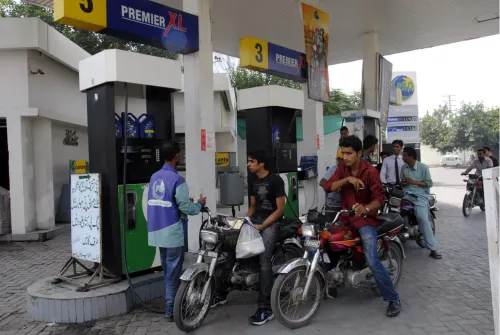
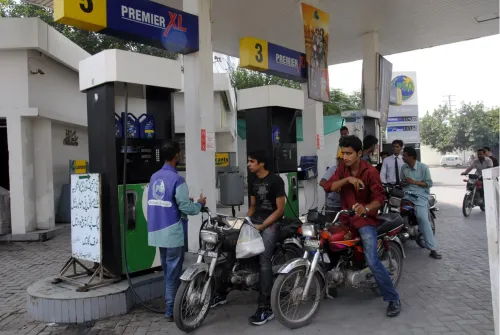
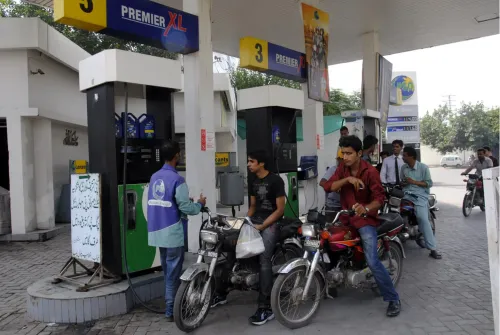
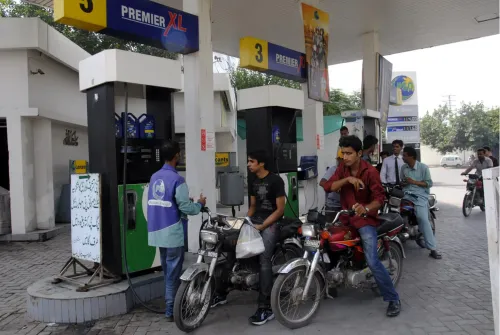
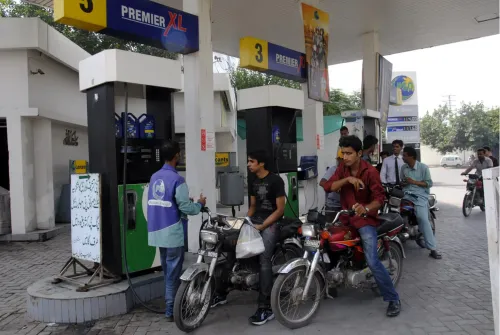
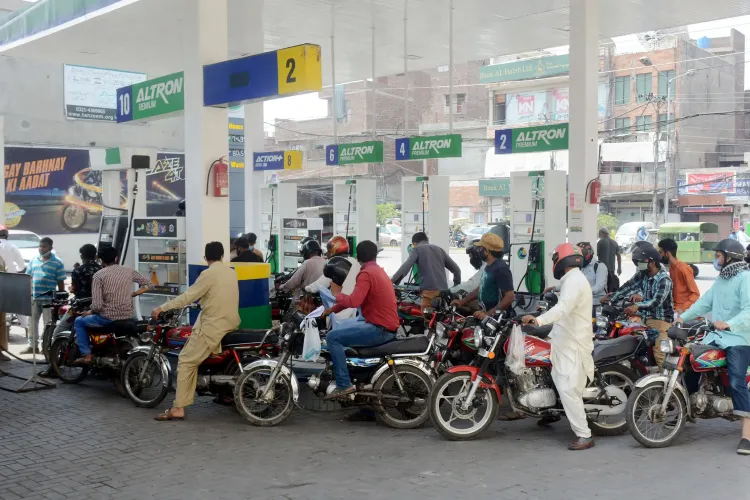
New Delhi, April 6 (NationPress) The recent cut of Rs 80 per litre in petrol prices in Pakistan has been described as a mere “populist maneuver” by a government grappling with economic challenges and political pressures, according to a new analysis.
As reported by Dawn, the earlier increase in fuel prices—43 percent for petrol and 55 percent for diesel—was “undeniably inflationary,” directly impacting transportation costs, food expenses, and overall inflation expectations.
The report suggests that “the prime minister’s decision to lower petrol prices signifies a more profound policy failure.”
This decision indicates a tendency to yield to political pressures rather than adhering to principled governance, the analysis asserts.
“Such impulsive policymaking will neither shield citizens from future inflation nor aid in establishing a stable economic environment,” the report further criticized.
Dawn also noted that this action reveals the government's reliance on blanket relief measures for all income groups instead of targeted interventions.
“In a nation with limited financial resources, these kinds of universal measures can lead to a misallocation of essential resources,” it further stated.
Moreover, the government's failure to fully transfer the surge in global energy prices, exacerbated by the US-Israel conflict with Iran, has already resulted in a loss of Rs 129 billion for the treasury, while the modest development budget has taken a hit of approximately Rs 100 billion.
Consequently, the fiscal deficit created by subsidizing petrol will persist; it will merely be transferred, and low- and middle-income families will ultimately bear the burden, whether through increased taxes and levies, diminished public spending, or inflation.
The sudden adjustment in fuel prices has highlighted political influences and a degree of ambiguity within government circles regarding crisis management strategies. Analysts have pointed out that this latest decision underscores Pakistan's limited ability to mitigate fuel price shocks.
Point of View
This situation underscores the importance of strategic governance over reactive policymaking. The government's latest actions may reflect short-term political calculations rather than a commitment to sustainable economic development, which ultimately affects the nation's stability and growth.
NationPress
12 Oct 2026
Frequently Asked Questions
What prompted the petrol price cut in Pakistan?
The petrol price cut was a response to domestic political pressures amid rising economic constraints.
How much was the petrol price reduced?
The petrol price was reduced by Rs 80 per litre.
What are the economic implications of this price cut?
The sudden price cut is criticized as a populist move that could lead to further inflation and misallocation of resources.
How has the government’s fiscal policy been affected?
The government's failure to fully pass on global energy price hikes has resulted in significant financial losses for the treasury.
What does this situation reveal about Pakistan's economic policies?
It highlights a broader issue of policy failure and the challenges of managing economic crises effectively.