Pakistan's Defiance of IMF Conditions: Diesel and Petrol Subsidy Cuts
Synopsis
In a startling move, Pakistan has reduced its petrol subsidy while the IMF urges the removal of diesel subsidies. This decision raises concerns about the country's adherence to IMF loan conditions and fiscal responsibility amidst economic challenges.
Key Takeaways
IMF Conditions: Pakistan is urged to eliminate diesel subsidies.
Government Actions: Islamabad has unexpectedly reduced petrol subsidies.
Fiscal Concerns: The subsidy cuts raise questions about fiscal stability.
Economic Vulnerabilities: Delayed reforms have left Pakistan exposed to external shocks.
Revenue Impact: The cuts could undermine critical revenue sources for the government.
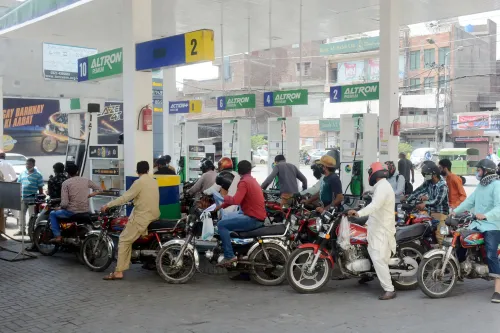
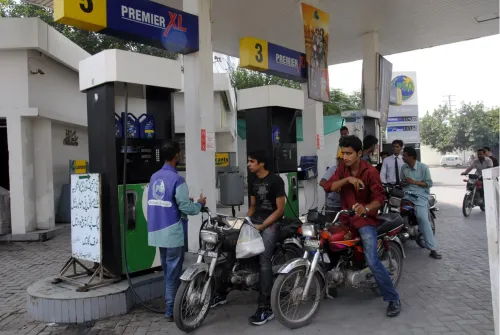
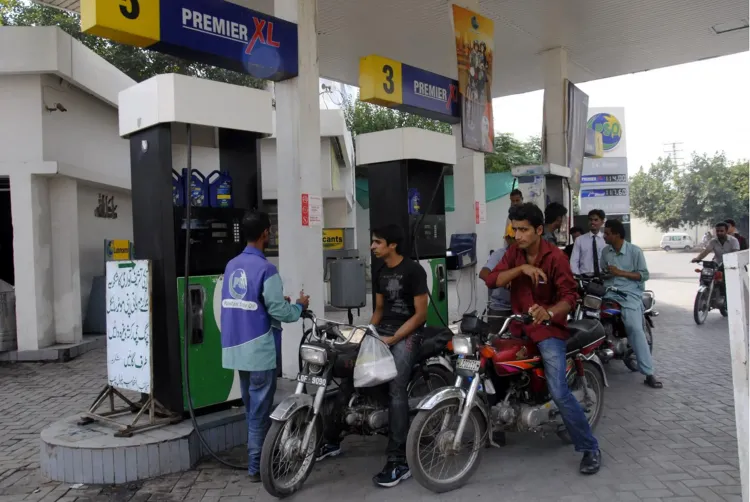
New Delhi, April 8 (NationPress) According to a report, the International Monetary Fund (IMF) has mandated that Pakistan eliminate its diesel subsidy, as maintaining fuel prices below market levels contradicts the established conditions for its financial assistance to the economically distressed nation. In a blatant disregard for these regulations, Islamabad has proceeded to decrease the petrol subsidy as well.
“The prime minister’s uncharacteristic move on Friday night to reduce the petrol levy—reversing a significant price increase that was intended to fully reflect the global surge in fuel prices due to supply disruptions—indicates a return to familiar economic strategies,” an article from the Karachi-based Dawn newspaper notes.
Although this action may not immediately jeopardize the latest staff-level agreement with the IMF, the institution remains apprehensive about the existing pricing distortions, particularly concerning diesel, which emerged after initial adjustments were made amidst the US-Israel conflict with Iran on March 7. The IMF is advocating for their prompt elimination, according to the article.
The government initially aimed to compensate for the revenue shortfall from the diesel levy—currently set at zero, while the budget targets Rs 80 per litre—by increasing petrol levy rates. However, this buffer has drastically diminished following the prime minister’s decision to slash the petrol levy by Rs 80 per litre to provide relief across all income brackets, rather than maintaining a targeted subsidy, the article highlights.
Previously, the IMF had tacitly accepted the targeted subsidy implemented by the government, likely because it did not compromise the revenue goals from the levy. However, the recent declaration has markedly shifted that stance.
This raises doubts about the government’s ability to maintain a balance between public relief and fiscal responsibility. The populist decision to reduce the levy jeopardizes a crucial revenue stream at a time when tax revenues are already failing to meet targets, the article explains.
Such actions prompt serious concerns regarding the sustainability of critical IMF program targets, such as achieving a primary surplus. The lender’s push for the removal of pricing distortions is thus firmly rooted in sound economic reasoning. Pakistan's challenges are largely self-inflicted.
Years of postponed tax reforms and an unwillingness to decisively reduce unnecessary public spending have constrained the government's fiscal flexibility to react to external shocks. The recent spike in oil prices, worsened by disruptions in global supply chains, has simply highlighted these underlying weaknesses, the article concludes.
Point of View
It is essential to recognize the complexities of Pakistan's economic situation. The government's recent subsidy cuts, while aimed at providing immediate relief, could undermine fiscal stability and jeopardize crucial agreements with the IMF. A balanced approach is necessary to navigate these challenges effectively.
NationPress
12 Oct 2026
Frequently Asked Questions
What conditions has the IMF set for Pakistan?
The IMF has mandated that Pakistan remove fuel subsidies, particularly on diesel, to align with the conditions of its loans.
How has Pakistan responded to these conditions?
Pakistan has reduced the petrol subsidy despite IMF requests, indicating a defiance of the established loan conditions.
What are the potential consequences of these subsidy cuts?
The cuts could weaken a vital revenue source and raise doubts about Pakistan's ability to meet IMF program benchmarks.
Why is the IMF concerned about Pakistan's fuel pricing?
The IMF is concerned that maintaining fuel prices below market levels creates economic distortions that violate loan agreements.
What factors have contributed to Pakistan's economic vulnerability?
Years of delayed tax reforms and high public expenditure have limited fiscal space, making the country particularly susceptible to external shocks.