IMF Urges Pakistan to Eliminate Fuel Subsidies Amid Price Instability
Synopsis
The IMF has called on Pakistan to promptly eliminate fuel subsidies that distort petroleum pricing, amidst a backdrop of rising global oil prices. This crucial move aims to stabilize the economy as diesel pricing concerns mount.
Key Takeaways
IMF calls for swift removal of fuel subsidies in Pakistan.
Pricing distortions are particularly concerning for diesel.
Higher petrol consumption is somewhat offsetting diesel PDL losses.
Significant adjustments needed in the macroeconomic framework for next fiscal year.
IMF continues to oppose blanket subsidies on petroleum products.
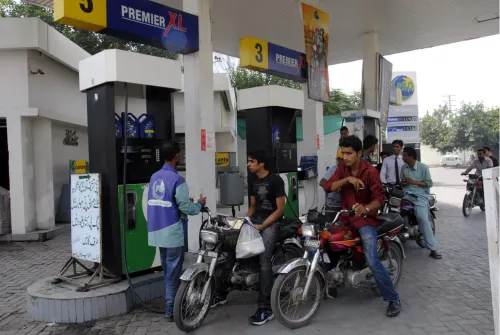
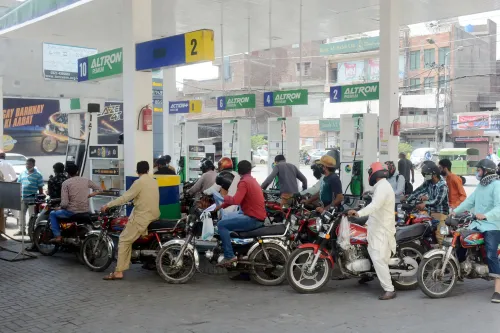
New Delhi, April 6 (NationPress) The International Monetary Fund (IMF) has urged Pakistan to swiftly address the pricing irregularities in its petroleum products caused by government subsidies to consumers. This request comes in light of rising global oil prices, exacerbated by the conflict in Iran, as reported by local media on Monday.
A high-ranking government official confirmed the IMF's concern over the current pricing discrepancies, especially regarding diesel, and emphasized the need for their prompt resolution, according to the Dawn.
Initially, the Pakistani government sought to stabilize its finances by adjusting the petroleum development levy (PDL) between petrol and diesel. Eventually, it shifted to targeted subsidies, funded by provincial budgets.
Currently, the PDL loss on diesel stands at zero, while the budget anticipated a rate of Rs 80 per litre. This loss is partially compensated by higher petrol prices. However, following Prime Minister Shebaz Sharif's decision to cut petrol prices by Rs 80 per litre last Friday, this financial buffer has diminished, indicating a need for reassessment in the near future, the report states.
Increased petrol consumption has somewhat mitigated the drop in diesel PDL, with petrol averaging around 660,000 tonnes per month versus diesel's 600,000 tonnes. However, diesel demand is predicted to rise during the ongoing harvest season.
Officials have stated that the current fiscal year's economic indicators align broadly with the IMF's program targets. However, significant revisions will be necessary in the macroeconomic framework for the next year, which will be finalized in coordination with the IMF before the federal budget for 2026–27.
They also mentioned that the petroleum differential claims from the oil industry have surpassed Rs 129 billion but have ceased following recent price hikes that fully accounted for import costs. Payments to oil firms and refineries are currently being made with a 10% retention rate, pending audit confirmation, as per the report.
The Dawn cited senior officials indicating that the staff-level agreement disclosed by the IMF on March 29 remains intact, and that the federal petroleum subsidy of Rs 152 billion was established with the Fund's prior awareness.
Sources informed the Dawn that Finance Minister Muhammad Aurangzeb and his team will brief IMF management on provincial contributions to the petroleum subsidy during the upcoming spring meetings of the IMF and the World Bank next week. Nonetheless, the IMF continues to oppose blanket subsidies on major petroleum products.
Point of View
The IMF's call to eliminate fuel subsidies in Pakistan reflects a necessary shift towards economic stability. While immediate government action may be challenging, aligning with IMF recommendations could pave the way for long-term financial health and sustainability.
NationPress
22 Sept 2026
Frequently Asked Questions
Why is the IMF asking Pakistan to remove fuel subsidies?
The IMF is urging the removal of fuel subsidies to address pricing distortions that affect the petroleum market, especially in light of rising global oil prices.
What are the current challenges in Pakistan's petroleum pricing?
Current challenges include zero PDL on diesel, rising petrol consumption, and the need for reassessment of pricing structures post-subsidy adjustments.
How do fuel subsidies impact Pakistan's economy?
Fuel subsidies can create financial imbalances and distort market prices, leading to inefficiencies and potential economic instability.
What is the significance of the IMF’s recommendations?
The IMF's recommendations are significant as they aim to align Pakistan's fiscal policies with broader economic targets, facilitating sustainable growth.
What is the future outlook for Pakistan's fuel pricing?
The future outlook hinges on the government's ability to implement recommended adjustments, especially as diesel demand is expected to rise during the harvest season.