Is Pakistan's Government Selling State-Owned Enterprises at Distress Prices?

Synopsis
Explore how political interference and poor management have led Pakistan's state-owned enterprises to be sold off at distress prices. This article delves into the cycle of neglect and the implications of hasty privatisation, highlighting the notable cases of PIA and K-Electric.
Key Takeaways
Poor governance and political interference lead to significant losses in state-owned enterprises.
Privatisation often occurs after accumulated debts and losses.
Examples like PIA highlight the failures of political management.
Privatisation does not guarantee lower prices for consumers.
A proactive approach focused on reform is necessary for sustainable growth.
New Delhi, Jan 15 (NationPress) Ineffective governance and mismanagement arising from political interference are resulting in severe losses among Pakistan's state-owned enterprises, which are subsequently offered for distress sales at meager prices, according to a report from a Pakistani media outlet.
An article published in Pakistan's Express Tribune emphasizes that rather than undertaking early governance reforms, successive administrations consistently delay tough decisions. State-owned enterprises are maintained despite diminishing performance, political meddling, and inadequate accountability. It is only after these enterprises have accrued significant losses and unbearable debt that privatisation is hastily adopted as the solution.
This cycle is evident across various sectors with remarkable consistency. Professional management is gradually supplanted by political appointments, commercial discipline deteriorates, and inefficiencies become commonplace. Selling these firms after years of neglect and the misuse of public funds effectively socialises losses while privatising profits, the article asserts.
Privatisation in Pakistan has seldom been a systematic or well-conceived economic reform but rather a series of hurried sales.
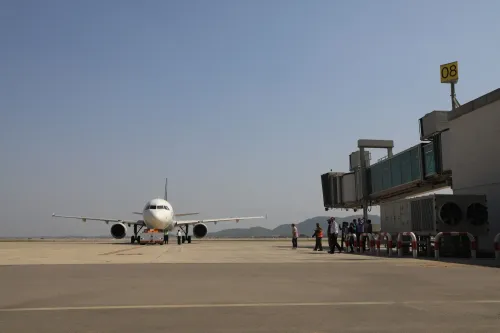
The case of PIA exemplifies this failure. Once a highly regarded regional airline, PIA has been compromised by overstaffing, political interference, and a lack of business rationale. Successive governments have treated the airline as a patronage source rather than as a commercial entity. Billions of rupees have been wasted to keep it operational while service quality has plummeted and competitiveness lost. Its eventual privatisation was not a strategic move; it was a recognition of long-standing governance failures, the article notes.
Advocates of privatisation often point to PTCL, a major telecom operator, as an example of how private ownership can enhance performance. Certainly, PTCL has made operational and technological advancements following its privatisation, resulting in network modernisation and service expansion.
However, this instance also reveals the significant flaws in Pakistan's privatisation practices. Years later, numerous former government employees and pensioners remain ensnared in legal battles over pensions, service regularisation, and post-privatisation rights. These unresolved issues underscore that human and legal costs were treated as secondary. They indicate a process prioritising transactional completion over institutional accountability, the article concludes.
Furthermore, the assumption that privatisation inherently benefits consumers through reduced prices is misleading. Pakistan's own experience disproves this notion. K-Electric serves as a stark example; despite its privatisation, electricity prices have surged to unprecedented levels. In the absence of stringent regulation, privatisation merely substitutes a public monopoly with a private one, often resulting in greater pricing power and diminished accountability.
Additionally, the article cites the British rail system, which, post-privatisation, has become fragmented, prone to delays, burdened by inflated fares, and reliant on outdated infrastructure. In contrast, European nations like Germany and France, which maintained public ownership, operate modern, high-speed rail networks that surpass Britain's privatised system in terms of reliability and efficiency.
Point of View
It is evident that Pakistan's approach to privatisation lacks foresight and accountability. The repeated cycle of neglect followed by desperate sales not only undermines public trust but also raises concerns about the long-term ramifications for the economy. A proactive strategy focused on reform rather than reaction is crucial for sustainable growth.
NationPress
26 Sept 2026
Frequently Asked Questions
What are the main reasons behind the distress sales of state-owned enterprises in Pakistan?
The primary causes include poor governance, political interference, mismanagement, and the accumulation of massive debts in these enterprises.
How does privatisation impact consumers in Pakistan?
Contrary to popular belief, privatisation does not always lead to lower prices for consumers; in some cases, like K-Electric, prices have increased post-privatisation.
What examples highlight the failures of privatisation in Pakistan?
The cases of PIA and K-Electric illustrate the adverse effects of political interference and mismanagement, leading to deteriorating service and rising costs.
Is privatisation in Pakistan well-planned?
Privatisation in Pakistan often resembles a series of hasty fire sales rather than a systematic and well-thought-out economic reform.
What can be done to improve the situation of state-owned enterprises?
Implementing early governance reforms, ensuring accountability, and maintaining professional management are essential steps to improve the performance of state-owned enterprises.