Piyush Goyal Pens Op-Ed on 12 Years of Modi Governance
Synopsis
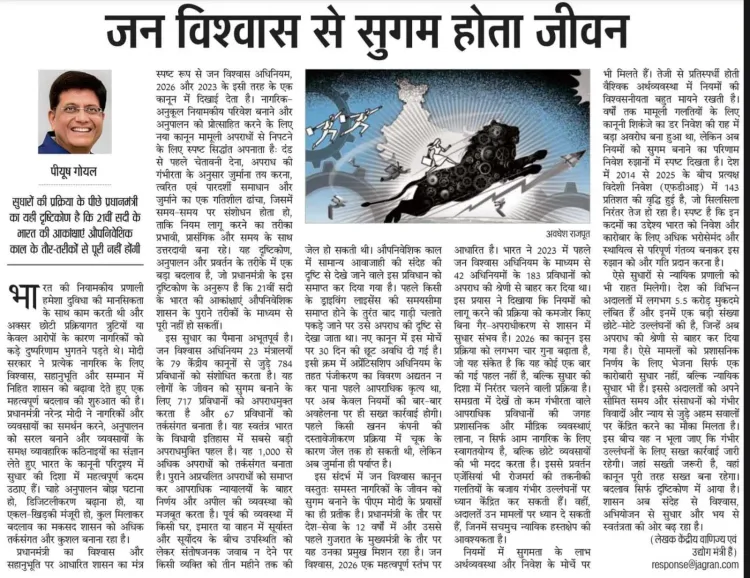
Commerce Minister Piyush Goyal on June 22, 2026, shared a Dainik Jagran op-ed tracing 12 years of the Modi government's governance record, welfare initiatives, and the Jan Vishwas Act's role in easing life for citizens and businesses.
Key Takeaways
Piyush Goyal published an op-ed in Dainik Jagran on June 22, 2026 , titled 'Jan Vishwas se Sugam Hota Jeevan' .
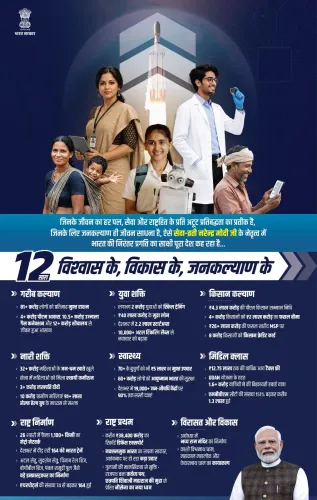
The article traces 12 years of the central government under PM Narendra Modi , focusing on governance and public welfare.
The Jan Vishwas (Amendment of Provisions) Act, 2023 amended 42 central acts to decriminalise minor offences.
The reform is part of a broader Ease of Doing Business push begun in 2014 , alongside the Insolvency and Bankruptcy Code 2016 .
MSMEs and small businesses are key beneficiaries of reduced criminal compliance risk under the Act.
State-level rule notification remains the critical next step for full implementation of the 2023 Act .
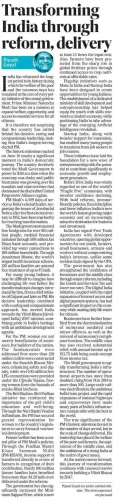
Union Commerce and Industry Minister Piyush Goyal on Monday, June 22, 2026, shared an opinion article authored by him in leading Hindi daily Dainik Jagran, titled 'Jan Vishwas se Sugam Hota Jeevan' ('Life Made Easier Through Public Trust'), tracing what he describes as a journey of good governance, public welfare, and positive change in the lives of the poor over 12 years of the central government led by Prime Minister Narendra Modi.
Context
In his post on X, Goyal wrote that the article 'underlines the journey of good governance, public welfare, and the positive changes that have come in the lives of the poor during 12 years of the central government running under the leadership of Prime Minister Narendra Modi.' He urged followers to read the piece and share their views. The article's title references the Jan Vishwas (Amendment of Provisions) Act, 2023, a landmark law that amended 42 central acts to decriminalise minor offences and reduce the compliance burden on citizens and businesses.
The op-ed appears at a moment when the BJP-led NDA government is marking over a decade in office, with senior ministers increasingly engaging in public communication through long-form writing to frame the government's legislative record for a Hindi-speaking audience.
Policy Backdrop
The Jan Vishwas (Amendment of Provisions) Act was introduced in the Lok Sabha in December 2022 and passed in 2023, amending provisions across sectors including environment, agriculture, food safety, and company law to replace criminal penalties for minor procedural violations with civil penalties or compounding. The legislation is positioned as the centrepiece of a trust-based governance model that the central government has pursued since 2014.
This reform sits within a broader sequence that includes the Ease of Doing Business initiative launched in 2014, the Companies (Amendment) Act 2015, and the Insolvency and Bankruptcy Code 2016, all of which aimed to reduce compliance barriers and improve India's standing in global business competitiveness rankings. Cumulatively, these measures shifted the regulatory philosophy from a punitive model toward self-certification and administrative adjudication for minor infractions.
Stakeholders and Impact
MSMEs and small businesses are the primary beneficiaries cited in discussions around the Jan Vishwas Act, as decriminalisation of minor offences removes the threat of imprisonment for procedural lapses, lowering the risk cost of doing business. Citizens dealing with government services also stand to gain from reduced bureaucratic friction in day-to-day compliance.
For Goyal, who holds the dual role of Commerce Minister and Leader of the House in the Rajya Sabha, the op-ed serves as a platform to consolidate the government's governance narrative ahead of what analysts expect will be an active parliamentary session. The choice of Dainik Jagran, one of India's most widely read Hindi-language dailies, signals an intent to reach voters in Uttar Pradesh and the Hindi heartland directly.
What's Next
Attention will now turn to state-level notification of rules under the 2023 Act, as effective implementation depends on states aligning their own statutes with the amended central provisions. Observers are also watching for any follow-up legislation in the next parliamentary session that could extend decriminalisation to additional sectors.
As the government approaches the completion of its third term's first full year, op-eds by senior ministers in mass-circulation Hindi publications are likely to become a recurring feature of the BJP's outreach strategy, anchoring policy achievements in accessible, vernacular narratives for a broad electorate.
Point of View
Where electoral opinion in the Hindi heartland is shaped. The choice of the Jan Vishwas Act as the anchor is telling: it allows the government to claim a liberal, pro-citizen regulatory identity while simultaneously appealing to the business community. At a structural level, this is consistent with the BJP's pattern of using senior ministers as policy communicators in the run-up to parliamentary sessions. The op-ed also signals that the government intends to keep decriminalisation and ease-of-living as live political themes, not merely archived legislative achievements.
NationPress
20 Sept 2026
Frequently Asked Questions
What is the Jan Vishwas Act that Piyush Goyal's article references?
The Jan Vishwas (Amendment of Provisions) Act, 2023 is a central law that amended 42 acts across sectors to replace criminal penalties for minor procedural violations with civil penalties, reducing the compliance burden on citizens and businesses, particularly MSMEs.
What did Piyush Goyal write about in Dainik Jagran?
Piyush Goyal authored an op-ed titled 'Jan Vishwas se Sugam Hota Jeevan' ('Life Made Easier Through Public Trust') in Dainik Jagran on June 22, 2026, covering 12 years of the Modi government's record on governance, public welfare, and positive change for the poor.
What is Piyush Goyal's current role in the government?
Piyush Goyal is the Union Minister of Commerce and Industry and also serves as the Leader of the House in the Rajya Sabha, making him one of the senior-most members of the Modi cabinet.
How does the Jan Vishwas Act help MSMEs and small businesses?
By decriminalising minor offences under 42 central acts, the Jan Vishwas Act removes the threat of imprisonment for small procedural lapses, lowering legal risk for MSMEs and small businesses and easing day-to-day compliance.
What comes next after the Jan Vishwas Act?
The key next step is state-level notification of rules aligned with the 2023 Act, as states must amend their own statutes for full implementation. Further decriminalisation legislation may also be introduced in upcoming parliamentary sessions.