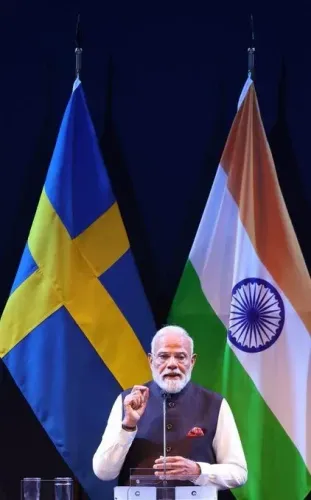
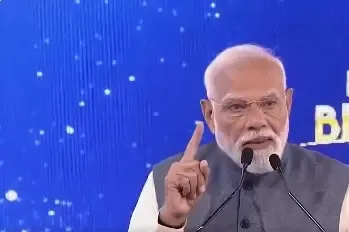
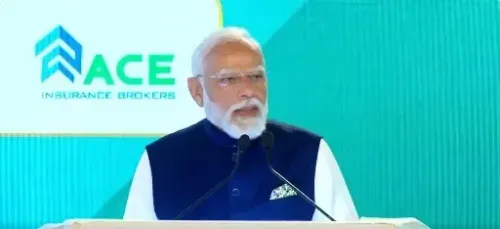
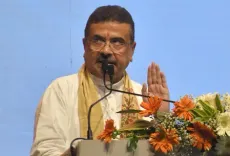
PM Modi addresses ET World Leaders Forum on India's reform path
Synopsis
Prime Minister Narendra Modi addressed the Economic Times World Leaders Forum on August 21, 2026, outlining India's decade-long reform journey across manufacturing, technology, infrastructure and governance, and signalling a next phase of structural transformation for the world's fifth-largest economy.
Key Takeaways
PM Modi addressed the Economic Times World Leaders Forum on August 21, 2026 .
The speech covered India's growth journey across manufacturing, technology, infrastructure, and governance .
Modi signalled the arrival of 'next-generation reforms', pointing to a new phase beyond the foundational changes of 2014-2024.
Key reform milestones cited in context include Make in India (2014) , Digital India (2015) , and the GST rollout (2017) .
India is currently the world's fifth-largest economy ; the address was a direct signal to global business and investment communities.
The next Union Budget is the key policy event to watch for concrete next-generation reform proposals.
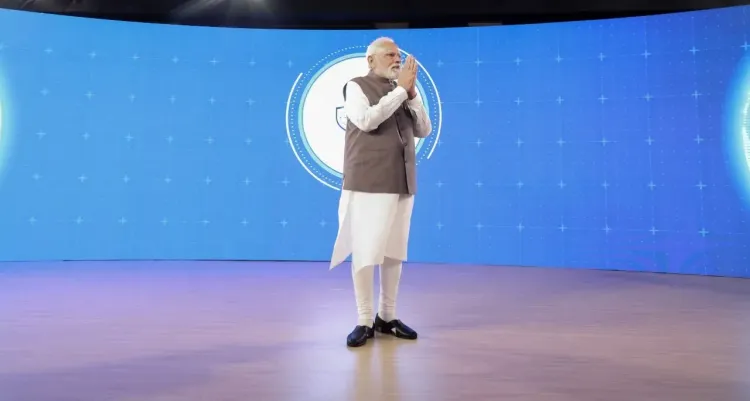
With global business leaders in the audience, Prime Minister Narendra Modi took the stage at the Economic Times World Leaders Forum on Friday, August 21, 2026, laying out India's growth story and the structural reforms he says will define the country's next decade.
Modi spoke on India's ongoing transformation across manufacturing, technology, infrastructure, and governance — four pillars that have anchored his government's economic agenda since 2014. The address touched on what he called 'next-generation reforms', signalling that the policy push is far from over.
Twelve years of reform — and the argument for what comes next
The scaffolding for this speech was built over more than a decade. The Make in India initiative launched in 2014 set the ambition of turning India into a global manufacturing hub. The Goods and Services Tax (GST), introduced in 2017, unified a fragmented indirect tax regime into a single national market. The Digital India programme, rolled out in 2015, wired government services to citizens at scale.
Together, these reforms form the lineage Modi was drawing on. The pitch to the forum was essentially this: the foundation is laid — now watch what the next phase builds on top of it.
Why a business forum, and why now
The ET World Leaders Forum is one of India's most prominent annual convening points for domestic and global capital. Addressing it is a deliberate signal — not just a speech, but a message to boardrooms and investment committees that India's policy direction remains stable and ambitious.
Modi's framing of 'next-generation reforms' is the detail to watch. It suggests the government is preparing to move beyond the foundational structural changes of the first decade and into a more sophisticated phase — likely touching areas such as labour markets, advanced manufacturing supply chains, and AI-driven governance. The next Union Budget will be the first concrete test of whether that framing translates into legislation.
India is today the world's fifth-largest economy. The forum address is Modi's argument that it does not intend to stay there.
Point of View
Not a plateau. For investors, the consistent four-sector framing (manufacturing, technology, infrastructure, governance) offers predictability, which is itself a form of policy communication. The real test, as always, will be whether the next Budget translates the rhetoric into specific legislative and fiscal commitments.
NationPress
21 Aug 2026
Frequently Asked Questions
What did PM Modi say at the ET World Leaders Forum 2026?
Prime Minister Modi spoke about India's growth journey, the importance of next-generation reforms, and the transformation underway in manufacturing, technology, infrastructure and governance.
What is the Economic Times World Leaders Forum?
The Economic Times World Leaders Forum is an annual event that brings together global business leaders and policymakers to discuss economic trends and India's role in the world economy.
What are India's next-generation reforms?
While specific proposals were not detailed in the post, the term refers to the next phase of structural reform beyond foundational measures like GST, Make in India, and Digital India — likely covering areas such as advanced manufacturing, labour markets, and AI-driven governance.
What has India's reform journey looked like since 2014?
Since 2014, India has launched Make in India (2014), Digital India (2015), and the GST (2017), pursuing ease of doing business, foreign investment attraction, and digital delivery of government services.
What should we watch for after Modi's ET Forum address?
The next Union Budget is the key event to watch, as it is likely to contain the first concrete legislative and fiscal details of the 'next-generation reforms' Modi outlined at the forum.