Is India Set to Become the Engine of Global Growth?
Synopsis
In a powerful address at the ET Now Global Business Summit, PM Modi outlines India's vision to be a catalyst for global growth while establishing a self-reliant development model. Emphasizing accelerated reforms, significant infrastructure investments, and a commitment to emerging technologies, he asserts India's role in shaping a new world order.
Key Takeaways
India aims to be a global growth engine.
Emphasis on self-reliant development.
Accelerated infrastructure projects underway.
Focus on technology sectors like AI and biopharma .
Significant trade agreements signed since 2014.
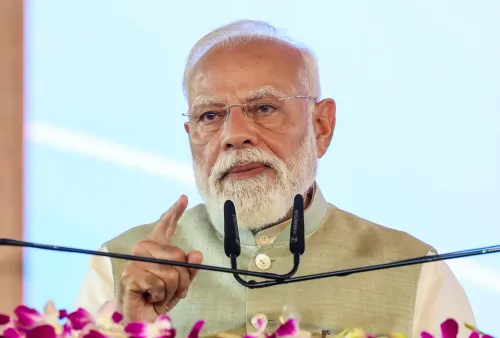
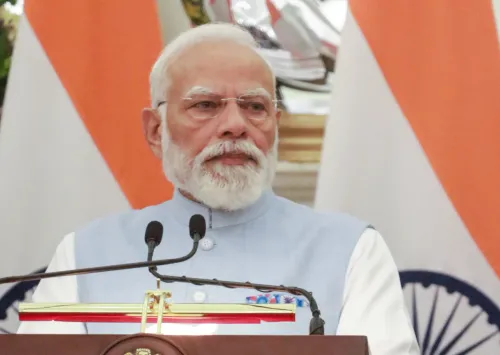
New Delhi, Feb 13 (NationPress) Prime Minister Narendra Modi proclaimed on Friday that India is set to emerge as a key driver of global growth while formulating its unique development strategy as the nation's Reform Express gains additional momentum.
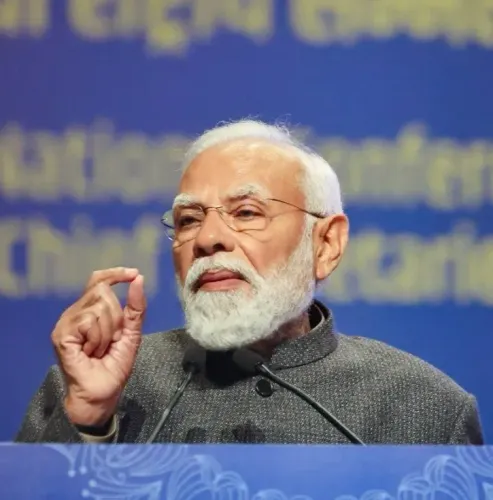
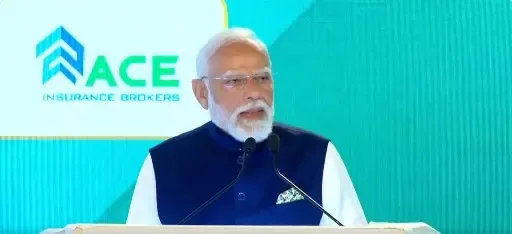
Speaking at the ET Now Global Business Summit 2026 in New Delhi, the Prime Minister emphasized that the Union government is propelling economic reforms not out of necessity, but from a strong belief in transforming the ecosystem for the benefit of the populace and realizing a 'Viksit Bharat' (Developed India).
He pointed out that the decision-making processes have been hastened, leading to swift advancements in the construction of highways and railways throughout the nation.
These reforms have been executed both within and beyond the framework of the Union Budget, according to the Prime Minister.
He noted that this year's Union Budget has further propelled the reform agenda with a focus on capital expenditure and technology.
"The Union Budget has significantly boosted major infrastructure initiatives with a substantial increase in capex, which has a multiplier effect in enhancing growth and generating additional employment opportunities in the economy. It also prioritizes the biopharma, AI, and semiconductor sectors," he stated.
Prime Minister Modi highlighted that the emphasis in the Budget is not solely on expenditures but on tangible outcomes.
"Previously, projects in the railway and highway sectors were announced but often went unimplemented. Since 2014, there has been a noticeable improvement in the speed of project completion," he remarked.
"Beyond the Budget, GST reforms and labor reforms have been instituted to benefit the citizens," PM Modi mentioned.
He further noted: "The single Indian reform that has gained global attention over the past decade is UPI. It's more than just an app; it's a proof of the extraordinary alignment of policy, process, and delivery. UPI is reaching individuals who never imagined accessing banking and financial services. This reform was driven by conviction rather than necessity. It aimed at including citizens previously overlooked by past administrations."
"Jise koi nahi poochhta, use Modi poojta hai," the Prime Minister remarked.
PM Modi conveyed: "Every country now recognizes the need to build its own resilience. While the world is discussing this today, India established its policy back in 2015. India made it clear in the foundational document of 'Niti Aayog' that it would not adopt development models from other nations."
He pointed out that his administration has signed free trade agreements with 38 developed nations, whereas prior to 2014, the UPA government managed to finalize comprehensive trade agreements with only four nations.
He attributed the inability to finalize these agreements during the UPA regime to policy paralysis and widespread corruption.
"Before 2014, India's manufacturing sector was notably weak, leading to a lack of trust in the nation," he added.
"Today, we are forging trade agreements with the world because India is now imbued with self-confidence. India stands stronger today, which is why the world also places its trust in us," he asserted.
"India is poised to lead global growth. India will serve as the engine of growth for the world. The international community is transitioning towards a new global order. The previous system was based on the notion of 'one size fits all', assuming that the global economy would be centralized. In this model, countries were merely seen as contributors. However, this model is now being reassessed," the Prime Minister concluded.
Point of View
I believe PM Modi's emphasis on self-reliance and accelerated reforms is critical for India's growth trajectory. By building a unique development model and fostering confidence in trade agreements, India is positioning itself as a formidable player on the global stage while remaining committed to the welfare of its citizens.
NationPress
16 Sept 2026
Frequently Asked Questions
What is the main focus of PM Modi's address?
PM Modi emphasized India's role as a global growth driver and presented a vision for a self-reliant development model.
What reforms are being implemented in India?
The reforms include expedited decision-making processes, significant investments in infrastructure, and advancements in technology sectors like biopharma and AI.
How has India's trade position changed since 2014?
Since 2014, India has signed free trade agreements with 38 developed countries, reflecting a shift from the previous regime's limited trade engagements.
What is UPI and why is it significant?
UPI is a digital payment system that has revolutionized banking accessibility for many citizens, showcasing India's innovative approach to financial inclusion.
How does PM Modi view the future of global economies?
PM Modi believes that countries must build their resilience and that the traditional 'one size fits all' economic model is being challenged.