HP CM Office Pushes to Reclaim Luhri, Sunni Hydro Projects from SJVN
Synopsis
The Himachal Pradesh CM Office has directed officials to accelerate efforts to reclaim the Luhri and Sunni hydroelectric projects from central PSU SJVN Ltd, and to fast-track construction of a 66 kV transmission line connecting Pooh, Samdo, and Kaza in the remote Spiti valley.
Key Takeaways
The Chief Minister's Office of Himachal Pradesh issued directives on 30 September 2026 to intensify efforts to bring the Luhri and Sunni hydroelectric projects under state control from SJVN Ltd .
SJVN Ltd is a central PSU that has been associated with both Satluj-basin projects; any transfer requires formal state-centre negotiation.
Officials were separately ordered to accelerate construction of a 66 kV transmission line from Pooh (Kinnaur) through Samdo to Kaza (Spiti) .
Kaza , the headquarters of Spiti subdivision, sits above 3,800 metres — making reliable power infrastructure a critical need for residents through harsh winters.
The directives reflect Himachal Pradesh's long-standing push for greater state oversight of hydropower assets developed on its rivers by central agencies.
Formal transfer notifications from SJVN and physical progress on the Pooh–Kaza corridor will be the key indicators of follow-through.
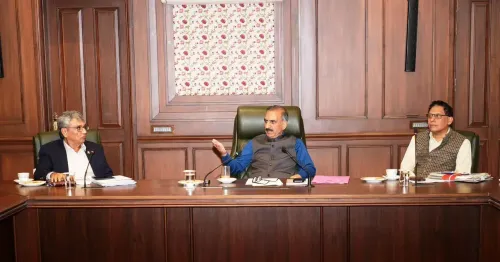
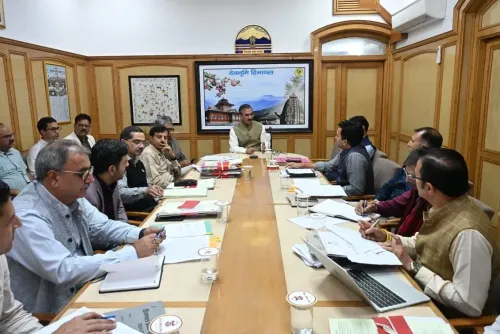
Two hydropower projects worth significant generation capacity — Luhri and Sunni — could soon shift from central control to state hands, as the Chief Minister's Office of Himachal Pradesh issued fresh directives on Wednesday, September 30, 2026, ordering officials to accelerate efforts to take both projects back from SJVN Ltd. The same set of orders pushed for faster construction of a 66 kV transmission line running from Pooh to Samdo and onward to Kaza — a critical power evacuation corridor deep in the Spiti valley.
Two Projects, One Political Priority: Reclaiming Assets from SJVN
The directives, posted on the official CMO account, instructed authorities to 'intensify efforts' — प्रयास तेज करने के निर्देश — to bring the Luhri and Sunni hydroelectric projects under state control from SJVN Ltd, a central public sector undertaking that has long operated across Himachal's river valleys. Both projects are sited on or near the Satluj river in Himachal Pradesh. The move fits a pattern stretching back years: state governments in Shimla have periodically pushed to review project allotments made to central PSUs, arguing that Himachal's rivers should generate revenue and jobs for Himachal first.
SJVN Ltd, headquartered in Shimla, is one of India's major hydropower developers and has been associated with both the Luhri and Sunni projects for several years. Any formal transfer of project ownership would require negotiation between the state utility and the central PSU — a process that is rarely swift. The CMO's public directive signals political intent and creates accountability pressure on the bureaucracy to deliver visible movement.
The Pooh–Samdo–Kaza Transmission Corridor
The second directive is equally consequential for the residents of the Lahaul and Spiti district. The 66 kV transmission line under construction — running from Pooh in Kinnaur district through Samdo to Kaza, the headquarters of Spiti subdivision — is designed to bring reliable, high-capacity power to one of India's most remote and climatically harsh regions. The CMO ordered that construction be accelerated: 'निर्माण कार्य में तेजी लाएं' ('speed up the construction work').
Kaza sits at over 3,800 metres above sea level. Winters are brutal and power outages costly. A dedicated 66 kV backbone would replace the patchwork of lower-capacity lines that currently serve the valley and enable any future renewable or hydro generation in the region to actually reach the grid. For the sparse population of Spiti, faster construction is not a bureaucratic milestone — it is a quality-of-life issue measured in heating, lighting, and connectivity through months of snowbound isolation.
State vs Centre: The Long Game Over Himalayan Rivers
Himachal Pradesh contributes disproportionately to India's hydropower capacity yet has repeatedly clashed with central agencies over the share of revenue, royalty rates, and direct control of projects on its rivers. The push to reclaim Luhri and Sunni is the latest move in that decades-old tug-of-war. The state's argument is structural: central PSUs extract value from Himalayan rivers while local communities bear the environmental and displacement costs. Whether the current push produces a formal transfer notification — or remains a directive on paper — will be the real test of its seriousness.
Watch for formal communications from the state power department to SJVN, and physical progress milestones on the Pooh–Kaza transmission corridor, in the months ahead.
Point of View
Rather than ceding it to central PSUs. By issuing a public directive rather than a quiet administrative order, the Himachal government is also creating a transparency trail — and political ownership of the outcome. The Pooh–Kaza transmission push signals that infrastructure equity for tribal and remote constituencies is being framed as a governance deliverable, not just an engineering project. If the Luhri and Sunni transfers actually proceed, they could set a template for other Himalayan states watching the state-centre hydro equation closely.
NationPress
1 Oct 2026
Frequently Asked Questions
What are the Luhri and Sunni hydroelectric projects in Himachal Pradesh?
The Luhri and Sunni are hydroelectric projects proposed or under development on the Satluj river in Himachal Pradesh. Both have been associated with SJVN Ltd , a central government public sector undertaking. The Himachal Pradesh government is now seeking to bring them under state control.
What is SJVN Ltd and why does Himachal Pradesh want to take projects from it?
SJVN Ltd (Satluj Jal Vidyut Nigam Limited) is a central PSU focused on hydropower generation, operating extensively in Himachal Pradesh and neighbouring states. Himachal Pradesh has long argued that its rivers should be developed under greater state oversight so that revenue, royalties, and jobs accrue more directly to the state and its people.
What is the 66 kV transmission line from Pooh to Kaza?
It is a high-capacity power transmission corridor currently under construction, running from Pooh in Kinnaur district through Samdo to Kaza in Lahaul and Spiti district . Once complete, it will provide reliable electricity to the remote Spiti valley and enable future renewable power to reach the state grid.
Why is the Pooh–Kaza power line important for Spiti residents?
Kaza , the headquarters of Spiti subdivision, sits above 3,800 metres and experiences extremely harsh winters. A dedicated 66 kV line would replace lower-capacity, less reliable infrastructure, ensuring residents have stable heating and electricity during months of near-isolation caused by heavy snowfall.
Can Himachal Pradesh actually take over hydro projects from a central PSU like SJVN?
A formal transfer would require negotiation between the state and central government and depends on the contractual terms of the original project allotment. While Himachal Pradesh has the political intent — demonstrated by the CM Office directive — formal notifications and regulatory approvals would be required to complete any transfer.