CM Sukhu Moves to Acquire Sunni, Luhri, Dhaulasidh Power Projects
Synopsis
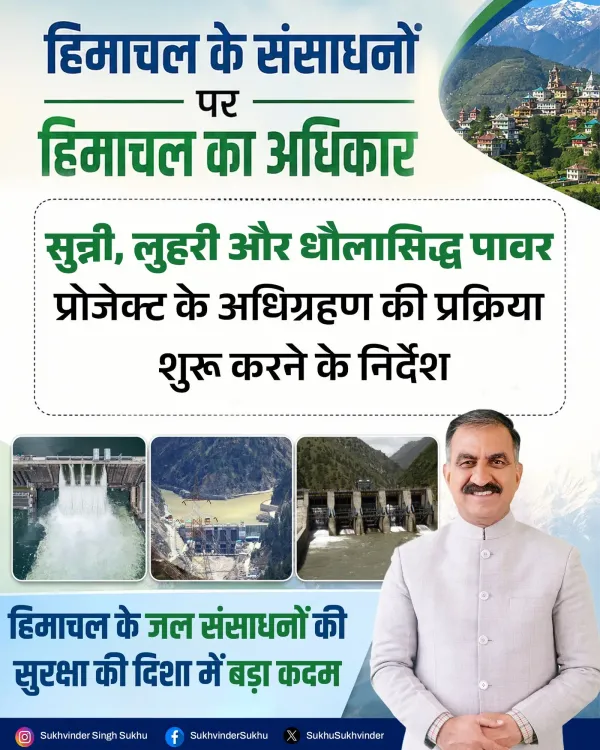
Himachal Pradesh CM Sukhvinder Singh Sukhu announced on 8 July 2026 that his government is moving to acquire the Sunni, Luhri, and Dhaulasidh hydroelectric projects, asserting the state's natural wealth belongs to its people and vowing to protect Himachal's rights with full resolve.
Key Takeaways
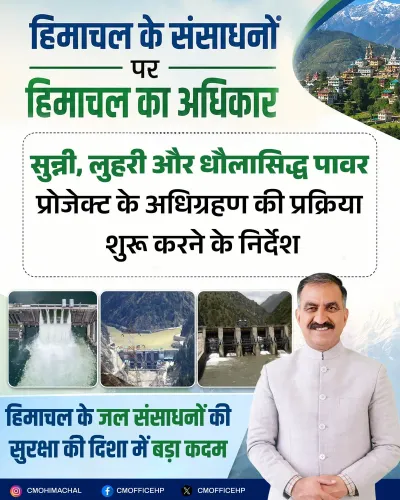
CM Sukhvinder Singh Sukhu announced on 8 July 2026 that the state government is actively moving to acquire three hydroelectric projects.
The three projects targeted for acquisition are Sunni (Shimla district), Luhri (Satluj river basin), and Dhaulasidh , all located in Himachal Pradesh .
Sukhu framed the move as a matter of state rights, calling Himachal's natural wealth a 'trust held for the people of the state.' Hydropower projects in Himachal Pradesh have historically been allotted to central PSUs and private developers since the early 2000s.
Formal acquisition notifications, financing plans, and potential legal challenges from existing developers are the key next steps to watch.
A successful acquisition could set a precedent for other resource-rich Indian states seeking greater control over natural assets.
Himachal Pradesh Chief Minister Sukhvinder Singh Sukhu announced on Wednesday, 8 July 2026 that his government is actively pursuing the acquisition of three major hydroelectric projects — Sunni, Luhri, and Dhaulasidh — asserting that the state's natural resources belong exclusively to its people.
Context
Posting in Hindi on X, CM Sukhu declared: 'हिमाचल की संपदा प्रदेश की जनता की अमानत है' ['Himachal's wealth is a trust held for the people of the state']. He added that rights over these resources belong only to the state's 'hardworking and honest people,' and that protecting Himachal Pradesh's interests, dignity, and rights is the government's 'highest priority.'
The statement marks a significant policy signal from the Congress government, indicating formal steps are underway — not merely planned — to bring the three projects under state control.
Policy Backdrop
Himachal Pradesh sits on one of India's richest hydroelectric endowments, with rivers such as the Satluj running through its valleys. Since the early 2000s, successive state governments allotted hydropower projects to central public-sector undertakings and private developers, often drawing criticism that the state received insufficient economic returns relative to the resources it provided.
The Luhri Power Project is located on the Satluj river basin, while the Sunni Power Project falls in Shimla district. The Dhaulasidh Power Project is also situated within the state. All three have been developed or are being developed through arrangements that the Sukhu government now appears to be revisiting in favour of direct state ownership.
Indian states rich in natural resources have periodically renegotiated project ownership and royalty terms with central agencies and private players. Himachal Pradesh's current push reflects a broader pattern of states seeking to reclaim economic benefits from resources within their borders.
Stakeholders and Impact
The most direct beneficiaries of state acquisition would be Himachal Pradesh's approximately 75 lakh residents, who stand to gain if royalty revenues and power surpluses are retained within the state rather than flowing to outside entities. Workers employed in the hydropower sector across these projects are also key stakeholders in any ownership transition.
Existing project developers — whether central public-sector undertakings or private firms — would face significant changes to their operational and financial arrangements. Any acquisition process is also likely to invite scrutiny over valuation, compensation, and continuity of construction or operations at projects in varying stages of completion.
What's Next
The government's next concrete steps will be closely watched: formal acquisition notifications, financing arrangements to fund the takeover, and potential legal challenges from incumbent developers or central agencies. CM Sukhu framed the effort as one driven by firm resolve — 'पूरी दृढ़ता से' ['with complete firmness'] — suggesting the administration intends to push through procedural and legal hurdles.
If the acquisitions proceed, they could reshape the revenue model for hydropower in Himachal Pradesh and set a precedent that other resource-rich Indian states may look to replicate in their own negotiations over natural-asset ownership.
Point of View
Positioning itself as the defender of state rights against central or private interests. This sits within a well-established pattern across India where ruling parties in resource-rich states leverage ownership disputes to consolidate popular support. The harder test will come in execution: acquisition financing, legal battles, and operational continuity will determine whether the resolve translates into lasting structural change.
NationPress
7 Oct 2026
Frequently Asked Questions
Which power projects is the Himachal Pradesh government trying to acquire?
The Himachal Pradesh government under CM Sukhvinder Singh Sukhu is pursuing acquisition of the Sunni, Luhri, and Dhaulasidh hydroelectric projects, all located within the state.
Why does Himachal Pradesh want to acquire these hydropower projects?
CM Sukhu has stated that Himachal's natural wealth is a trust belonging to its people, and the state government wants to ensure that economic benefits from these resources remain within Himachal Pradesh rather than flowing to outside entities.
Where are the Sunni, Luhri, and Dhaulasidh projects located?
The Sunni Power Project is in Shimla district, the Luhri Power Project is on the Satluj river basin, and the Dhaulasidh Power Project is also situated in Himachal Pradesh.
Who currently controls these hydroelectric projects in Himachal Pradesh?
Hydropower projects in Himachal Pradesh have historically been developed through allotments to central public-sector undertakings and private developers since the early 2000s; the Sukhu government is now seeking to bring them under direct state ownership.
What happens next after CM Sukhu's acquisition announcement?
The key steps to watch include formal acquisition notifications, financing arrangements for the takeover, and potential legal challenges from existing project developers or central agencies.