CM Sukhu Attends Key Meet With Union Ministers Khattar, Patil
Synopsis
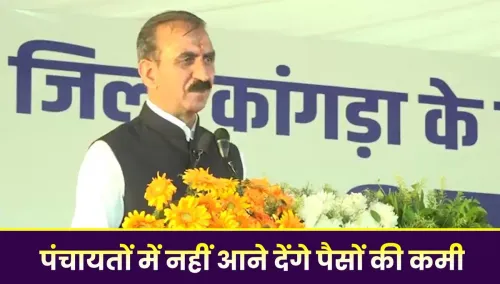
Chief Minister Sukhvinder Singh Sukhu of Himachal Pradesh attended a high-level meeting with Union Power Minister Manohar Lal Khattar and Union Jal Shakti Minister C. R. Patil, along with Chief Ministers of beneficiary states, to discuss shared water and hydroelectric resources across northern India.
Key Takeaways
CM Thakur Sukhvinder Singh Sukhu participated in a multi-state inter-ministerial meeting on June 16, 2026 .
Union Power Minister Manohar Lal Khattar and Union Jal Shakti Minister C.
Patil were present at the meeting.
Chief Ministers of other beneficiary states — those sharing water and hydropower from Himalayan rivers — also attended.
The meeting reflects the Centre's ongoing coordination framework on trans-boundary rivers, rooted in the Bhakra Beas Management Board constituted in 1966 .
Himachal Pradesh is a key upstream source state for hydroelectric power serving Punjab , Haryana , and Rajasthan .
The Chief Minister's Office of Himachal Pradesh announced on Tuesday, June 16, 2026, that Chief Minister Thakur Sukhvinder Singh Sukhu attended a high-level inter-ministerial meeting alongside Union Power Minister Manohar Lal Khattar, Union Jal Shakti Minister C. R. Patil, and Chief Ministers of other beneficiary states, underscoring the Centre's continued engagement on shared water and energy resources in northern India.
Context
The post, shared by the official handle of the Chief Minister's Office of Himachal Pradesh, states: 'Baithak mein Kendreey Urja Mantri Manohar Lal Khattar ji, Kendreey Jal Shakti Mantri C. R. Patil ji aur labhanvit rajyon ke Mukhyamantri bhi maujood rahe.' In English: 'The meeting was also attended by Union Power Minister Manohar Lal Khattar, Union Jal Shakti Minister C. R. Patil, and the Chief Ministers of the beneficiary states.' The disclosure was attributed directly to Chief Minister Thakur Sukhvinder Singh Sukhu.
The reference to 'beneficiary states' points to the cluster of northern states — including Punjab, Haryana, and Rajasthan — that share water and hydroelectric power generated from Himalayan river systems running through Himachal Pradesh.
Policy Backdrop
The institutional framework governing these shared resources traces back to 1966, when the Bhakra Beas Management Board (BBMB) was constituted to regulate water and power from inter-state projects among Punjab, Haryana, Rajasthan, and Himachal Pradesh. The board remains the principal mechanism for allocating river flows and hydroelectric output across these states.
Central ministers regularly convene with Chief Ministers of northern states to coordinate on trans-boundary rivers that serve both irrigation and power generation. Such meetings fall within the established pattern of Centre-state engagement on resource allocation under existing boards and inter-state treaties, reflecting a preference for joint management of Himalayan river basins over unilateral state decisions.
Manohar Lal Khattar, who previously served as Chief Minister of Haryana, brings direct familiarity with the downstream perspective on water-sharing, while C. R. Patil oversees the broader national water resources mandate as Union Jal Shakti Minister. CM Sukhu has led the Congress government in Himachal Pradesh since December 2022, consistently emphasising the state's role as a net contributor of hydroelectric power to the national grid.
Stakeholders and Impact
The primary stakeholders in such inter-ministerial discussions are the riparian states and hydropower beneficiaries whose agricultural and urban water needs are tied to upstream flows from Himachal Pradesh. Farmers in Punjab, Haryana, and Rajasthan depend on regulated releases for irrigation, while industrial and residential consumers across northern India rely on the hydroelectric capacity these rivers support.
For Himachal Pradesh, participation in such forums is critical to asserting its interests as a source state — particularly on questions of royalty from hydropower projects, equitable power-sharing ratios, and environmental flow requirements that affect the state's own river ecology and local communities.
What's Next
Observers will watch for any follow-up announcements on project clearances, revised power-sharing ratios, or updated water allocation schedules stemming from the meeting. Parliamentary references to water disputes or hydro-policy updates in the coming sessions may also shed light on the outcomes of this engagement.
The convergence of the Union Power Ministry, the Jal Shakti Ministry, and multiple state governments at a single forum signals that the Centre is treating northern water and energy coordination as a priority, and further rounds of consultation are likely before any formal policy revision is announced.
Point of View
Signalling that the Centre is treating inter-state water and energy allocation as an active governance priority rather than a dormant board matter. For CM Sukhu, visibility at such a forum reinforces Himachal Pradesh's claim as an indispensable upstream partner rather than a passive participant in resource-sharing arrangements. The inclusion of beneficiary-state Chief Ministers alongside central ministers follows an established pattern of multilateral consultation that tends to precede revisions to power-sharing ratios or irrigation allocations. Any concrete outcomes from this meeting could have downstream consequences — literal and political — for millions of farmers and consumers across the northern plains.
NationPress
20 Sept 2026
Frequently Asked Questions
Why did CM Sukhu meet Union Ministers Khattar and Patil?
CM Sukhvinder Singh Sukhu attended an inter-ministerial meeting with Union Power Minister Manohar Lal Khattar and Union Jal Shakti Minister C. R. Patil, along with Chief Ministers of other beneficiary states, to discuss shared water and hydroelectric power resources in northern India.
What is the Bhakra Beas Management Board and why does it matter?
The Bhakra Beas Management Board (BBMB) was constituted in 1966 to regulate water and power from inter-state projects shared among Punjab, Haryana, Rajasthan, and Himachal Pradesh; it remains the primary institutional framework for such resource allocation.
Which states are considered beneficiary states in Himachal Pradesh water-power meetings?
The beneficiary states typically include Punjab, Haryana, and Rajasthan, which receive water for irrigation and hydroelectric power generated from rivers flowing through Himachal Pradesh.
What is Manohar Lal Khattar's current role?
Manohar Lal Khattar currently serves as Union Minister of Power in the central government; he previously served as Chief Minister of Haryana.
What could come out of the CM Sukhu meeting with central ministers on water and power?
Potential outcomes include revised power-sharing ratios, updated water allocation schedules, or new project clearances, though no specific decisions have been confirmed from this meeting.