Kishan Reddy Highlights PMJDY Reach: 1.33 Cr Accounts in Telangana
Synopsis
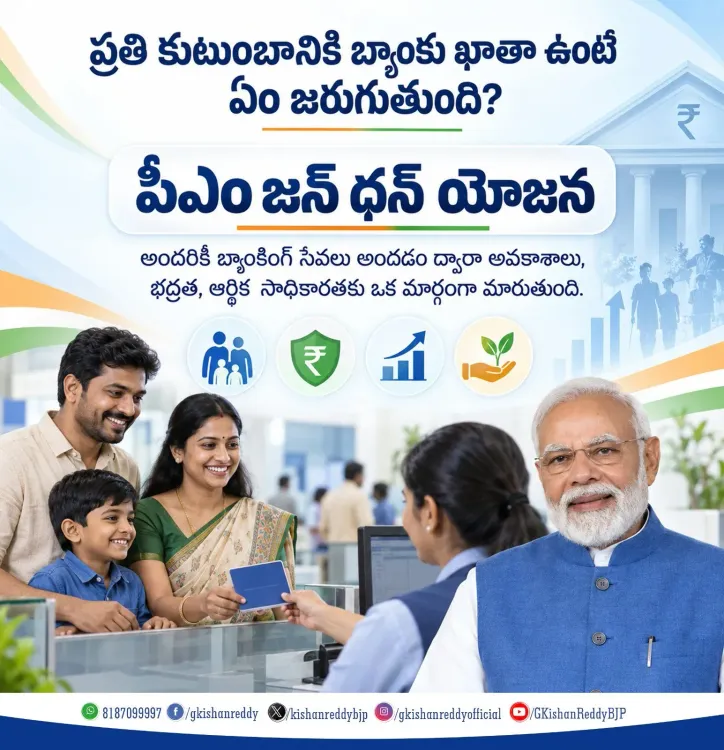
Union Minister G. Kishan Reddy highlights that Telangana has crossed 1.33 crore PM Jan Dhan Yojana accounts — 77.65 lakh held by women — with Hyderabad alone contributing 12.74 lakh accounts, underscoring the scheme's deep penetration since its 2014 launch.
Key Takeaways
Telangana has over 1.33 crore PMJDY accounts , according to figures cited by Union Minister G.
Kishan Reddy on 29 September 2026.
77.65 lakh of Telangana's Jan Dhan accounts — roughly 58 percent — are held by women.
Hyderabad alone accounts for 12.74 lakh PMJDY accounts, with 7.82 lakh belonging to women.
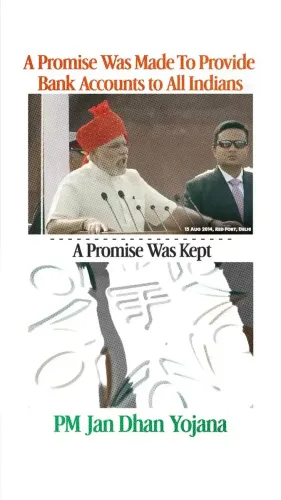
PM Jan Dhan Yojana was launched on 28 August 2014 to provide zero-balance banking to unbanked households across India.
PMJDY is integrated with Aadhaar and mobile banking, forming the foundation for Direct Benefit Transfers to crores of beneficiaries.
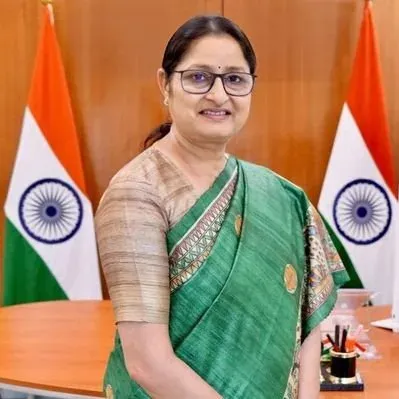
Kishan Reddy is both Union Coal and Mines Minister and BJP Telangana state president , making the post a blend of central-scheme amplification and state-level political outreach.
More than a decade after its launch, PM Jan Dhan Yojana (PMJDY) continues to reshape the financial landscape of India's poorest households — and Union Coal and Mines Minister G. Kishan Reddy, also the BJP Telangana state president, on Tuesday, 29 September 2026, put hard numbers to that transformation in his home state.
Posting in Telugu, Kishan Reddy cited figures showing over 1.33 crore PMJDY accounts active across Telangana — with 77.65 lakh of those held by women. The state capital alone tells a sharp story: Hyderabad accounts for 12.74 lakh of those accounts, of which 7.82 lakh belong to women. In a city often associated with tech wealth and corporate towers, nearly eight lakh women now hold a formal banking identity who once had none.
From 'privilege' to 'right': what PMJDY actually did
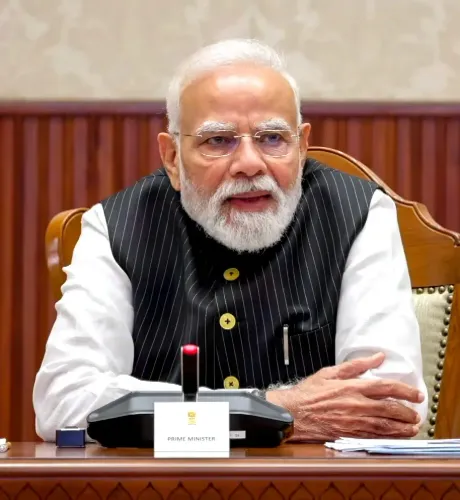
PMJDY was launched by Prime Minister Narendra Modi on 28 August 2014 with a single, audacious premise: that a bank account is a fundamental right, not a privilege of the salaried class. The scheme offered zero-balance accounts, a RuPay debit card, and accidental insurance cover — no minimum balance, no branch intimidation, no exclusion fine print.
Over time, the architecture grew. Aadhaar seeding and mobile banking turned PMJDY accounts into pipelines for Direct Benefit Transfers (DBT) — cooking gas subsidies, crop insurance payouts, pandemic cash relief — all landing directly in the same zero-balance accounts, bypassing intermediaries that had historically skimmed welfare at every level.
Why the women's share matters in Telangana
The gender breakdown in Kishan Reddy's figures is not incidental. Of the 1.33 crore total Telangana accounts, 77.65 lakh — roughly 58 percent — are held by women. In Hyderabad, that share climbs to 61 percent. Financial inclusion research consistently shows that when women control a household's bank account, spending on nutrition, education, and health rises. A bank account is not a welfare benefit; it is an economic lever.
For the BJP in Telangana — a state where the party is in opposition and has been building ground-level presence — amplifying central-scheme data serves a dual purpose: it anchors the party's welfare narrative ahead of future electoral cycles, and it gives a central minister a local-language platform to speak directly to the very communities the scheme was designed to reach.
The bigger financial inclusion picture
PMJDY does not stand alone. It forms the foundational 'J' in the government's JAM trinity — Jan Dhan, Aadhaar, Mobile — a policy architecture that now underpins almost every major welfare scheme in India. The Telangana numbers Kishan Reddy cited reflect that integration: these are not dormant accounts but active nodes in a benefit-delivery network that moves funds in real time.
What will matter next is account utilisation — how many of these 1.33 crore accounts are linked to pension products like Atal Pension Yojana, micro-insurance under Pradhan Mantri Jeevan Jyoti Bima Yojana, and whether the women account-holders are accessing credit lines. Account ownership was the first wall to break. Credit access is the next one.
Point of View
A politically potent message in a state the party is working to expand in. More broadly, the post reflects a decade-long communication strategy in which PMJDY is positioned not as a government programme but as a rights-restoration moment — 'a bank account as a fundamental right' — a framing that is hard to contest and easy to localise. The real policy test, however, lies beyond account opening: credit access, insurance linkage, and account activity rates will determine whether the numbers translate into lasting economic agency.
NationPress
29 Sept 2026
Frequently Asked Questions
How many PMJDY accounts are there in Telangana?
According to figures cited by Union Minister G. Kishan Reddy, Telangana has over 1.33 crore PM Jan Dhan Yojana accounts , of which 77.65 lakh are held by women.
How many Jan Dhan accounts are in Hyderabad?
Hyderabad has 12.74 lakh PMJDY accounts , with 7.82 lakh — over 61 percent — belonging to women beneficiaries.
When was PM Jan Dhan Yojana launched?
PM Jan Dhan Yojana (PMJDY) was launched by Prime Minister Narendra Modi on 28 August 2014 to provide universal, zero-balance banking access to unbanked households across India.
What is the JAM trinity and how does PMJDY fit in?
The JAM trinity stands for Jan Dhan, Aadhaar, and Mobile . PMJDY provides the bank account layer; Aadhaar provides identity verification; and mobile connectivity enables real-time Direct Benefit Transfers, eliminating intermediaries in welfare delivery.
Who is G. Kishan Reddy?
G. Kishan Reddy is the Union Minister of Coal and Mines in the Government of India and also serves as the BJP Telangana state president . He is a senior BJP leader representing the Secunderabad constituency.