Kishan Reddy Highlights Digital India's Gains for Women
Synopsis
Union Minister G. Kishan Reddy praised PM Modi's digital vision on 9 June 2026, citing 89% financial inclusion and expanded connectivity for India's women under Digital India and allied schemes.
Key Takeaways
Kishan Reddy posted on 9 June 2026 crediting PM Narendra Modi with driving a digital revolution for women.
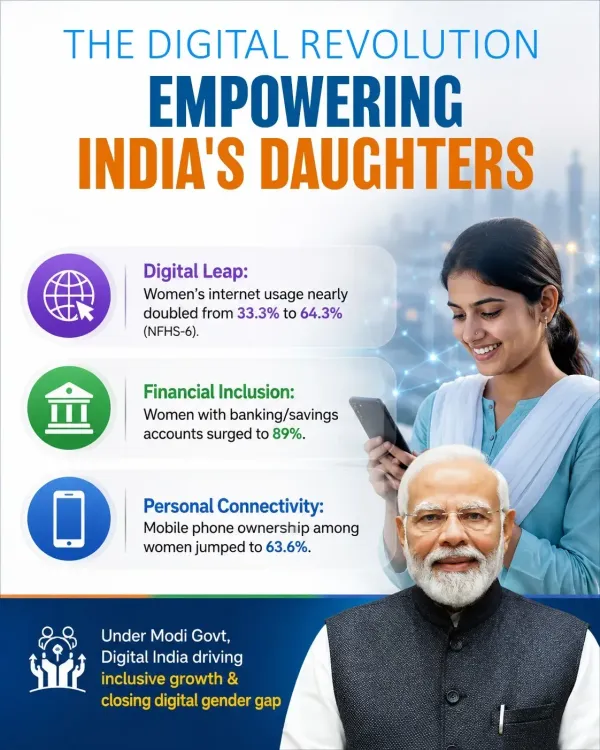
The post claims financial inclusion has reached 89 per cent , framed as a milestone of the Modi government's policy agenda.
The Digital India programme, launched 1 July 2015 , forms the backbone of the government's digital public infrastructure stack.
Pradhan Mantri Jan Dhan Yojana , announced 15 August 2014 , brought unbanked households — especially women — into formal banking via Aadhaar-linked zero-balance accounts.
The Beti Bachao Beti Padhao scheme was expanded in 2015 to include digital literacy components for girls.
Independent verification of the 89% inclusion figure and specific connectivity claims is pending forthcoming Economic Survey and RBI data.
Union Coal and Mines Minister G. Kishan Reddy on Tuesday, 9 June 2026 credited Prime Minister Narendra Modi's vision for driving a digital revolution that has expanded financial inclusion and improved personal connectivity for India's women, sharing the message on his official X account under the hashtags #NariShakti and #DigitalRevolution.
Context
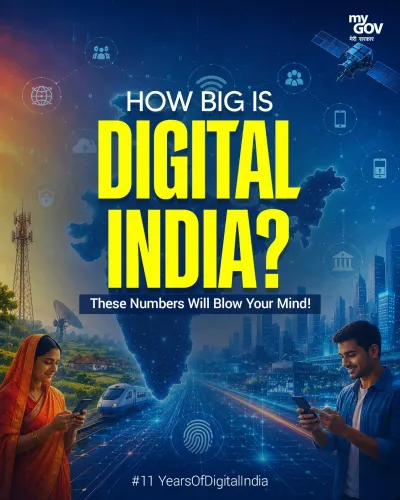
In his post, Kishan Reddy highlighted three broad achievements he attributed to the Modi government: 'seamless personal connectivity' for India's daughters, financial inclusion reaching 89 per cent, and what he described as 'inclusive growth at every step.' The post was accompanied by an image and framed as a tribute to the Prime Minister's policy direction.
The minister's remarks sit within a long-running government communication effort that presents digital and financial access for women as a central pillar of the BJP-led administration's governance record ahead of ongoing political activity in states including Telangana, where Kishan Reddy serves as the party's state president.
Policy Backdrop
The Digital India programme, launched on 1 July 2015, was designed to deliver government services electronically and expand broadband and mobile access across the country. It has since been described by the government as the foundational layer connecting citizens to welfare schemes and financial services.
The Pradhan Mantri Jan Dhan Yojana (PMJDY), announced on 15 August 2014, brought previously unbanked households into the formal banking system through zero-balance accounts linked to Aadhaar and mobile banking. Women in rural areas have been a primary target demographic for the scheme since its inception.
The Beti Bachao Beti Padhao scheme, expanded in 2015 to include digital literacy components for girls, has been woven into the broader Nari Shakti narrative that successive central government communications have amplified. Together, these programmes form what policy observers describe as a digital public infrastructure stack — integrating Aadhaar, mobile phones and bank accounts to extend service delivery.
Stakeholders and Impact
The primary beneficiaries cited in government communications around these schemes are women in rural and semi-urban areas, particularly those who previously lacked access to formal banking or affordable mobile connectivity. Financial inclusion for women is seen as a lever for household economic agency and direct benefit transfers.
Successive budgets have layered women-specific targets onto the digital public infrastructure stack under the Nari Shakti framing, with ministries covering communications, finance and rural development each contributing components. The convergence of these programmes is regularly cited by BJP leaders as evidence of a coherent, women-centred governance model.
What's Next
Gender-disaggregated financial inclusion data in forthcoming Economic Survey and Reserve Bank of India reports will provide independent benchmarks against which the government's claimed figures can be assessed. Parliamentary questions on digital literacy spending specifically targeting women are also expected to test the depth of these gains.
As the BJP prepares for continued political consolidation in Telangana and other states, ministers like Kishan Reddy are likely to keep amplifying the Digital India and Nari Shakti narrative as a campaign-ready policy record heading into future electoral cycles.
Point of View
If substantiated by independent data, would represent a significant policy achievement; but its citation without a sourced basis in a social media post is consistent with a pattern of metric-led political communication rather than formal policy announcement. The Nari Shakti framing is a deliberate convergence of gender empowerment language with digital governance, designed to appeal simultaneously to urban aspirational voters and rural women beneficiaries. As BJP's Telangana state president, Kishan Reddy's messaging also carries a regional dimension — projecting central government achievements into a state where the party is in opposition and seeking to expand its footprint.
NationPress
19 Sept 2026
Frequently Asked Questions
What did G. Kishan Reddy say about Digital India and women?
Kishan Reddy credited PM Modi's vision for empowering India's daughters with seamless personal connectivity, expanding financial inclusion to 89%, and driving inclusive growth, posting under the hashtags #NariShakti and #DigitalRevolution on 9 June 2026.
What is the Digital India programme?
Digital India is a government programme launched on 1 July 2015 to deliver government services electronically and expand broadband and mobile access nationwide, serving as the backbone of India's digital public infrastructure.
What is Pradhan Mantri Jan Dhan Yojana?
Pradhan Mantri Jan Dhan Yojana (PMJDY) is a financial inclusion scheme announced on 15 August 2014 that provides zero-balance bank accounts linked to Aadhaar and mobile banking, with women in rural areas as a primary target group.
What is the Nari Shakti scheme in India?
Nari Shakti is not a single scheme but a policy framing used by the central government to describe women-centric components layered across programmes including Digital India, PMJDY and Beti Bachao Beti Padhao, emphasising women's empowerment through digital and financial access.
Who is G. Kishan Reddy?
G. Kishan Reddy is the Union Minister of Coal and Mines in the Modi government and the BJP's Telangana state president, a senior party leader who frequently highlights central government digital and welfare schemes.