Kishan Reddy hails India Post's IT 2.0 digital transformation push
Synopsis
Union Coal and Mines Minister G. Kishan Reddy has praised India Post's transformation from a traditional mail service into a digital powerhouse, citing the IT 2.0 programme and PM Narendra Modi's leadership for driving technology integration and financial inclusion across the country's vast postal network.
Key Takeaways
Kishan Reddy called India Post's modernisation a 'historic transformation' led by PM Modi.
He cited the IT 2.0 programme as a key driver of growth, technology integration and financial inclusion.
India Post operates over 1.5 lakh post offices, among the largest networks in the world.
The earlier IT Modernization Project (Phase-I) was approved in 2012 with around Rs 4,909 crore outlay.
India Post Payments Bank, launched in 2018, anchors the network's financial inclusion push.
The minister's remarks reinforce the government's wider Digital India messaging.
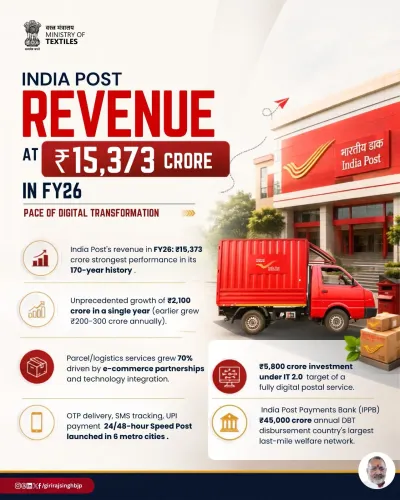
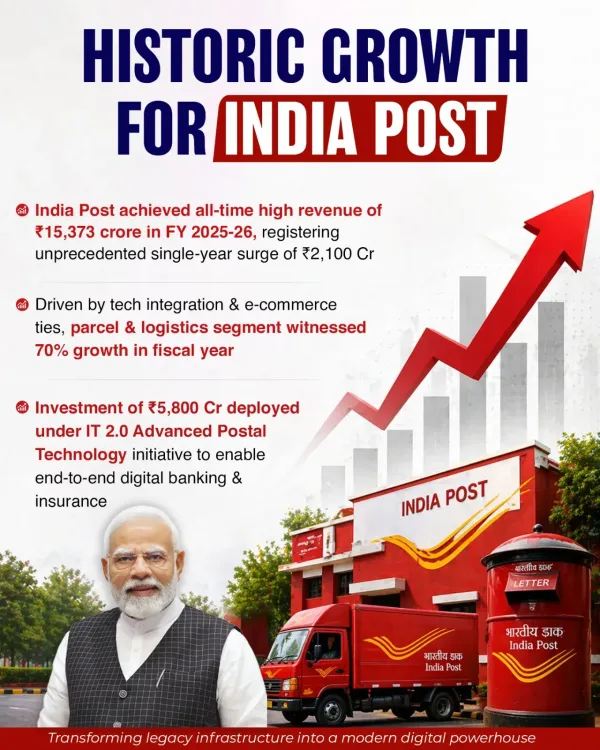
Union Coal and Mines Minister G. Kishan Reddy on Wednesday lauded what he described as a 'historic transformation' of India Post, crediting Prime Minister Narendra Modi's leadership and citing strategic investments such as the IT 2.0 programme for driving the country's largest postal network into a digital services era. In a post on X, the minister linked the modernisation drive to broader gains in technology integration and financial inclusion.
'From a traditional mail network to a modern digital powerhouse, strategic investments like IT 2.0 are driving unprecedented growth, tech integration, and financial inclusion across the nation,' Reddy wrote, framing the shift as a flagship outcome of the Centre's digital governance agenda.
Context
The remarks come as the postal department continues a multi-year overhaul of its technology backbone, building on the original India Post IT Modernization Project (Phase-I), approved in 2012 with an outlay of about Rs 4,909 crore to computerise post offices and roll out core banking. The follow-on IT 2.0 initiative referenced by the minister is aimed at upgrading core systems, network infrastructure and citizen-facing digital platforms across the network.
With more than 1.5 lakh post offices, India Post is one of the world's largest postal systems and a central pillar of last-mile public service delivery, particularly in rural India.
Policy backdrop
The transformation sits within the wider Digital India programme launched in 2015, which has progressively pulled legacy government networks into a common digital stack. A key milestone in the postal domain was the launch of India Post Payments Bank in 2018, designed to extend formal banking, doorstep financial services and Aadhaar-linked payments to unbanked households through the postman.
Successive Union governments have treated the postal grid as ready-made infrastructure for financial inclusion, parcel logistics for e-commerce, and identity-linked citizen services, reducing the need to build parallel rural delivery channels from scratch.
Stakeholders and impact
The direct beneficiaries of the IT 2.0 rollout include rural citizens, unbanked households, small retailers reliant on postal logistics, and the department's own workforce, which is being retrained on new digital tools. A modernised back-end is expected to shorten transaction times, reduce paperwork at counters, and allow integration with platforms such as DBT transfers, pension disbursals and KYC services.
For policymakers, an upgraded India Post also offers a low-cost channel to push government-to-citizen payments deeper into geographies where private banks and fintech players have limited footprint.
What's next
Attention will turn to the postal department's forthcoming performance disclosures on IT 2.0 deployment, including the number of offices migrated to upgraded systems and uptake of digital financial services through India Post Payments Bank. Any supplementary allocations in the next Union Budget or the department's outcome budget will indicate whether the Centre intends to accelerate the rollout.
Reddy's intervention, coming from a senior cabinet minister outside the communications portfolio, signals a coordinated political messaging push around the government's technology-led service delivery record as the administration continues to position digital public infrastructure as a defining theme of its tenure.
Point of View
Signalling a coordinated narrative push. By anchoring India Post's modernisation to PM Modi's leadership, the messaging aligns a legacy institution with the ruling party's flagship Digital India arc. The substantive question is execution: whether IT 2.0 delivers measurable gains in service quality and financial inclusion, particularly in rural circles where India Post enjoys an unmatched footprint. Watch the next outcome budget for a sharper picture.
NationPress
18 Oct 2026
Frequently Asked Questions
What is India Post's IT 2.0 project?
IT 2.0 is a follow-on IT modernisation initiative aimed at upgrading India Post's core systems, network infrastructure and citizen-facing digital platforms. It builds on the earlier IT Modernization Project Phase-I approved in 2012.
Who is G. Kishan Reddy?
G. Kishan Reddy is the Union Minister of Coal and Mines and the BJP's Telangana state president. He frequently comments on central government policy initiatives, including digital and governance reforms.
How many post offices does India Post operate?
India Post operates more than 1.5 lakh post offices across the country, making it one of the largest postal networks in the world and a critical channel for last-mile public service delivery, especially in rural areas.
What is India Post Payments Bank?
India Post Payments Bank is a payments bank launched in 2018 to extend formal banking and financial services through the postal network. It targets unbanked households and offers doorstep banking via postmen.
How does India Post link to Digital India?
India Post's modernisation is a key extension of the Digital India programme launched in 2015. The postal network is being converted into a multi-service digital hub for payments, e-commerce logistics and identity-linked citizen services.